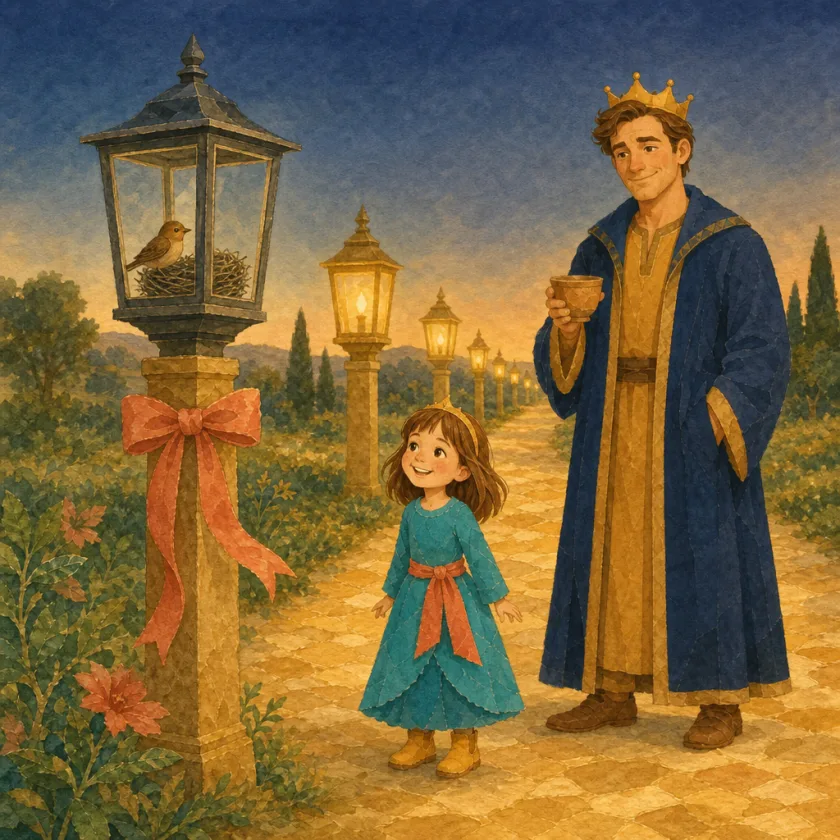
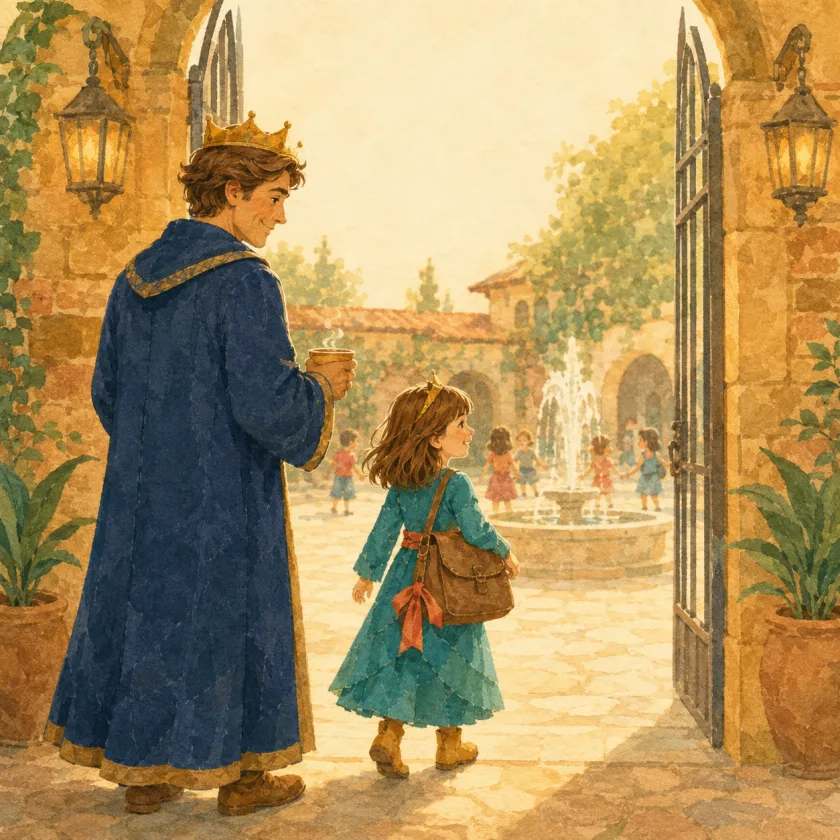
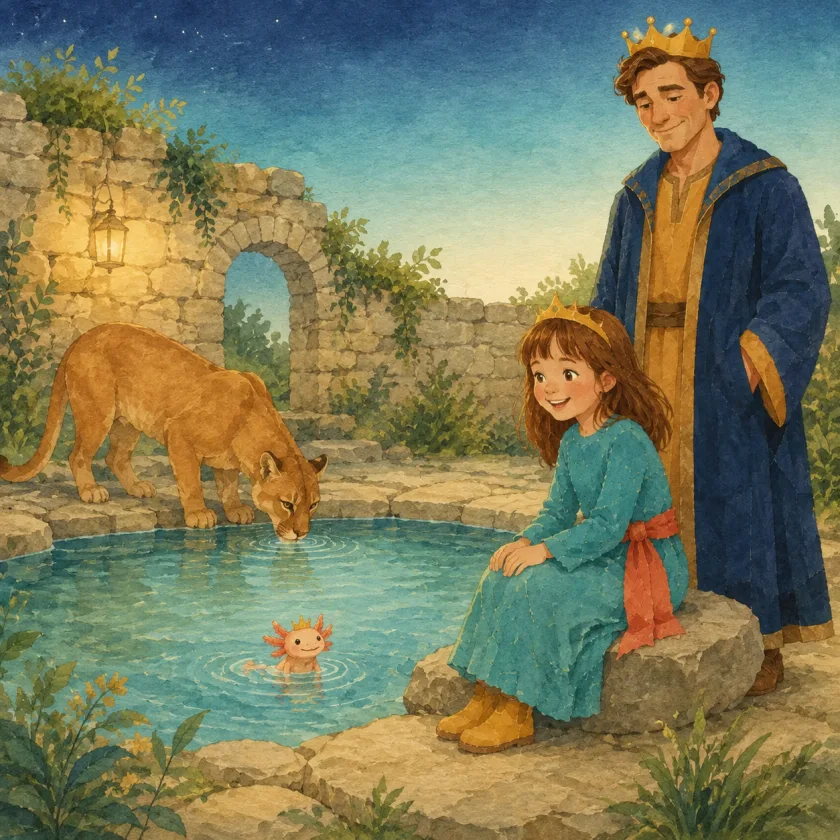
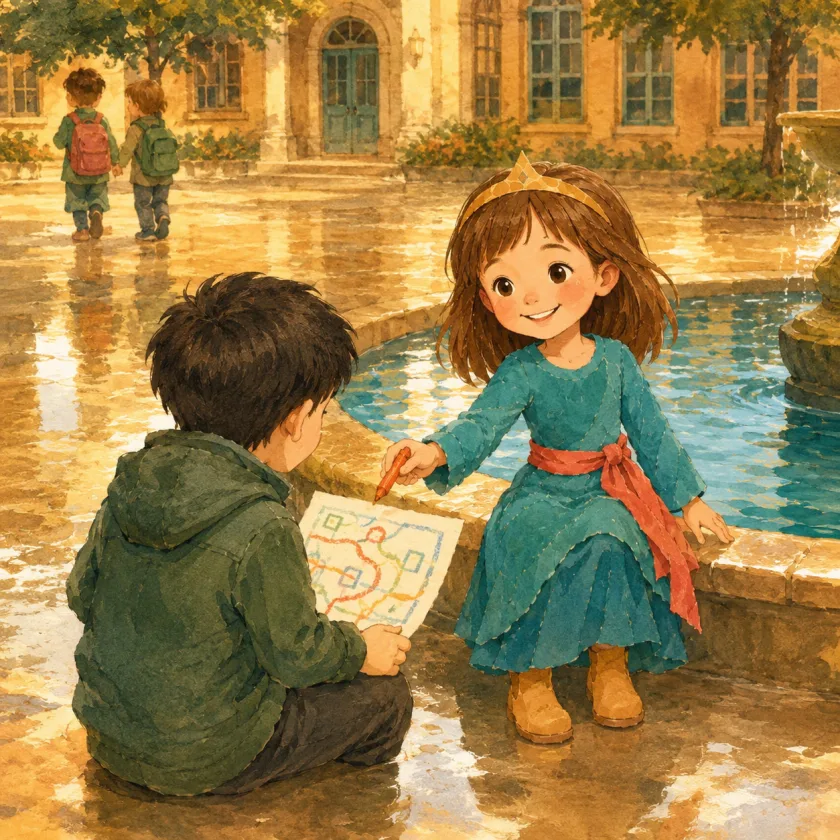
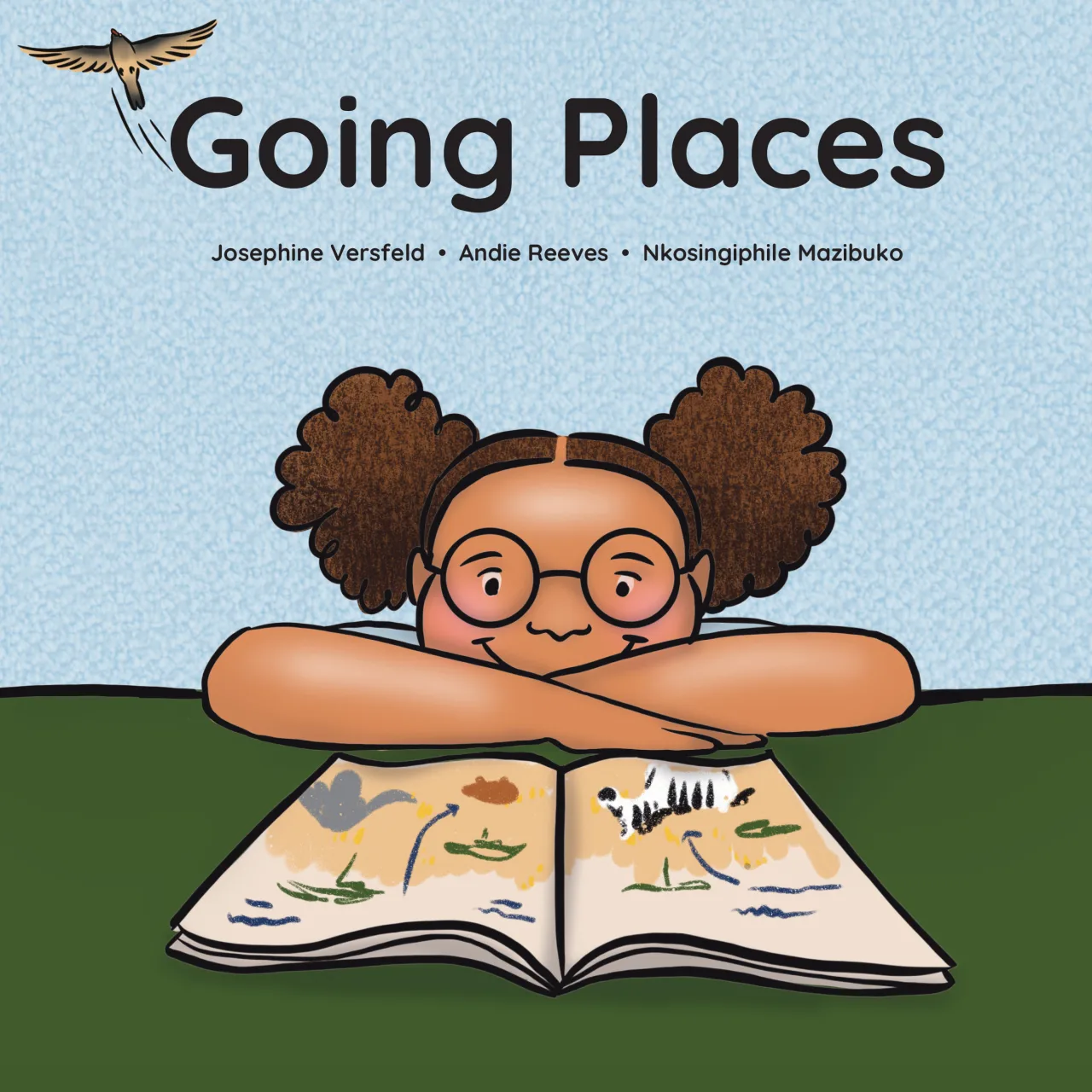
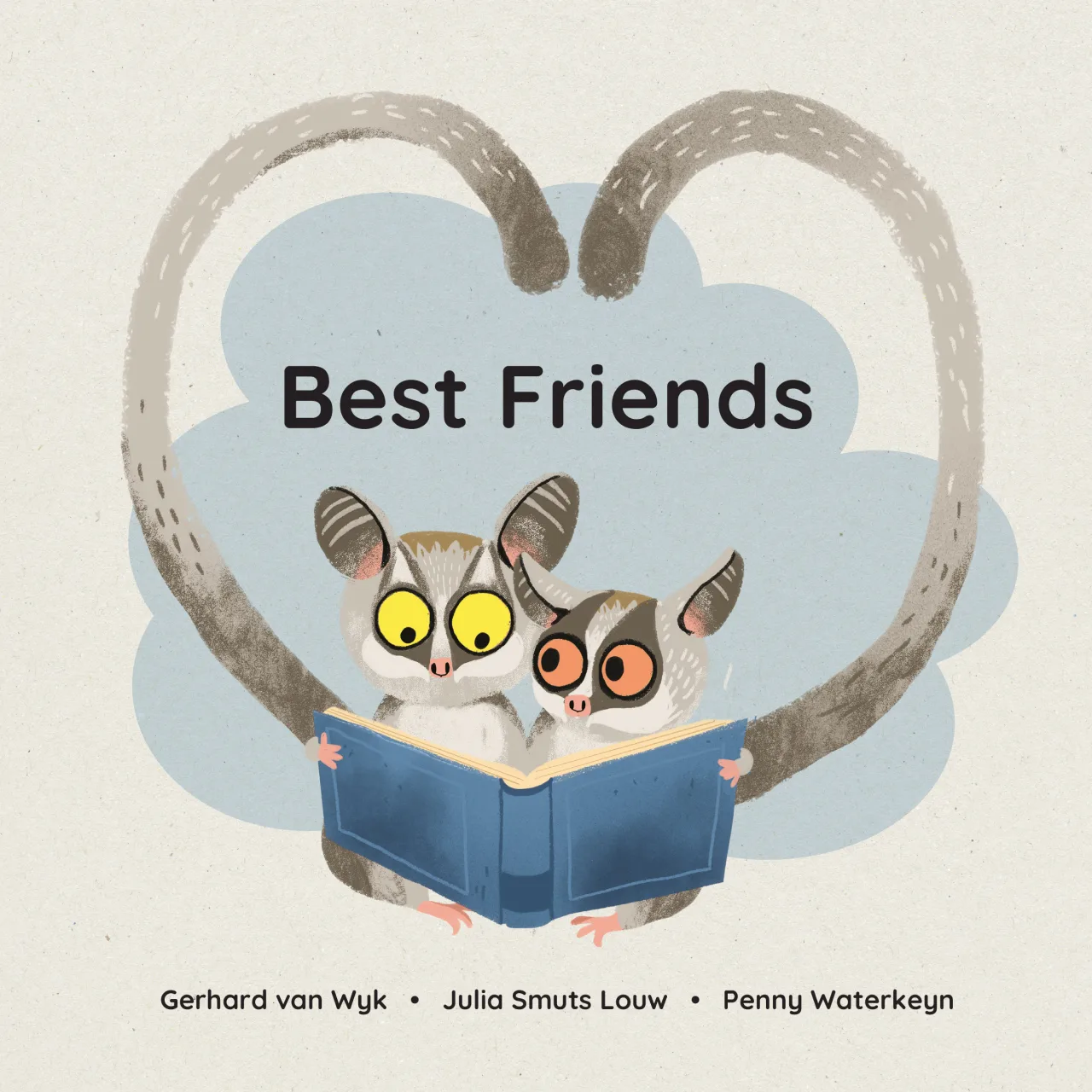
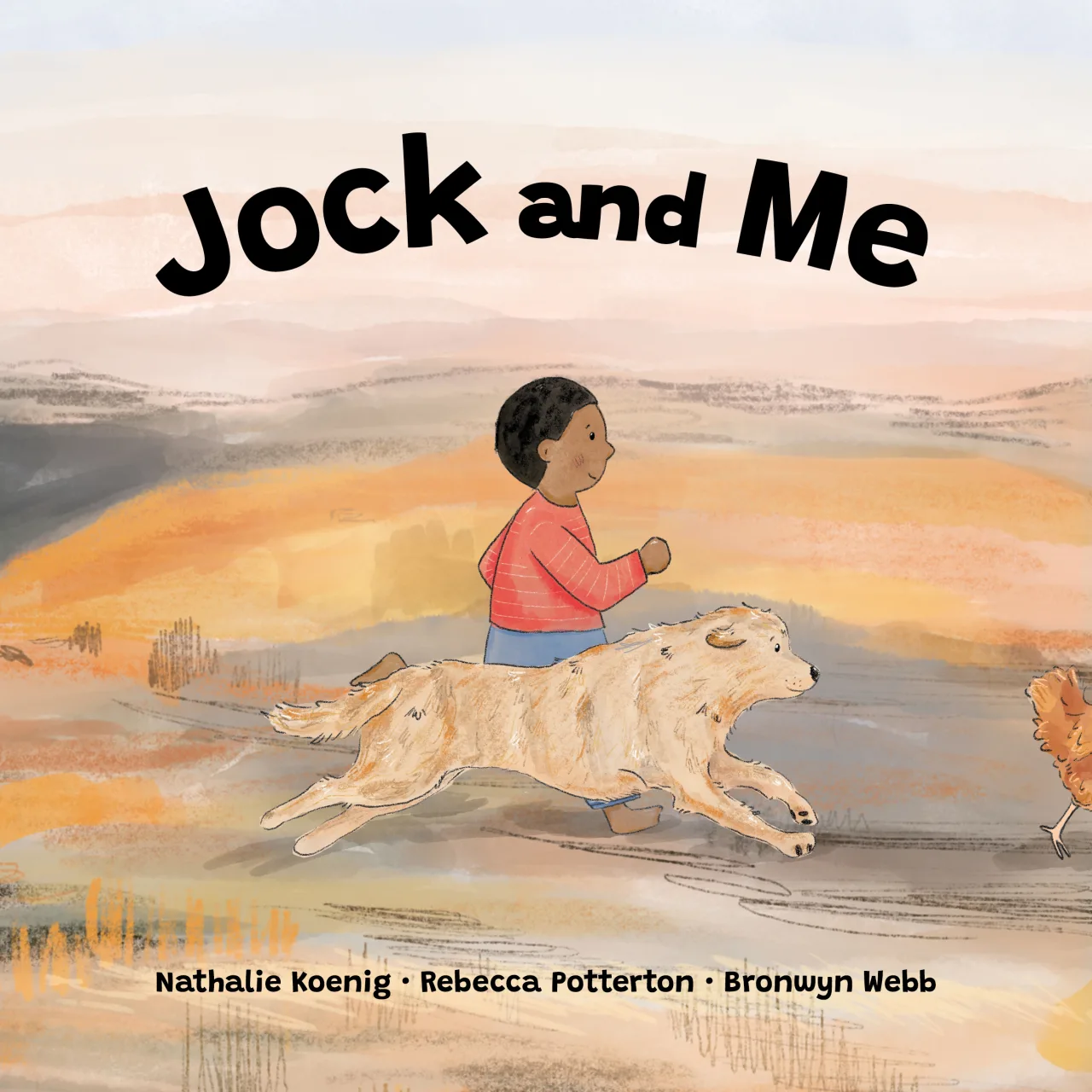
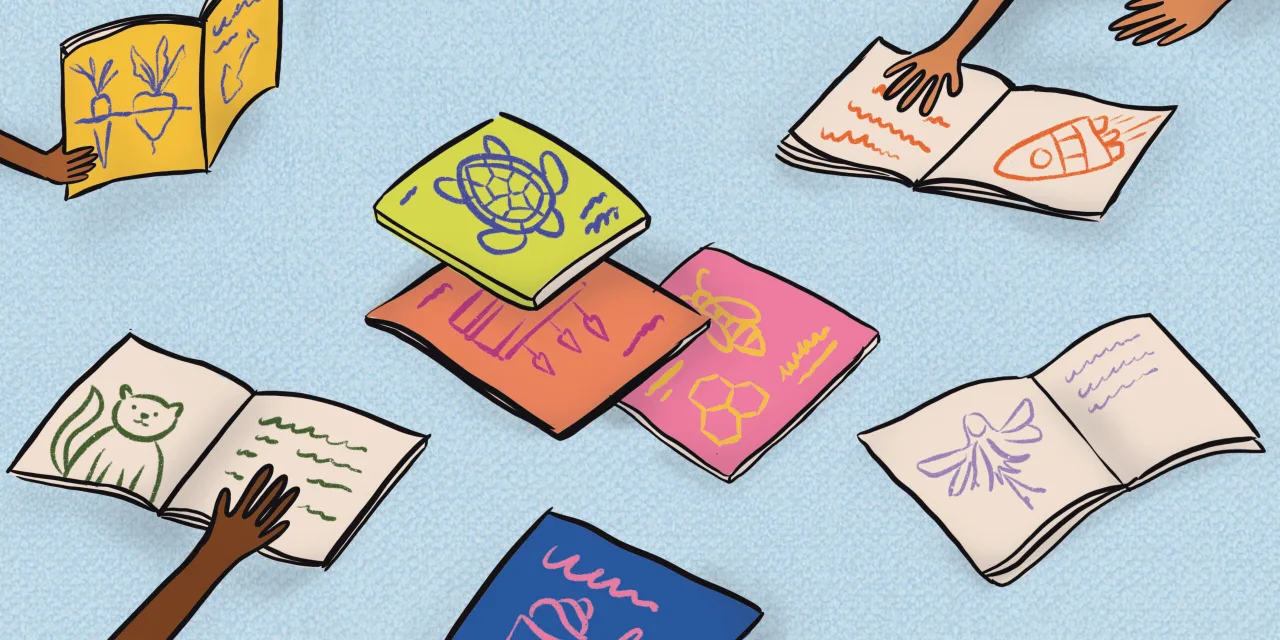
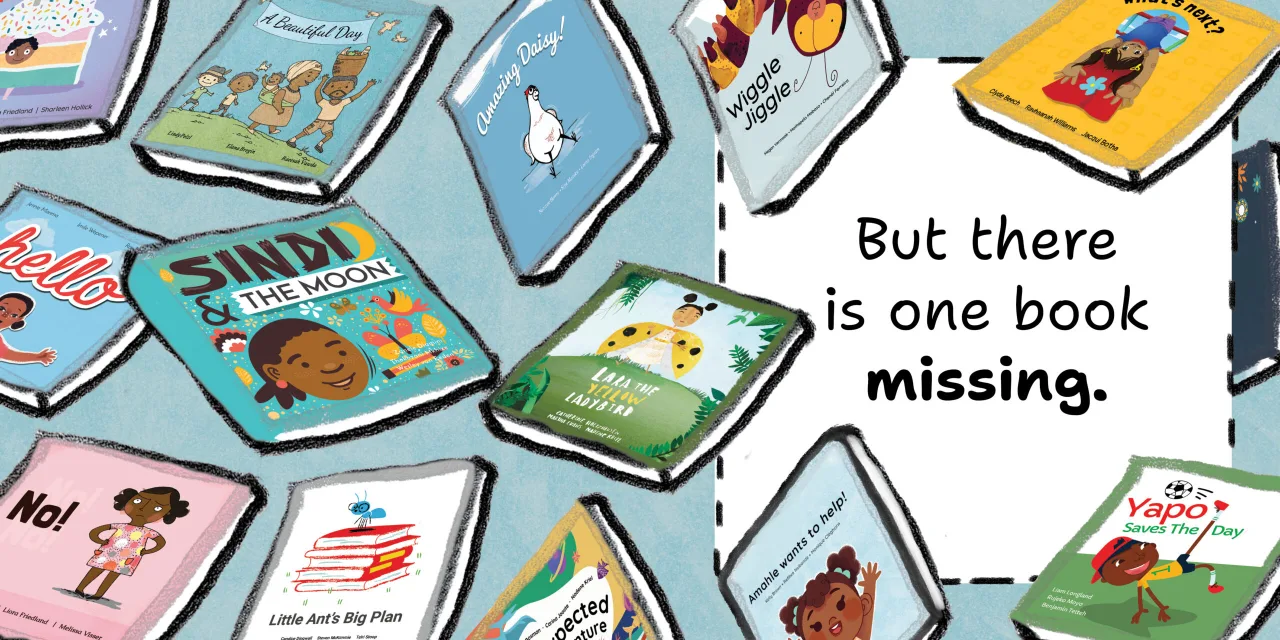
Pick from 43 books and read one aloud together. Twenty-three StoryBeam Originals from the mind of Allison Colapietro lead the shelf, two of them in Spanish. The classics come next, and nine conservatively screened, unrated Book Dash picture books from guest authors wait in a folder at the end.
Twenty-three original books written and illustrated for StoryBeam Kids. The Princess Allison stories come first and are best read in order, since each book remembers the ones before it. The family stories sit beside them, and three earlier painted-paper tales close the row.
Nine more picture books from writers outside StoryBeam, tucked away here
Guest shelf · editorial suggestion · unrated
For grown-ups: these nine Book Dash picture books come from writers and illustrators outside StoryBeam, so they sit apart from the Originals and the classics. Each passed our conservative content screen before joining. Editorial suggestions are not ratings, and every outside source or license link requires the grown-up check.
For the grown-up reading alongMom's nightly sky check is a real, copyable family ritual: step out together before bed, dressed warm, and read three things, clear, still, and cold. The weather in this book behaves the way weather behaves: frost forms on clear calm cold nights and melts in the first sun, and snow arrives under low soft clouds, so the practice the book teaches is watching, not magic. The freezer experiment is deliberately allowed to run: Allison's idea is treated as a real question, the result is examined together, and the lesson arrives from the evidence rather than from a lecture. Cold-morning safety is modeled as ordinary competence: coats over pajamas, checked mittens, a grown-up first on the slippery steps, a hand for the rail, and back inside for breakfast. The before-dawn wake is saved for the rare firsts, the year's first frost and its first snow; on an ordinary yes morning the frost is usually still there at the family's normal waking time, so the practice does not have to cost sleep. Nothing icy is ever walked on, only frosty grass, and the one cup of ice in the book is Allison's own experiment, looked at together and never tasted. Miami is named as Mom's real childhood the way the family tells it; the art depicts no real places. The first frost and the first snow stay plain weather rather than occasions: no countdowns, no staging, just a parent who checked the sky and a girl who got to be there. And the ending's reversal is the point of the practice: a child who has been caught for enough mornings will one day do the catching back.
On an ordinary night at the cold end of fall, Allison went up to bed, and the fourth stair creaked under her foot the way it always did.
But on her way past the window she stopped. Down in the yard, in the last of the porch light, stood Mom, doing nothing at all. Her face was turned up, the way you look when somebody important is talking.
Mom smiled her porch smile. Allison pressed her nose to the glass until it went white. Down below, the porch light clicked off, and Mom's hand found the rail.
Whatever the sky had told her, it was good news.
Morning arrived before the sun did.
"Allison." Mom's hand was warm on her shoulder. "It is tomorrow."
"It is today," said Allison into her pillow, because it was too early for riddles.
"It is both," said Mom. "Something happened in the yard while you slept, and the sun is coming to take it back before breakfast."
They dressed fast, coats over pajamas, the official uniform of urgent mornings. Mittens on, a zipper checked to the chin.
At the back door Mom stopped. "The steps will be slippery. I go first. You take the rail."
She opened the door, and the cold came in to meet them and took the warm right off Allison's cheeks.
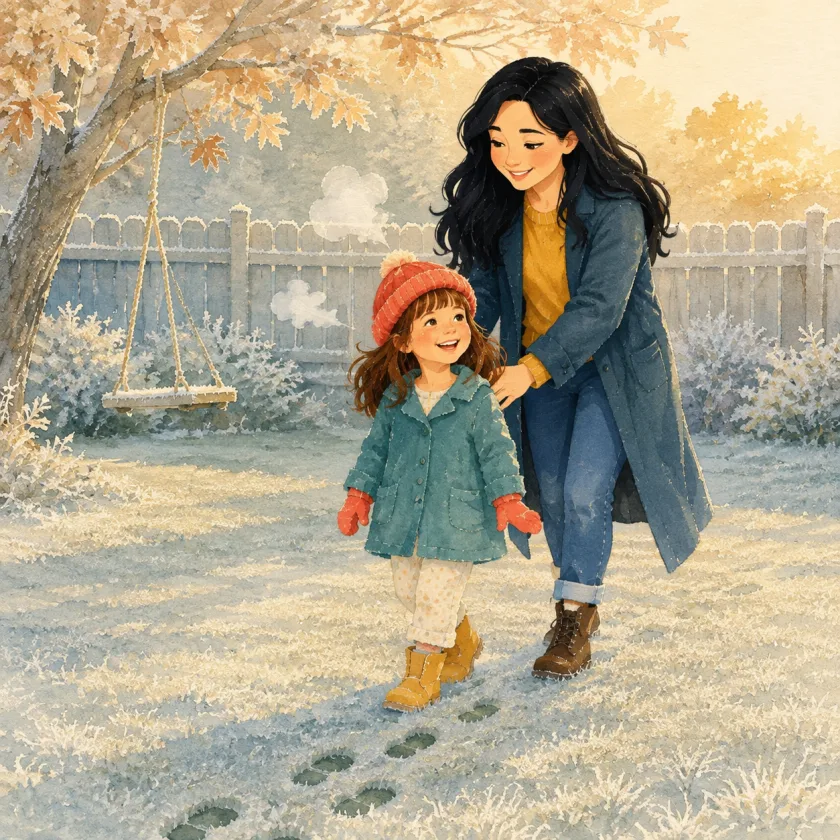
The yard had turned silver.
Every blade of grass wore a thin white coat. The fence rails had grown fur overnight. On the swing, a cushion nobody could sit on.
Allison stopped on the bottom step, one boot down and the other still in the air, and forgot to breathe out.
"Frost," said Mom, one hand on the rail. "The first one this year. Go on."
So Allison walked out into the silver, crunch, crunch, crunch, and every footstep turned dark green behind her, as if her boots were writing on the morning. Her laugh came out as a little white cloud.
The yard had turned silver.
Allison pulled off one mitten and touched a blade of grass, quick as a question. The white on it turned into a bead of water.
"It melted," she said, surprised at her own finger.
"Warm hands," said Mom. "Frost has no defense against them." She held out the mitten, and Allison put it back on.
Allison went along the fence, and at the corner post she stopped.
A spider's web hung between two posts, and the frost had found that too. Every thread was strung with beads too small to count, a chandelier the size of her hand.
They crouched in front of it, side by side, and Allison pointed. "Have you been waiting for this?"
"When I was your size," said Mom, "I lived in a city called Miami, where I never saw frost. I read about it in a library book. Grass made of sugar. A morning you could crunch. It sounded made up."
"So I promised myself," she said. "Someday somebody I loved would stand in a real one." She tucked a loose bit of hair back under Allison's hat.
You are the somebody.
"I saw you from my window last night," said Allison. "How did you know to look for frost?"
"Caught," said Mom. "I was asking the sky. Clouds are a no. Wind is a no. Clear, still, and cold: three yeses make a frost." She pulled her coat closed. "Mostly it is noes. I ask anyway."
"Can I learn it? The asking?"
"You just did the hardest part," said Mom. "You wanted to."
Then the sun put a gold line along the fence.
"Ah," said Mom. "Here comes the taking-back."
The yard un-silvered. Wherever the light landed the frost let go, the fence fur first, then the grass.
"Wait," Allison said, to the sun, which did not.
She scooped a pinch of frosted grass from the last white corner and went up the steps, one hand on the rail and the other in a fist. The storm door banged. The kitchen was warm on her cheeks. She pressed the pinch into a cup. Already it was turning wet. She added a little water to cover the grass and set the cup in the freezer, where cold things keep. "I am keeping it," she said.
Mom stamped the cold off her boots in the doorway. "We will see," she said, which was not a no.
They had breakfast, because even silver mornings end in oatmeal: warm bowls, mittens drying by the door.
That afternoon Allison took her cup from the freezer. Inside was plain cloudy ice with three blades of grass in it.
"It kept the cold," said Allison. "But it did not keep the it."
"No," said Mom, one arm around her. "The cold keeps. The morning does not. Freezers are good at winter and no good at all at mornings."
"Then how do you keep one?"
"You were in it," said Mom. "A morning will not go into a cup. It goes into a girl standing in the yard when it happens."
The cold keeps. The morning does not.
Now the asking belonged to both of them. Most nights the answer was no: wind in the maple, or clouds over the stars. On clear nights, in coats over pajamas, they went out and asked the sky. Allison counted out loud. Sharp stars, one yes. The bare maple holding still, two. Her own breath white in the air, three.
One night there were no stars at all. The clouds had come down low and soft.
"No stars," said Allison. "That is a no."
Mom looked at the sky a long time and smiled her porch smile.
"That," she said, "is a different yes."
Allison woke early. The light on her ceiling was wrong, too white and too soft, and the road outside made no sound. She put a palm flat against the window glass. Then she was running.
"Mom." She put a hand on Mom's shoulder, and the hand was cold from the glass. "It is tomorrow."
The first snow was falling, fat and slow, and the swing already had a white seat. The fence line was going, post by post. They stood in it, coats over pajamas, catching flakes on their mittens, and under their boots there was no crunch at all.
A flake came down on Allison's mitten and stayed there, whole, every arm of it showing. Up at the house the porch light was still burning from last night's asking.
Mom stood with her face turned up, snow landing on her eyelashes and not melting yet.
Overhead, the sky went on saying yes.
That was the different yes.
A StoryBeam Original
The Friends Who Did Not Match
From the mind of Allison Colapietro
About 7 min aloud
A StoryBeam Original
Six painted-paper pictures
For the grown-up reading alongEmber is a storybook guardian, not a wildlife lesson in disguise, and the book keeps the real-world rules intact anyway: every visit happens with a grown-up, at a distance the kingdom's animal keeper set, with no touching, no feeding, and every approach left to the animal. If your child meets real wildlife, the family rule is the same one the King models: stop, stay with your grown-up, and watch from far away; and real axolotls, like all wild water creatures, stay in their water. The friendship strategy underneath is concrete and copyable for the playground as much as the spring: stop trying to match, find the one real thing you share, and arrange a when and a where. Allison's failed SAME column normalizes a first plan that does not work, and the storm night shows the payoff arriving on its own once the meeting has been made. Distance is drawn as respect throughout, never as fear, and the lonely post nobody visits is treated as a job description, not a warning.
At the high end of the lantern road there is an old stone wall, and on the old stone wall there is a cougar.
His name is Ember. He is the color of the last hour of afternoon, and he is big the way the wall is big. Every dusk he watches the road until morning, and everyone in the kingdom walks a little faster under that wall.
Everyone except Princess Allison, who stopped. Her father, the King, stopped beside her.
Ember's tail-tip ticked once, like a clock finding its next second.
"He is not mean," said Allison. "He is on duty."
He is not mean. He is on duty.
The stories about Ember were the hurrying kind. The facts were better.
"He has kept the high road since before you were born," said the King. "The keeper who minds our wild neighbors gives us the rules of that wall. Visit the far end only, bring nothing to feed him, touch nothing, and let him decide every step closer."
"Does anybody visit?" asked Allison.
"No," said the King. He looked up at the wall for a long moment. "Nobody has ever sat at the far end of it. Keeping watch is a job you mostly do alone."
The next evening she went looking for a friend for Ember, the King beside her, and found the spring below the wall. In the middle of it was an axolotl, coral-pink and no bigger than her palm.
"You were born already wearing a crown," said Allison, bending down at the water's edge, hands to herself, as you do with royalty.
This was Brook, who smiled the way axolotls smile, which is always, feathered gills lifting and settling in the water.
Then Brook looked up, past her, at the wall. Along its top walked the great gold keeper, his back to them both.
Twenty steps, wall to water.
The two loneliest posts in the kingdom were twenty steps apart.
That night Allison took a fresh sheet of paper and her backup orange crayon and made two columns. SAME, said one. DIFFERENT, said the other.
DIFFERENT filled up like a rain barrel. One naps in snowdrifts. One lives in a spring the size of a soup pot.
SAME stayed empty.
"An empty column is not a no," Allison decided, out loud, so it would be true. "It is a not yet."
She folded the paper down the middle and put it in her pocket, and DIFFERENT did not get one more line.
Every evening that week, she and the King climbed up and sat at the far end of the wall, and watched the road the way Ember watched it. They did not bring so much as a crumb. They brought the one thing the rules let through.
Company.
The first evening, his tail-tip stopped. On the fourth, the gold shoulder rose and moved one whole cat-length closer along the top of the wall, and not one stone shifted under him.
"We are being introduced," whispered Allison, "at his speed."
We are being introduced, at his speed.
"Where does Ember drink?" Allison asked on the walk home.
"At the spring, at first light," said the King. "Every keeper's secret hour."
"Dusk and dawn," said Allison. All evening Brook watched the wall, and Ember watched the road. Then at dawn he came down to drink. "I wonder if Brook is awake then. We could watch from the path."
She turned the paper over right there on the road and wrote two new questions on the back. WHEN? WHERE?
"Somebody has to introduce the hours," she said.
She and the King came to the spring at first light. Brook was still beneath a frond. Then the small crown stirred and turned toward the path. They took their place a courteous distance away and waited.
Down the hill, huge and quiet as the last of the night, came Ember.
He paused, reading the morning. They did not move, and let the rules say hello for them. So he came on, and lowered his heavy head to the spring, and drank.
And came up nose to crown with Brook.
Neither one moved. Ember's ears came forward. The water between them went smooth, and stayed smooth, for one long breath.
Ember's tail-tip ticked. Brook stayed near the surface, watching with him. Allison turned her paper back to the two columns and wrote the first line in SAME. KEEPS WATCH.
Making a visiting place took one more evening. A flat grey stone lay by the path, the exact shape of a sitting stone. Allison chose its place, at the courteous distance beside the spring, and the King moved it there. Then she stretched up on tiptoe and tied her coral ribbon to the lantern post above.
"The princess has a reason," said the King.
"Two reasons," said Allison. "One as big as the wall. One as small as my palm."
Dusk at the wall with Ember, his tail-tip ticking. Dawn at the spring, with Allison and the King on the flat grey stone and Brook watching from the water. The front of her paper gained three more things in SAME: THE SPRING. QUIET COMPANY. US.
Two reasons. One very big and one very small.
The squall came at dusk, wind first and then rain with its sleeves rolled up. It took the last lantern's flame in one gust. Allison watched from her window with her forehead on the cold glass and both hands flat on the sill.
In the morning she and the King walked up and read the mud from the path. Ember's wide prints led down to the spring and stopped at a hollow in the grass, the kind you make by staying all night. He was still there, resting on the bank. Brook hovered near the surface beside him.
"Two friends," said Allison. "Same storm."
The King relit the last lantern that evening. The wall above held its keeper, the spring below its crown, the coral ribbon shining on the post between.
"I thought friends had to match," Allison said on the road home, tilting the paper into the lantern light. "Four things in SAME. Forty in DIFFERENT."
On the wall, a tail-tip ticked goodnight.
"The forty are just whiskers," said the King. "Dawn, then. Bring your crayon."
Below the wall, the water held one small point of lantern light. Above it, in the dark, an ear turned toward the road.
The forty are just whiskers.
Story Steps
For after the story. Pick your size.
Words from the story
cougar a large wild cat that lives in the Americas.
keeper a person or animal that watches over something.
axolotl a small water animal with feathery gills beside its head.
courteous polite and respectful of someone else's space.
squall a sudden burst of strong wind and rain.
lantern a light inside a case that protects its flame.
Little · 3-5 Talk about it
Point to the safe rules Allison follows near Ember.
Show me a courteous distance with your hands.
Say one thing Ember and Brook have in common.
Big · 6-8 Talk about it
Why are the facts about Ember better than the hurrying stories?
How does Allison introduce the hours instead of forcing a friendship?
What lets Ember and Brook choose their own way to meet?
One thing to do
Little Draw two very different friends and one true same they can share.
Big Make SAME and DIFFERENT columns for two characters, then circle the one same that helps them meet.
A StoryBeam Original
Room on the Map
From the mind of Allison Colapietro
About 8 min aloud
A StoryBeam Original
Six painted-paper pictures
For the grown-up reading alongAllison's first instinct, handing over her finished map, is treated as genuinely kind and genuinely insufficient, so a child hears that a clumsy first try at welcoming is normal and fixable, not shameful. The working strategy is concrete and copyable: ask the new kid for real help, share a material, walk the space together, and let them add themselves rather than being added. Alder's competence is real (he corrects Allison's map before he ever needs rescuing), modeling that newcomers bring things rather than only needing things. Adults keep every doorway: Queen Marigold receives and releases by name, Alder is met by his own grown-up before the King's pickup happens, and the lesson is delivered by a teacher who is delighted, never scolding. Missing your mountain, like missing your harbor, stays legitimate weather.
By the second week of school, Princess Allison's map hung on her bedroom wall, one strip of tape at each corner, the orange crayon laid on thick. The fountain sat in the middle, three small figures on its lip. The right side of the paper was still bare, on purpose.
That morning she rolled the map into her satchel to show Professor Fig. She came through the classroom door, satchel swinging, coral ribbon bright, and stopped.
Eleven desks had become twelve overnight. Everybody else had been here a week. The new desk stood by the map shelf, nothing on it, no name card, the chair pushed in square.
Somebody new was coming to a place where everybody else had already arrived.
He arrived one step behind Queen Marigold, holding a rolled paper. She kept her hand on the door and said his name as if she had known it for years. "This is Prince Alder, from a mountain kingdom with more goats than people."
Alder looked at the maps on the shelf beside his desk, and his shoulders came down half an inch.
Juniper reached him first, and her voice got there before she did. "I am Juniper! That is Allison, she has maps."
"Thank you," said Alder, and sat down at the twelfth desk and held his rolled paper all morning.
Allison knew that hold. At the morning break she unrolled her own map across his desk, corner to corner, and flattened it with both hands.
"This is the whole school. Here is the map room, and here is the fountain where we sit. You can have it, and then you will know everything."
Alder took it in both hands and read it a long time, and did not say thank you yet.
Because there on the paper was the fountain, three small figures on its lip, and none of them was him.
"Thank you," he said, quieter. Her map stayed open across his desk until the bell, and neither of them touched it. Allison waited for the smile. It did not come.
A map of somebody else's belonging is a strange gift to hold.
Prince Alder followed her map to the next lesson in the map room. At midday it took him to the fountain, where the others were already sitting. And there he stopped, at the edge of them, her map held flat to his chest.
The map worked perfectly. That was the worst part. It could take him to the fountain. It could not make anybody move over for him.
Beside Allison, Princess Maren was watching too. "When I was new," she said, "you did not give me a paper. You sat down."
The first drops hit the map room windows. Then the rain came down hard, and the whole school crowded in out of it, hoods dripping onto the stone, the room going warm and close and smelling of wet wool.
"Professor Fig, I gave Prince Alder my whole map," said Allison, "and he is still lost."
The maps teacher pushed his spectacles up into his grey hair and left them there. "Walk with him, Princess Allison. Lend him your looking, not your lines."
Lend him your looking, not your lines.
She asked Prince Alder for her map back and spread it between them. "Will you help me check the hallway lines?" she asked. "I drew some of them from memory."
He set his rolled paper on the desk and came with her. At the bend by the music room he squinted along the wall like a boy reading a ridge. "Your line is straight here. The hall is not. It bends, like a switchback. May I?"
She handed him her orange crayon, and he drew the line again with a mountain walker's bend in it. Allison rolled the checked map into her satchel, and Alder's shoulders came down the whole rest of the inch.
Alder unrolled his own paper at last: a map of his mountain kingdom, ridges like folded cloth, a tiny flag on the peak he had climbed with his mother.
He took a fresh sheet of paper and began a map of the school. Allison did not draw one single line on it. She walked beside him with her hands in her pockets. When he took a wrong turn, they stopped together and looked back, and he found the bend himself.
By the last bell his map had a bent line and a fountain with nobody on it yet.
"Not done," he said.
"The best maps never are," said Allison.
Outside, every stone had gone gold and the fountain held a second sky.
Juniper came across the yard calling, "How many goats is more goats than people?" Maren was right behind her. Allison moved over on the fountain lip and patted the place beside her. "Here, Alder." Soon all four were sitting on the fountain lip. The stone was warm, but the wet went straight through their clothes. Alder set his new map on his knees and drew the fountain, with four small figures on it.
Allison unrolled her own map beside his. Alder pointed to the fountain, where there was room beside the three small figures. "May I?" he said, and this time she handed him the crayon before he finished asking, and there he drew himself, in his own hand.
This time she handed him the crayon before he finished asking.
At the door Queen Marigold said every name on the way out, "Prince Alder" among them, and he stood straighter to walk under it.
Beyond the gate a tall queen in a mountain cloak changed her whole face when Alder ran to her. And exactly where the morning had left him, the King. Two cups.
"Well," he said. "Report."
"I gave somebody my map," said Allison, "and it did not work. So I put it away and walked with him instead."
They walked home down the lantern road, every puddle holding a small gold light of its own, while Allison told the whole day at full speed.
The King listened all the way to the gate, then gave the slow nod and put the second cup into her hands, still warm. "You walked it with him," he said.
That night her map was back on her wall, four small figures on the fountain where three had been, the newest in a hand that was not hers.
Beside it she pinned a corner Alder had drawn for her before they parted: one goat path, climbing, going somewhere she had never been.
Between the fountain and the goat path, the paper was still bare, on purpose. Plenty of room.
He put the second cup into her hands, still warm.
Story Steps
For after the story. Pick your size.
Words from the story
fountain a place where water is pushed up and falls into a basin.
satchel a bag carried with a strap.
mountain land that rises very high above the ground around it.
spectacles eyeglasses.
switchback a sharp bend in a path that climbs a steep place.
ridge a long, narrow top of a hill or mountain.
Little · 3-5 Talk about it
Point to the map Allison gives Prince Alder.
Show me how you could walk beside someone without drawing their line.
Say one real job a new person could help you do.
Big · 6-8 Talk about it
Why does a map that works perfectly still leave Alder feeling lost?
What is the difference between lending someone your looking and lending them your lines?
How does drawing himself on the fountain help Alder belong?
One thing to do
Little Walk one short path with a grown-up and let each person point out something different.
Big Invite someone to correct or add one line on a shared map in their own way.
A StoryBeam Original
The Queen's Keys
From the mind of Allison Colapietro
About 7 min aloud
A StoryBeam Original
Six painted-paper pictures
For the grown-up reading alongThe Queen's first book runs on a no that respects the child. Allison's opening plan is treated as genuinely good and genuinely incomplete, and the no arrives with its reason sitting right beside it, plus a road back: bring me a plan that knows all four seasons. Commitment is modeled as love with a schedule, never as a lecture, and when Allison returns with a keeper's plan instead of an afternoon's, the key is offered on an open hand and every bit of the work stays hers. The door's own last no, unlocked but sewn shut by old ivy, is solved by her child-height noticing, not by an adult reaching over her. Tall jobs, tools, and the high ivy stay with the King; the Queen teaches with her voice and her forethought, and the basket she packed before anyone asked is named and credited in the text. This is also the book where Allison calls the Queen "Mommy" for the first time, once, at the key, and calls the King "Daddy" at the hardest push, and nobody knocks on the finished door tonight, because a kept welcome does not need a visitor to be true. Lights-out lands on a quiet bell, a gold doorstep, and a key on its ribbon, done for today.
Princess Allison was drawing the castle garden, which was harder than drawing the whole kingdom. On her kingdom map, mountains stayed mountains. In the garden, beans climbed and ivy hid things. She drew as far as the west wall, then pushed the ivy back with the flat of her hand to see the stone underneath, and the crayon in her other hand stopped.
There was a door.
A small door, exactly her height, with a keyhole shaped like a tall flower. "You were hiding," she said. The door said nothing, in the locked way doors say it.
The wall had kept this quiet the whole time.
She tried the handle, politely. Locked.
"Whose little door is this?" she called up to the King on the ladder in the pear tree.
"Every door in this castle answers to one ring of keys," he said.
And there, coming down the garden steps with the morning basket, was the Queen, four gold keys swinging at her side, one for each season.
Allison took out a fresh sheet of paper and her backup orange crayon and wrote the title first: OPEN THE DOOR. Then the walkers on the lane would not have to go all the way round to the big gate. Under the title went the whole afternoon: sweep the sill, and wave at every walker until suppertime.
She brought the plan to the Queen at a run, holding it up ahead of her. The Queen read it twice, then folded her hands over the ring of keys, and Allison understood, one breath early, that the answer was going to be no.
She read it twice, which is the respectful amount.
"Not with this plan, my love," said the Queen. "Open it for one afternoon and the walkers learn to knock here. What happens tomorrow, when you have gone to play? A door needs someone to answer it, in frost and in the long hot quiet of summer."
The no went into Allison like a key turned the wrong way. The Queen did not fill the quiet. Behind them a pear came down through the leaves and into the grass.
"Bring me a plan that knows all four seasons," the Queen said, "and we will talk about keys."
That day Allison watched doors instead of people. The big gate was unbarred at dawn and barred again at dark, and somebody did both. At the bakery, somebody opened the hatch before the first loaf was sold and swept it clean before closing. At the bird house, a bird went out, flew off, and came back with supper.
Kept doors had keepers.
At her desk she crossed out OPEN THE DOOR and wrote a truer title: KEEP THE DOOR. Under it she drew four boxes, spring, summer, autumn, winter. In each she drew the mat to shake, the hellos to answer, and the Queen beside her for the times she could not be there.
The new plan was the same size as the first one. It just knew more.
Kept doors had keepers. That was the whole secret.
The Queen read the new plan three times.
"Winter too?" she asked.
"Winter too," said Allison. "Mittens are in the box."
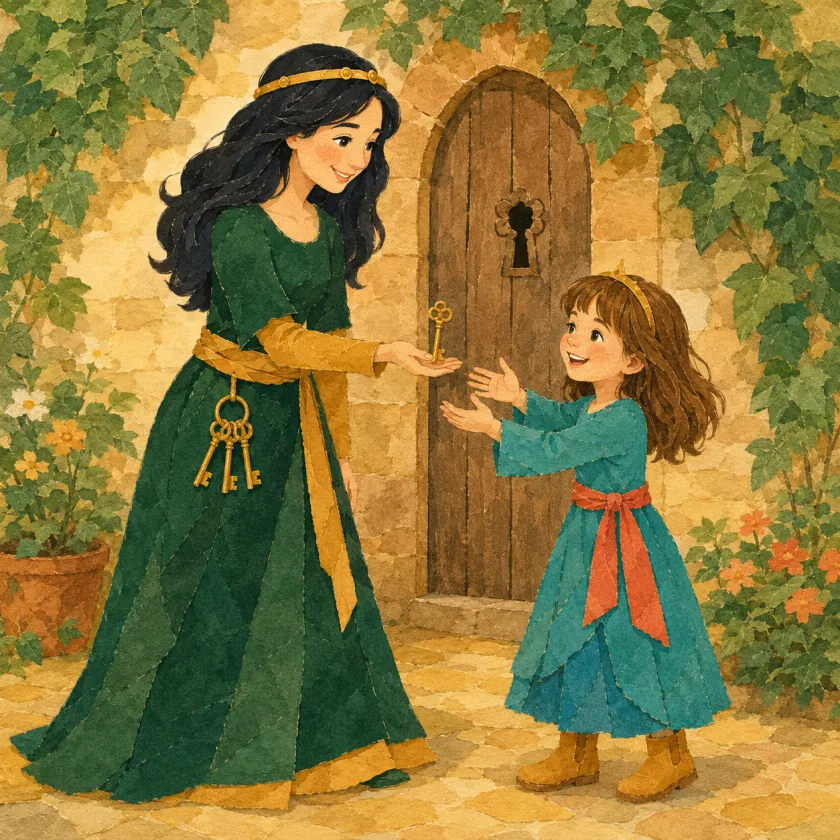
The Queen laughed, worked the smallest key off the ring, and held it out on her open hand. Then she waited.
"Locks like to be asked, not told," she said. "Slow hand. Small turn."
Allison lifted the key. It was lighter than a spoon, and it made her hand careful. "Thank you, Mommy," she said.
They went down the garden steps and along the west wall, the gravel loud under her shoes. In the cool of the ivy-shade a basket was already waiting: an oil can, a rolled mat, and a small brass bell.
"You knew," said Allison.
"I hoped," said the Queen. "Hoping is allowed to carry a basket."
The King came along the wall, set down his cup, unwound the high ivy, and oiled the top hinge. Allison swept the sill and hung the bell on the low hook. The Queen stood beside her at the lock, hands behind her back.
"Ask it," she said.
Allison slid the key in. Slow hand. Small turn.
The lock listened. Something inside it lifted and clicked, the sound of a very old yes.
Allison pushed. The door did not move.
She pushed again, harder, one hand flat on the planks and all her hopes behind it. Nothing.
She looked up at the King. "It will not open, Daddy," she said, and heard her own voice go small on the last word.
The King checked the hinges. Oiled. The Queen checked the lock. Asked, and answered. The door was unlocked. The door still did not open.
The door was unlocked. The door still did not open.
Allison sat down on the sill and put her cheek against the stone, and looked along the bottom of the door.
And there it was, low in the seam where door met frame: ivy. Thin green stitches sewing the door to its own wall.
"It is not stuck," she said. "It is sewn."
She unpicked the low stitches, one thread at a time. The King drew out the one high runner she could not reach. Then Allison took the handle and asked.
It opened with the sound of an old yawn. The lane was there, and the hedgerow, and the sun already low behind it.
They laid the mat. Down the lane the King's lanterns came on, and the nearest one, on the wall above the door, set a gold square on the doorstep.
Nobody knocked that evening. Allison sat on the sill until the last orange light had gone out of the lane. Then she shook the mat, just as her plan said, and set it straight again.
The Queen touched the little bell once, so lightly it only thought about ringing.
"Open is only today," Allison said. "Kept is all the days."
The King's cup had gone cold in his hand. He raised it anyway and said nothing.
Open is only today. Kept is all the days.
That night the small gold key hung by her bed on a coral ribbon.
Once in the night she put out her hand, and the key was there.
Story Steps
For after the story. Pick your size.
Words from the story
keyhole the shaped opening where a key goes into a lock.
ivy a climbing plant that holds onto walls.
basket a container woven from thin strips of material.
autumn the season after summer and before winter.
mittens warm hand coverings with one space for the thumb.
hedgerow a line of bushes or small trees along a road or field.
Little · 3-5 Talk about it
Point to the four seasons in Allison's new plan.
Show me a slow hand and a small turn.
Say one daily job that helps keep a welcome ready.
Big · 6-8 Talk about it
Why does the Queen say no to Allison's first plan?
How is keeping a door bigger than opening it once?
What does Allison discover by looking from the door's height?
One thing to do
Little Draw one small welcome you can help keep ready.
Big Turn a one-time idea into a four-season plan with a small job for each season.
A StoryBeam Original
Princess of the Month
From the mind of Allison Colapietro
About 8 min aloud
A StoryBeam Original
Six painted-paper pictures
For the grown-up reading alongAllison helps the way children actually can: not by fixing anyone, but by changing what she herself does, asking to be taught, asking for help, requesting one small thing, handing over what was packed. Her first attempt fails because it is too big and too public, and the story treats that as information rather than defeat; the recalibration comes from a short saying attached to a real cup, not a lecture, and the Queen listens to the whole hard day without fixing any of it, which is its own modeled skill. The veterans' habits are drawn as loyalty grown too tight, never as flaws to mock, and the newcomer-helps-experts turn carries no smugness because the Hall teaches her back all month. The Queen scaffolds without rescuing: provision set out before it is asked for, concrete sayings offered once and then trusted, the acting left entirely to the child, and credit received rather than claimed. The King's stone gives a working parent's absence a reliable, repeatable ritual: love that arrives on schedule even when he cannot, and, on the night it matters, a child who can hand the warm back. The award is earned through acts a child can list and copy tomorrow, the veterans themselves stand up for the newcomer who helped them, and the celebration is the Hall's own old tradition, which keeps the spotlight warm instead of loud.
Allison woke before the sun on the first morning of her month at the Royal Training Hall. There would be princesses she had never met and things she had never tried. First she checked the windowsill, where the King left her morning message.
The stone was there, still warm, with a hollow worn the size of a thumb.
The far bridges kept the King away, dark to dark, but he stopped at her sill first. He warmed the river stone between his palms before he left it. "Carry my warm today," he always said. Allison fit her thumb in the hollow and pocketed it.
In the kitchen the Queen set the good honey beside the bread.
"It is only Tuesday," said Allison.
"A jar keeps honey a hundred years," said the Queen, "and never once lets it be honey. Honey happens on the bread."
Honey happens on the bread.
Allison poured her own milk from the big jug. Half of it found the table. The Queen handed her the cloth without turning.
"Wet tables dry," she said. "Again, my love."
The second pour came out true. By the door waited the satchel the Queen had packed: two of everything, in case. Allison looked inside. Two cups, one nested in the other.
She walked with her thumb in the stone's hollow. The Hall door was heavy enough to lean on, and when it gave, the smell of wax came out to meet her. The floors shone. So did the cups. Even the quiet had a polish on it.
Allison's young cougar had gone in ahead. Mac sat in the exact middle of the floor, tail over her paws.
Three princesses were practicing, and none of them had seen the door open. Petronella curtsied to an empty doorway without looking up. Bea poured tea in a thin silver arc, back into the pot. Tansy counted jars through the storeroom keyhole.
"You will be the new one," said Keeper Quill. "The other three have been at it for years. Nothing here has ever been out of place."
Nothing here has ever been out of place.
"At the month's end," said Keeper Quill, "the Hall chooses its Princess of the Month. Not the shiniest one. The one who helped the most. Now, tell our new friend one thing you have practiced. Allison, tell us something you enjoy."
"Fifty-one numbered curtsies," said Petronella, "two for occasions that have never occurred."
"Four thousand cups of tea," said Bea. "Nobody has ever drunk one while I watched."
"One hundred and nine jars," said Tansy, "every one safe."
"One show," said Allison. "I was five before I saw it. Thomas and Friends."
She wanted to help. The cup she picked up was already clean. So was the next one. By the third day her good mornings were landing on the backs of heads. All that shine, pointed at nobody.
So she drew a grand plan for everyone to share tea and bread. The next morning she set the long table, rang the bell, and announced, "Today, everything gets used!" She had not asked a single person first.
Bea startled and spilled. Petronella got stuck halfway into Nineteen and stayed there. "The jars are safe," said Tansy. A tray went over, cups rolled bright across the floor, and Mac put a paw on the runaway one.
The tray came back to Allison stacked and level. Bea mopped, and Tansy put her hand back on the storeroom door. Allison walked home with a no in her satchel.
Allison walked home with a no in her satchel.
The Queen set out one cup on the kitchen sill for the King, as she did every night. She listened to the whole story without fixing one thing.
She nodded at the sill cup. "One cup says come sit."
Upstairs, Allison turned her grand plan over and drew one small cup on the back. It fit in her pocket.
Back at the Hall she started with one person. In fifty years nobody had brought the keeper a cup.
"Could you pour a cup for her?" Allison whispered to Bea. "I would like to carry it over. Mine still splashes, and I have seen how carefully you pour."
Bea went pale, then pink, then poured. The arc wobbled once, and held. Keeper Quill drank it all.
"Six years I have watched that arc," she said. "It tastes like all six."
On a plain Tuesday, Allison asked Tansy for one jar.
"For which occasion?"
"No occasion," said Allison. "That is the fanciest kind."
Tansy chose the honey she had kept safest, and the Hall ate it on warm bread.
Then Petronella came to Allison, hands down at her sides. "Which curtsy is for friends?" Of fifty-one, not one.
So they invented Curtsy Fifty-Two: the one where you look at the person the whole time.
In the last week the door opened on a princess nobody knew. She was small, her trunk had not arrived, and neither had her brave. Petronella did not curtsy to the doorway. She curtsied to the girl standing in it, eyes up.
At tea the small princess had no cup. Allison, with Mac at her side, had two.
"Keep it," she said, holding out the second cup. "It was packed for you. We did not know your name yet."
It was packed for you. We did not know your name yet.
On the last evening the Hall lit every lantern it owned. The Queen was already there in the light.
Keeper Quill opened her ledger. "Who made the month better?"
Bea stood. "She asked for my help. In six years, nobody else had." Tansy held up the empty jar. Petronella stood, chin up, eyes up.
Keeper Quill read what she had written. "A cup that somebody drank. A jar spent on a plain Tuesday. A curtsy with a face in it." She closed the ledger. "Princess of the Month. Princess Allison."
Chairs went back all down the long tables. The Hall was on its feet.
The Hall blazed gold. Families had come from kingdoms Allison could not name, and bread went down the tables hand to hand. Tansy handed out her saved lanterns. "These can come out next Tuesday too," she said. "They know the way now."
Bea poured, and the cups came back empty. Petronella gave Fifty-Two to the room, and the room gave it back. The small princess cheered, cup in both hands, Mac purring the length of the bench.
Keeper Quill pinned the old soft sash. "Where did she train?" she asked the Queen.
"Nowhere," said the Queen. "We have breakfast."
Allison ran straight into the Queen's arms. "It was your honey and your extra cup and your wet tables, Mommy. I took them all with me."
"My little girl," said the Queen, and clapped long after the loudest were done.
Every lantern the Hall owned was lit, and the Queen clapped last.
At home, Allison set the stone back on the windowsill, where the news goes.
"They picked us, Daddy," she whispered into the hollow. "It is your turn to carry my warm."
Story Steps
For after the story. Pick your size.
Words from the story
hollow an empty space or dip inside something.
honey a sweet food made by bees.
satchel a bag carried with a strap.
ledger a book used to keep an organized record.
curtsy a greeting made by bending the knees and lowering the body.
sash a long strip of cloth worn around the body or over a shoulder.
Little · 3-5 Talk about it
Point to the one cup that says come sit.
Show me how Allison offers her extra cup to the new princess.
Say one good thing that becomes better when it is shared.
Big · 6-8 Talk about it
Why does Allison's big first plan fail even though everyone is kind?
How does asking Bea for help change what her careful practice is for?
What family lessons does Allison carry into the Hall?
One thing to do
Little Pick one safe object and use it to invite someone to sit or join you.
Big Choose one saved or practiced thing and plan a small way to use it for someone this week.
A StoryBeam Original
The Forever Den
From the mind of Allison Colapietro
About 8 min aloud
A StoryBeam Original
Six painted-paper pictures
For the grown-up reading alongThe wish at the center of this book is one every child recognizes, the longing to keep a wonderful thing forever, and the story honors it instead of correcting it: the King never says no, he redirects the wish into building, and the forever Allison wanted is exactly what she gets, on the unicorn's own terms. The refusal at the doorway is treated as information rather than rejection, and the child is the one who reads it correctly: the den is pretty outside and empty inside, with nowhere comfortable to settle. Her fix is social, not material, and the gifts work because they are freely given rather than requested; the invitation itself says to bring nothing. The King models a working parent's presence the way book ten modeled his absence: the mended bridges put the hammer back in his hands, and he spends three days of it on his daughter's plan instead of replacing her plan with his own. Safety lives in the craft, not in warnings: the doorway has no door, the lantern hangs high and away from the wool, and no one ever makes the unicorn do anything. The closing exchange gives "forever" a shape a child can check for herself: it is just a great many mornings, and the book ends on the first one coming true.
On a clear gold morning, Princess Allison walked out to the wild end of the garden, where the birches begin and the water is always talking. Mac, her young cougar, was already there, sitting still in the long grass.
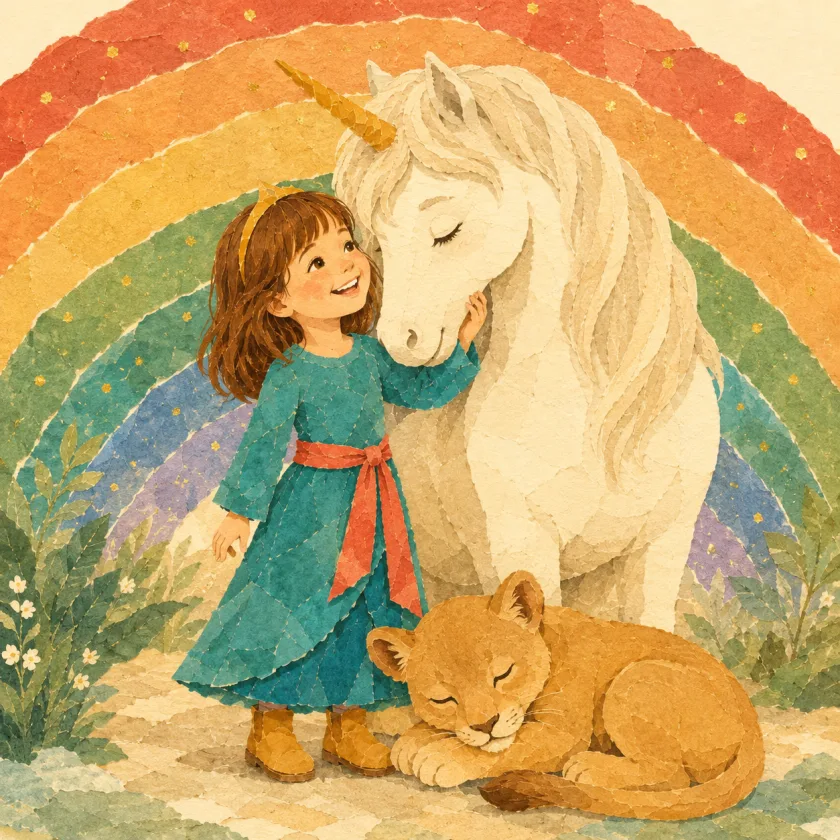
A unicorn stood in the stream, drinking. White as washed wool, a small gold horn, in no hurry about anything.
She looked at Allison a long time, and Allison held still and let herself be looked at. Then the unicorn stepped out of the water on quiet hooves and breathed one warm breath into Allison's hair.
Mac patted the unicorn's front leg twice with one enormous paw. Twice is how Mac says yes.
She looked at Allison for a long time, and Allison held still and let herself be looked at.
Allison ran for the King so fast her crown had to hold on.
"There is a unicorn at the stream," said Allison, all in one breath. "She is white and quiet and Mac patted her twice. Can I take her home, Daddy? Can I keep her forever?"
The King came at once and crouched down so their eyes were level. "A unicorn is a wild thing," he said. "You cannot take a wild thing home. Home is somewhere she has to walk to on her own four feet."
Allison's shoulders came down.
"So we will build," said the King. "The finest den any unicorn ever heard of, right here at the wild end. A place she can choose every morning, for as many mornings as she likes."
Allison drew the plan in crayon: a wide doorway, a window at exactly unicorn height, a shelf, and a water trough.
"That is the best plan I have seen all year," said the King, and he was not joking even a little.
The building took three days. Allison held the ends of boards and carried the level like an egg. From the birches the unicorn watched, one tree closer every day. Mac supervised from a square of sun.
The King built the doorway wide and hung no door in it. "A door would tell her to stay put," he said. "I want her to know she can come back."
A door says stay put. A doorway says welcome back.
"What color?" asked the King.
"All of them," said Allison.
So the paint pots stood in a rainbow row, and into every one the King stirred a spoonful of gold dust, fine as flour.
They painted stripe by stripe, the King doing the tall parts and Allison every part she could reach.
By evening the den stood rainbow from grass to roof, and when the light slid low it glowed. All it needed was the unicorn.
That night the unicorn came to the doorway and stopped. She looked in a long time, then folded down in the cool grass and slept outside instead. The next night, the same.
"She does not want it," said Allison, and her voice wobbled.
The King crouched beside her in the dew, and they both looked at the den. Rainbow to the roof, every stripe shining. Inside, bare boards and nothing on them.
"It is finished," said Allison, "but it is not full." She looked from the bare boards to the soft grass where the unicorn lay. "There is nowhere comfortable to settle."
Allison looked at the dark doorway for a long while. She would not want to sleep in there either, not all by herself. "It needs everyone," she said. "Just once. Just to see it. We could make it feel lived in."
It is finished, but it is not full.
In the morning she made invitations, one for every friend, and the King walked with her to deliver them.
They said: Come and see the den we built. Bring nothing but yourselves.
Everyone said yes. And every one of them brought something anyway.
They came the next afternoon, past the roses.
A blanket of grey goat wool came down from the mountains with Alder underneath it, boots muddy from the whole way. Maren carried the cushion off her own window seat in both arms, the way you carry a cake. Then up the path came Juniper, with a clover wreath and the loudest whisper in the kingdom. "It is so beautiful."
Bea filled the trough in one thin silver arc from much too high. From Tansy, two jars: oats and clover honey.
Keeper Quill, who looks after the kingdom's wild neighbors, asked the unicorn's name. "She has not told me yet," said Allison, and Quill left an empty space in her ledger for it.
Allison thanked each friend and carried the blanket, the cushion, the wreath, and the jars straight into the den. Bea's gift was already waiting in the trough.
Alder's wool went down first, then the cushion in the corner. The clover swung over the doorway whenever the wind moved. On the shelf the jars knocked together, and the water in the trough was still rocking.
The unicorn came to the doorway, as she had for two nights. Everyone went quiet.
Allison walked in first and sat in the middle of Alder's blanket. Mac poured herself through the doorway and lay down in the sun on the boards.
Then the unicorn ducked her gold horn under the clover, stepped in on her quiet hooves, and folded down with her chin across Allison's knees.
Through the floorboards, low and steady, something purred.
Allison held still, the way she had at the stream. She breathed when the unicorn breathed, and her crown stayed exactly where it was.
Through the floorboards, low and steady, something purred.
The friends went home while the light was still long. The King hung a lantern by the doorway, high up and away from the wool.
The unicorn did not get up. She tucked her nose into the wool and let out a long breath.
"I thought the den would keep her," said Allison.
"The paint was ours," said the King. "The staying is hers."
The castle windows went yellow, one at a time.
Allison came down the path in her soft cream pajamas, her toes cold in the wet grass, the King a step behind her. The den glowed at the wild end like a piece of morning that had agreed to wait outside all night.
Inside, the unicorn lay awake in the grey wool. Mac was curled against her, asleep in a square of moon.
The unicorn breathed one warm breath into her hair. It smelled of grass.
The King carried her up to bed. "Will she still be there?" asked Allison, halfway up the stairs.
"Forever is just a great many mornings," said the King. "Tomorrow is one of them."
In the morning Allison ran to her window and looked down at the wild end.
The clover was still over the doorway. Under it, one warm breath hung white in the cold air.
Forever is just a great many mornings.
Story Steps
For after the story. Pick your size.
Words from the story
birches slim trees with smooth white bark.
level a builder's tool that shows whether something is straight and even.
doorway the open space you walk through to get inside.
trough a long open container that animals drink from.
wreath leaves or flowers woven into a ring.
ledger a book used to keep an organized record.
Little · 3-5 Talk about it
Point to the den that is pretty on the outside and empty on the inside.
Show me how Allison holds still and lets herself be looked at.
Say one thing you would bring to make the empty den feel like home.
Big · 6-8 Talk about it
Why does the King build the doorway wide and hang no door in it?
What does Allison figure out when the unicorn looks in and sleeps outside instead?
How do the friends' gifts change the den in a way the paint could not?
One thing to do
Little Draw the inside of the den and fill it with things that would make someone want to stay.
Big Get a space ready for someone visiting this week, and write the invitation so it asks them to bring nothing.
A StoryBeam Original
The Name She Drew
From the mind of Allison Colapietro
About 8 min aloud
A StoryBeam Original
Six pictures, one drawn by Allison
For the grown-up reading alongNaming is claiming, and this book slows that moment down until a child can see all of its parts. Allison does not invent Uni's name. She uncovers it, in the word she has said at the doorway every morning without hearing herself say it. The grown-ups around her model different kinds of help: Tansy, Juniper, and Maren offer names that belong to their own worlds, Alder trusts what repetition already knows, and Keeper Quill, who could settle it in a second, refuses on principle, because writing things down is not the same as deciding them. The King answers the only question that matters with the story of Allison's own name. If your child has ever named a stuffed animal or a pet with a word that simply arrived, they have already done what this book honors. The drawing at the front is Allison's real marker drawing, photographed and framed for the page.
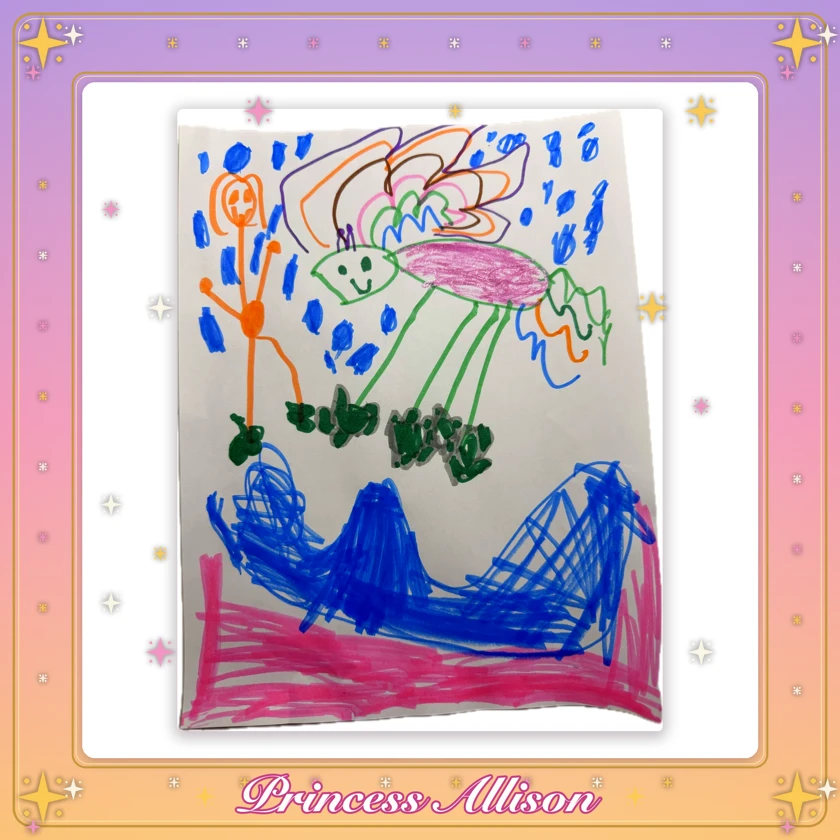
"That is her in the rain," said Allison.
Rain had come down all night and was still coming at breakfast. It stood across the courtyard so thick the far door was only a shape.
Out at the wild end the den lantern was still lit, a small orange smudge behind the water. Princess Allison watched the unicorn put her head out into the rain. The light lay along her wet shoulder in a stripe.
"Uni is up," said Allison, with her nose on the glass.
The rain was keeping her in, so she filled a big sheet of paper with more of it. Blue dots, hundreds, pressed hard until the marker squeaked. Then she drew herself in the middle of it, orange and small, arms straight up. She did not give herself an umbrella, because she did not want one.
Then she drew the unicorn beside her.
A round green face, smiling all the way across. Two little purple ears straight up. A body like a big pink egg, pressed until the pink came up shiny.
The mane took longest. It looped and looped, purple and orange and green and pink and blue, one color riding up over the last.
The mane took longest.
Long green legs into dark green bushes, and a tail scribbled off sideways on its way somewhere. At the bottom, blue mountains and a pink meadow.
Last, she turned the paper over and wrote three orange letters on the back, without stopping to think about them. UNI.
The King stood a long while behind her chair. "That is her," he said.
"That is her in the rain," said Allison.
Somebody knocked. Keeper Quill stood on the step, rain running off her hat brim, her ledger buttoned inside her coat. "Dry since the day I got it," she said, and patted the buttons. "I am on my rounds. Has the unicorn told you her name yet?"
She opened the ledger flat on the table. Between two full lines sat the empty space she was keeping for a name.
"She has not told me yet," said Allison. Uni was only what she called across the garden. A name for Quill's ledger ought to be grander than that.
"Then come and listen with me," said Quill. "We can ask along my rounds, and finish at the den."
Allison pulled her boots on and folded the drawing into her coat. Then she held out her hand. Quill's shoulders were already dark with rain, and Allison's coat was new and dry. Quill handed her the ledger.
They went out past the roses. Every rose held all the water a rose can hold, and hung low.
The lane ran down to Tansy's, where the honey went into the jars slow as slow. "Name her for something sweet," said Tansy. "Nobody ever minded being named for honey."
Allison carried that one to the end of the lane and tried it in her mouth. It was a good name. It belonged to a jar.
It was a good name. It belonged to a jar.
Juniper leaned out from under a dripping hedge and whispered one. It had eleven parts, took two breaths, and went on so long a blackbird left the hedge before the end.
Allison did not try that one anywhere. It would not have got through a doorway.
The rain came down harder after the bridge. Allison walked with her arms crossed over her coat, the drawing on one side of the buttons and the ledger on the other.
Maren sat at her window seat. Her cushion was down at the den, and she had not asked for it back. "Name her something soft," she said. "Something you could say with your face in a pillow."
Allison held Maren's suggestion all the way up the hill road. It was soft, and it was kind. But when she pictured the unicorn coming toward her, it was not the name she wanted to call out.
Where the hill road ran out into the mountain track, Alder came down through the mud. "On the mountain we let a wild thing come back three times," he said. "After the third time you already know what to call it."
"She has come back a hundred times," said Allison.
"Well then," said Alder, and went back up his track.
On the way down they sheltered under an oak. Quill took her ledger back and wrote down the wren they had seen by the bridge.
"What would you call the unicorn?" asked Allison. "I do not name them," said Quill. "I write them down."
The King was standing at the gate. He had been out there long enough for the rain to get through the shoulders of his coat.
"Daddy," said Allison, "how did I get my name?"
The King crouched down to her. "We looked at you for a whole day," he said. "Then we said the thing we had been calling you since the morning."
He had been out there a while.
She went down the path to the wild end with her hand over the drawing inside her coat, Quill behind her. The trough had run over, and the clover above the doorway dripped in one line.
Inside the den it was dry. The unicorn had the middle of the wool bed, legs folded under. Mac the young cougar had got there first, in the driest corner.
Allison dragged Maren's cushion into the second driest corner and set it down flat.
"Who is that for?" said Quill.
"The King," said Allison. "He sits on floors."
A cushion, set down flat for somebody not there yet.
Then she knelt in the wool. "Will you tell me what you are called?"
The unicorn put her nose into Allison's hair and breathed out, warm, once. That was all.
So Allison took the drawing out of her coat. It had gone warm in there. One bottom corner had found the rain, and the pink meadow had run into the blue mountains.
The letters on the back had stayed dry. She turned it over and held it up.
Quill leaned in and read the letters out loud. "U. N. I."
"Uni," said Allison. It was what she said at the doorway every morning, and at the window every night. It was what she called when she wanted her friend.
"Is it short for something?" said Quill.
"It is short for mine," said Allison.
Mac reached over and patted the paper twice.
Boots came down the path. The King ducked under the clover and found a cushion set out for him in the second driest corner. "Well," he said. He looked at the cushion, and at her. "Well, well, well." And he sat.
Quill opened the ledger on her knee, looked at the three letters on the drawing, and copied them into the space she had been keeping.
The unicorn came up out of the wool, put her nose down to the page, and breathed. Her breath dried the ink.
"Uni," said Allison, to hear how it went in the room. The King put his hand on the top of her head and left it there.
The next line was empty.
The ledger stayed open on the boards where the lantern reached it. The next line was empty.
Story Steps
For after the story. Pick your size.
Words from the story
marker a pen with a thick tip for drawing and coloring.
mane the long hair along the top of an animal's neck.
ledger a book used to keep an organized record.
rounds the regular visits someone makes to check on things.
wren a small brown bird with a short tail that points up.
cushion a soft pad used to make a seat or special place comfortable.
Little · 3-5 Talk about it
Point to the orange girl with her arms up in all that rain.
Show me how you would set a cushion down for someone who sits on floors.
Say one name you say out loud every morning.
Big · 6-8 Talk about it
Why does Quill keep an empty space in her ledger instead of picking a name herself?
Why does no name from Tansy, Juniper, or Maren fit, even though all three are kind?
How does the King's story about Allison's own name help her hear the name she has been saying all along?
One thing to do
Little Draw a toy or animal you love and say out loud the name you already call it.
Big Ask a grown-up this week how you got your name, then write the story down in your own words.
A StoryBeam Original
La olla que no se deja sola
De la imaginación de Allison Colapietro
About 13 min aloud
A StoryBeam Original
Six painted-paper pictures
En español
For the grown-up reading alongEste libro trata de una cosa muy concreta que casi todos los niños conocen: querer hacer algo importante uno mismo, y descubrir que lo importante no era la parte grande sino la parte de quedarse. Allison quiere una olla del tamaño de un barco; la Abuela la reduce a dos puñados sin reducir a la niña, y le da las dos únicas reglas de la olla. Cuando la primera se pega, la respuesta es "hay más leche", y el libro deja que la vergüenza de Allison exista un momento sin convertirla en castigo. El arreglo es suyo y está a su medida: voltea el banquito y pide al Abuelo que sea sus ojos, que es una manera de ser responsable de la propia distracción. El fuego y cada olla caliente son de la Abuela de principio a fin; la parte de Allison es el limón, la cuchara y la canela. Andreas es marinero y vuelve a casa como vuelven los marineros, en un día normal, con el silbido de siempre y un plato esperándolo en la ventana. Si en su casa hay una receta que "sabe cuándo la dejan sola", este libro ya la conoce.
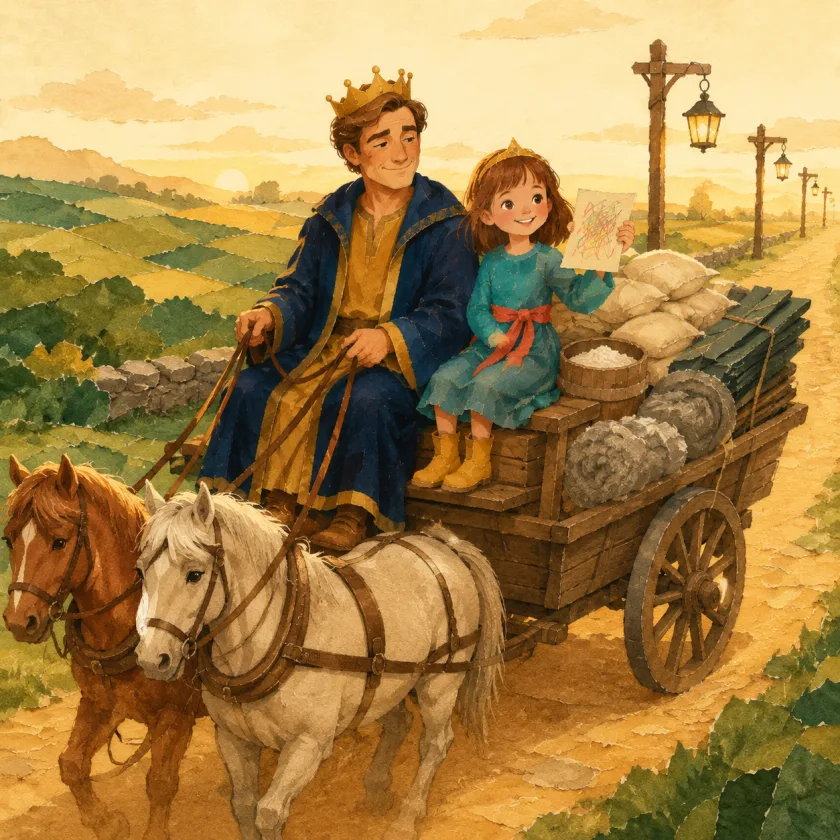
El camino al sur duró dos días y una canción que el Rey se iba inventando y que no terminaba nunca.
Al final del segundo día, el camino bajó una cuesta y se acabó en una casa blanca con la puerta azul y dos mecedoras en el corredor, que se mecían solas con el viento. Detrás de la casa había un patio, y en el patio un limonero, y detrás del limonero, el mar, tan grande que no cabía en una sola mirada.
En la puerta azul esperaba la Abuela, con el delantal puesto y los brazos abiertos desde antes de que pararan.
"¡Mi cielo!", dijo, y la princesa Allison se metió en el abrazo hasta el fondo. La Abuela olía a canela y a limón, y un poco a mar, como todo allí.
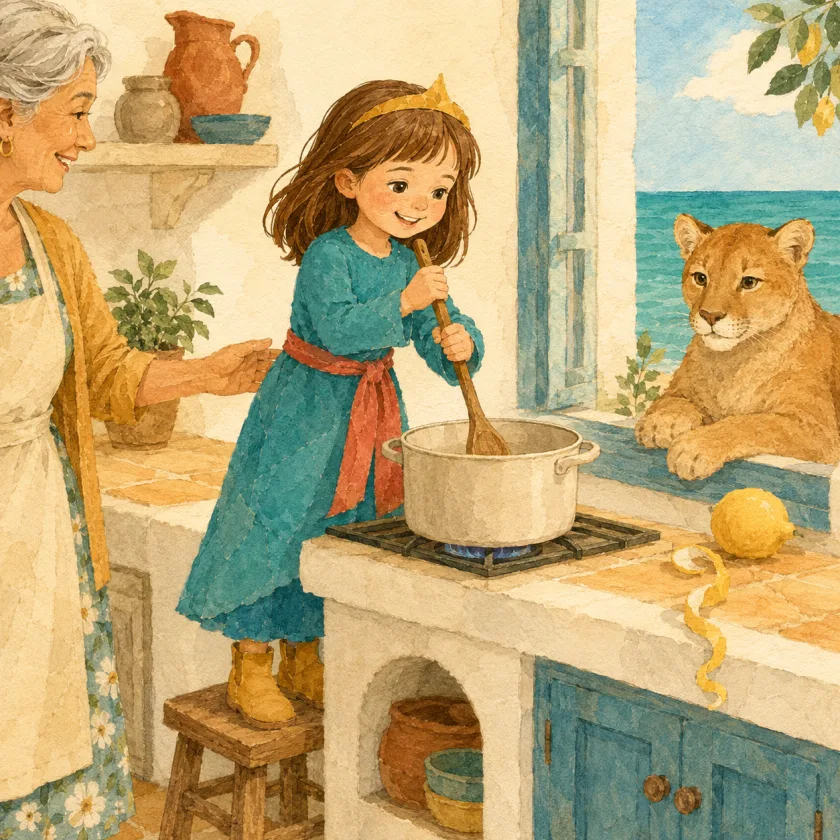
Mac ya estaba en el limonero. Nadie la había visto llegar, ni subir, ni cruzar dos días de camino. Solo estaba, en una rama alta, con la cola colgando.
Bajó de un salto y dio dos golpecitos con su pata enorme en el zapato de la Abuela. Aprobado.
En la puerta azul esperaba la Abuela, con el delantal puesto y los brazos abiertos desde antes de que pararan.
La cocina era la habitación más importante de la casa, y se notaba. Tenía la ventana más grande, que daba al mar, y la mesa más gastada, y un olor que ya estaba ahí antes de que nadie cocinara nada.
"El barco de Andreas llega mañana", dijo la Abuela, poniendo tazas de pinolillo, espeso y de color tierra, que había que menear todo el tiempo para que el fondo no se quedara con lo mejor. "O eso dice el puerto".
Andreas era el primo de Allison, el hijo de la Abuela y del Abuelo, y era marinero. Estaba en el mar desde la primavera, en un barco grande de la flota con banderas en lo alto. Sabía silbar con dos dedos, y una vez había cruzado la playa entera con Allison en los hombros sin cansarse.
"¿Y cómo sabe Andreas que ya llegó a casa?", preguntó Allison.
"Cuando Andreas era chico", dijo la Abuela, "cada vez que volvía de algún lado, encontraba arroz con leche esperándolo en la ventana. Así sabía que había llegado".
Allison miró la ventana. Miró el mar. Miró a la Abuela.
"Esta vez lo hago yo", dijo.
"Dale pues", dijo la Abuela. "Lo hacemos. El fuego es mío".
A la mañana siguiente, Allison corrió por una hoja y dibujó el plan: una olla tan grande como un barco, y dentro arroz con leche para todos los marineros de la flota.
La Abuela lo miró un buen rato, con la cabeza ladeada.
"Para el barco entero haría falta el mar", dijo. "Para Andreas, dos puñados de arroz. Empezá por Andreas".
Dos puñados de arroz, medidos con la mano de la Abuela, que era la medida de aquella cocina. Leche hasta una marca que solo ella veía. Una raja de canela y dos clavitos de olor, que era como los ponía la mamá de la Abuela, hacía mucho tiempo, en una cocina muy lejos de allí.
"Y esto es tuyo", dijo la Abuela, y señaló el limonero por la ventana. "Andá".
Allison salió al patio, eligió el limón más amarillo, el que Mac llevaba un rato mirando, y volvió con él en las dos manos. La Abuela le quitó una tira de cáscara en un solo rizo largo y la echó a la olla.
Después vino el banquito, y la cuchara de madera, que era más larga que el brazo de Allison.
"Lo dulce se hace despacio", dijo la Abuela. "Se menea así, todo el tiempo, sin prisa". Le llevó la mano una vuelta entera y la soltó. "Y el que menea no se va. Esas son las dos reglas de esta olla".
"¿Cuánto tiempo?"
"Hasta que esté".
Allison meneó. La cuchara dio la vuelta a la olla, despacio, y la leche giró detrás.
"Lo dulce se hace despacio", dijo la Abuela.
Meneó mientras el sol subía por la ventana. Meneó mientras el Rey y el Abuelo arreglaban la bisagra de la puerta azul en el patio, con mucho hablar y poco martillo.
El Abuelo tenía el bigote más ordenado de todo el sur. Llevaba varios días bajando al puerto a preguntar por el barco, y siempre volvía diciendo "mañana". Esa mañana volvió y dijo "hoy".
"Hoy", repitió desde el patio, por si alguien no lo había oído. "Antes de que se ponga el sol".
El olor cambió. Primero era leche. Luego era leche con canela. Luego era algo que solo pasa en las cocinas de las abuelas, y Allison no tenía palabra para eso.
"Ya huele a que viene alguien", dijo la Abuela desde la mesa, sin mirar, pelando plátanos.
"Abuela, ¿tu mamá también lo hacía mirando el mar?"
"Mirando el lago", dijo la Abuela. "En Nicaragua, donde yo nací, hay un lago tan grande que tiene olas y le dicen mar, y en medio una isla con dos volcanes. Ella meneaba mirando el lago. Yo meneo mirando el mar. Es la misma olla".
Allison contó las vueltas. Llegó casi a cien, se le olvidó el número y volvió a empezar. No le importó.
Por la ventana, muy lejos, brillaba el mar. Y en el brillo apareció una vela.
"¡Un barco!"
Allison dejó de menear y se asomó a la ventana, con la cuchara en la mano. La vela entraba por la boca del puerto, pequeña y blanca, detrás de los otros botes. Se puso de puntitas y buscó las banderas. Buscó y buscó. No había banderas.
"Es el de los pescadores", dijo la Abuela. "Andreas viene con banderas, mi cielo".
Allison se dio la vuelta.
El olor había cambiado otra vez. Ahora tenía un borde oscuro, como de humo.
La Abuela ya estaba en el fuego. Apartó la olla con un trapo, sin prisa, y la puso en la piedra fría. Metió una cuchara limpia, probó, y torció la boca.
"Se pegó", dijo. "Sabe a humo desde el fondo hasta arriba".
A Allison se le puso la cara caliente. "Solo fue un momento".
"El arroz sabe cuándo lo dejan solo", dijo la Abuela. "Siempre lo ha sabido. No lo hace por maldad. Es su manera de ser".
"¿Se acabó?"
"Se acabó esta olla". La Abuela abrió la alacena. "Hay más leche".
"El arroz sabe cuándo lo dejan solo", dijo la Abuela.
La segunda olla empezó igual: dos puñados, la leche hasta la marca, la canela. Allison fue por otro limón y volvió con dos, por si acaso.
Pero antes de subirse al banquito, hizo una cosa.
Lo giró y lo puso al otro lado de la olla. Desde allí podía menear de espaldas a la ventana, mirando a la pared, donde solo había un azulejo con un pez.
"Así no veo el mar", dijo.
Después se asomó al patio. "Abuelo, ¿tú puedes mirar el mar por mí?"
El Abuelo dejó el martillo, que tampoco estaba usando mucho, y llevó su silla a la ventana de la cocina. Se sentó con el periódico y el mar delante.
"Yo aviso", dijo.
Allison se subió al banquito, de espaldas a todo, y meneó.
Esta vez, cuando le daban ganas de darse la vuelta, miraba el pez del azulejo y seguía meneando. Del mar se encargaba el Abuelo.
Meneó mientras el Abuelo pasaba las hojas del periódico. Meneó mientras el Rey se apoyaba en el marco de la puerta con una taza, mirándola, sin decir nada, porque no hacía falta.
Cuando el arroz estuvo blando, la Abuela echó el azúcar, que en aquella cocina entraba siempre al final. Allison siguió meneando. La cuchara empezó a dejar un camino en la olla que se cerraba despacio detrás de ella.
"Cuando el camino tarda en cerrarse", dijo la Abuela, "está".
Allison miró el camino. Tardó. Miró a la Abuela.
"Ahora", dijo la Abuela, y apartó la olla del fuego.
La Abuela pasó el arroz al platón. Cuando se hubo enfriado un poco, a Allison le tocó la última parte, que era la mejor: la canela molida por encima, en una lluvia fina, de punta a punta.
La Abuela puso el platón en la ventana para que terminara de enfriarse, con el mar detrás. El Abuelo movió el periódico para hacerle espacio.
Cuando el Abuelo vio por fin las banderas, avisó a toda la casa. Esta vez Allison sí pudo correr a la ventana: el arroz ya estaba listo. Andreas llegó cuando el sol tocaba el agua.
Primero llegó el silbido, con dos dedos, desde la esquina de la calle. Después llegó él, vestido de blanco, con la bolsa de marinero al hombro y la gorra en la mano.
Allison salió disparada por la puerta azul, que ya no chirriaba, y Andreas la recogió del aire y la subió a sus hombros de una sola vez, como si no hubieran pasado la primavera y el verano enteros. Olía a sal y a soga.
En la puerta de la cocina se paró. Levantó la nariz.
"Arroz con leche", dijo.
"Lo hice yo", dijo Allison desde arriba. "Con la Abuela. La primera olla se quemó".
"La mejor siempre es la segunda", dijo Andreas. "En el barco también".
La Abuela lo abrazó por la cintura, porque más arriba no llegaba, con Allison encima de todo.
"La mejor siempre es la segunda", dijo Andreas.
Cenaron en el patio, bajo el limonero, con un farol colgado de la rama de Mac, alto, lejos de todo. Hubo gallo pinto, que es arroz y frijoles hechos amigos, y plátano frito, y queso, y después, en el platón de la ventana, el arroz con leche.
Andreas se comió dos platos y raspó el segundo hasta que sonó. El Rey se comió uno despacio, mirando a su hija por encima de la cuchara. El Abuelo dijo que el suyo sabía a antes, y nadie le preguntó antes de qué.
"¿Cómo es el mar por la noche?", preguntó Allison. Llevaba todo el día queriendo preguntarlo.
Andreas lo pensó con la cuchara en la boca.
"Grande", dijo. "Y oscuro. Y desde muy lejos, si el viento viene de tierra, huele a canela".
Allison no se lo creyó del todo. Pero se lo guardó.
La Abuela le había hecho la cama en el cuarto de la ventana, para que el mar fuera lo último y lo primero.
Allison se metió entre las sábanas con su pijama de color crema, y la Abuela se sentó en el borde, con las manos que olían a limón, y le apartó el pelo de la frente.
"Mañana hago otra", dijo Allison. "De espaldas al mar".
"Mañana la hacés vos, chavala", dijo la Abuela. "Yo pongo el fuego y miro".
El Rey estaba en la puerta, con el hombro en el marco.
"Papi", dijo Allison, ya casi dormida, "el arroz sabe cuándo lo dejan solo".
El Rey asintió sin decir nada, con todo el tiempo del mundo.
Abajo, en la cocina, el platón vacío seguía en la ventana. Y en toda la casa, hasta en el cuarto más lejano, olía a que alguien había llegado.
Y en toda la casa, hasta en el cuarto más lejano, olía a que alguien había llegado.
Story Steps
For after the story. Pick your size.
Words from the story
olla la vasija honda donde se cocina el arroz con leche.
cuchara el utensilio largo de madera con el que se menea la olla.
canela una especia dulce, en raja o molida, que perfuma la olla.
limonero el árbol del patio que da limones.
delantal la prenda que la Abuela se pone encima para cocinar.
marinero una persona que trabaja en un barco, como Andreas.
Little · 3-5 Talk about it
Señala la ventana donde el arroz con leche espera a Andreas.
Enséñame cómo menea Allison la olla, despacio y sin parar.
Di una cosa que huela a que alguien ha llegado a casa.
Big · 6-8 Talk about it
¿Por qué la Abuela cambia la olla del tamaño de un barco por dos puñados de arroz?
¿Qué hace Allison distinto en la segunda olla, y por qué funciona?
Cuando la primera olla se pega, la Abuela dice "hay más leche". ¿Qué le está enseñando a Allison?
One thing to do
Little Dibuja la olla de Allison y pon al lado a alguien que mire el mar por ti.
Big Cocina con un adulto algo que se haga despacio y quédate al lado hasta que esté; después cuenta cuántas vueltas diste.
A StoryBeam Original
La ficha que viaja
De la imaginación de Allison Colapietro
About 12 min aloud
A StoryBeam Original
Six painted-paper pictures
En español
For the grown-up reading alongUn juego de mesa con los mayores, un primo que se va al amanecer y una ficha que falta: este libro pone tres cosas ordinarias una al lado de la otra y deja que se toquen. El dominó enseña lo que enseña sin que nadie lo diga dos veces: que se juega con la mano que te ha tocado, que las fichas pesadas se sueltan pronto, y que decir "paso" en voz alta, cuando de verdad no hay nada que poner, es jugar bien y no perder. Allison gana la ronda contando puntos, no deseando fichas distintas, y el Abuelo celebra la derrota con la gorra al revés, que es la manera que tiene un abuelo de decir que la partida fue buena. La despedida en el muro se cuenta como lo que es en una familia de marineros: un día normal, con las dos manos en alto para que desde el barco se sepa quién eres. La tristeza del banco existe y se le da su rato. La ficha que viaja convierte la ausencia en una cuenta que la niña puede llevar ella sola: cuando haya veintiocho, ya volvió. Si en su casa alguien se va y vuelve por trabajo, este libro le da a su hijo o hija algo que contar mientras tanto.
El Abuelo salía a caminar por el malecón todas las mañanas a la misma hora, con la gorra puesta y las manos detrás de la espalda, y esa mañana la princesa Allison salió con él.
El malecón iba desde la casa hasta el puerto, con su muro largo y bajo, el mar de un lado y los botes del otro. El Abuelo saludaba a todo el mundo por su nombre y todo el mundo lo saludaba a él. A Allison le presentó a tres pescadores, un perro y una gaviota que, según él, era amiga suya.
Sobre el muro, en fila, había pelícanos, grandes y serios, que no saludaban a nadie.
"¿Y en tu tierra también hay pescadores?", preguntó Allison.
"En el Perú, donde yo nací, los pescadores salen al mar montados en un caballito de totora", dijo el Abuelo. "Un barquito hecho de juncos, con la punta levantada. Se sientan encima como quien monta a caballo, y vuelven a la playa sobre la ola".
Allison miró el mar un buen rato buscando uno.
En el puerto estaba el barco de Andreas, grande y quieto, con las banderas dormidas en lo alto.
"Se va mañana, al amanecer", dijo el Abuelo. "Lo despediremos desde el muro. Los barcos de la flota no esperan a nadie".
"¿Y hoy?"
"Hoy es de Andreas", dijo el Abuelo. "Y esta noche, dominó".
"Los barcos de la flota no esperan a nadie".
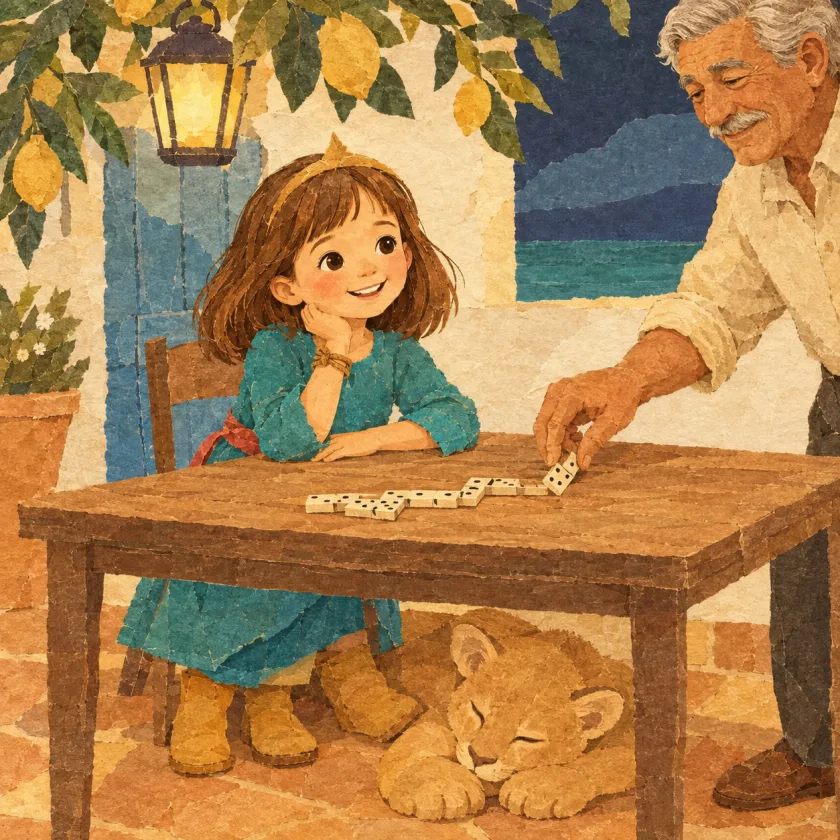
La mesa del dominó estaba debajo del limonero, y era la mesa más vieja del patio. Encima tenía una caja de madera con la tapa gastada de tanto abrirla.
"En esta mesa aprendió Andreas", dijo el Abuelo, "cuando era de tu tamaño. Y en esta mesa juega conmigo cada vez que vuelve". Abrió la caja. "Y yo no pierdo nunca".
"Esta noche juego yo", dijo Allison.
"Entonces hay que aprender antes de almorzar".
Volcó las fichas sobre la mesa. Eran blancas, con puntos negros, y al caer sonaron como la lluvia en un techo. Allison las puso boca arriba y las contó con el dedo, dos veces.
"Veintiocho", dijo.
"Hoy están todas", dijo el Abuelo, y no explicó qué quería decir con hoy.
Mac apareció sentada encima de la caja vacía, y nadie la había visto llegar. Dio dos golpecitos en la ficha del doble seis. Aprobada.
El dominó era fácil de entender y difícil de jugar bien.
Cada ficha tenía dos mitades, y cada mitad tenía puntos o estaba en blanco. Se ponían en fila sobre la mesa, tocándose, y una ficha nueva solo se podía poner en una de las dos puntas de la fila, donde los puntos fueran iguales: un tres junto a un tres, un cinco junto a un cinco. Ganaba el primero que se quedaba sin fichas, y lo decía en voz alta: 'dominó'.
"Y si no tienes ninguna que encaje", dijo el Abuelo, "dices 'paso'. Y no pasa nada, pues".
Allison aprendió a contar los puntos con el dedo. Aprendió que las fichas con las dos mitades iguales se llamaban dobles y se ponían atravesadas. Aprendió que el Abuelo, cuando iba a poner una ficha buena, se tocaba el bigote.
Jugaron tres partidas antes de almorzar. Allison perdió las tres.
En la tercera se quedó con el doble cinco y el doble cuatro en la mano, guardados para el final como dos tesoros, y el final llegó antes de que pudiera ponerlos.
"Los guardaba", dijo.
"Ya lo vi", dijo el Abuelo, contando los puntos de ella con mucho cuidado. "En el dominó se juega con lo que tienes, no con lo que quisieras tener. Las gordas primero, hijita. Que pesan".
"Las gordas primero, hijita. Que pesan".
Allison fue por una hoja y dibujó el plan para la noche: siete fichas en fila, las gordas primero, las pequeñas al final, y una flecha de su mano a la mesa.
Andreas volvió del barco a mediodía, todavía de blanco, y se sentó a la mesa del limonero como si la silla llevara desde la primavera esperándolo. Miró el plan.
"Buen plan", dijo. "El Abuelo me lo enseñó a los nueve años y todavía me gana".
Le enseñó a Allison una cosa del barco: un nudo. Lo hizo en un pedazo de soga de las de verdad, gruesa y áspera, y se lo ató en la muñeca.
"Este no se suelta", dijo. "Por mucho que tires".
Allison tiró. No se soltó.
De noche, el patio se encendió con el farol y las fichas brillaron sobre la mesa.
Jugaban el Abuelo, Andreas y Allison. En medio de la mesa había una jarra de chicha morada, que el Abuelo hacía con maíz morado de verdad, y Allison bebió un vaso con mucha atención para ver si le dejaba la lengua morada. Se la dejó.
La Abuela miraba desde la puerta de la cocina, con un plato de algo. El Rey miraba desde su silla, con una taza, y no decía ni una palabra, porque el dominó no se comenta.
Allison empezó con el doble seis, atravesado, en el centro de la mesa, porque el que tiene el doble seis sale, y esa noche lo tenía ella. Después esperó su turno y miró las puntas de la fila. Cuando apareció un cinco pudo poner el doble cinco, y más adelante encontró sitio para el seis cuatro. Las gordas iban saliendo de su mano y ella se iba quedando ligera.
El Abuelo se tocó el bigote dos veces.
Y entonces le tocó a ella, miró sus fichas, y no encajaba ninguna.
Ni una. Miró otra vez, por si acaso.
"Tengo que decir paso", dijo, y la voz se le fue un poco para abajo. Porque paso sonaba a perder, y el plan iba tan bien.
Y entonces le tocó a ella, miró sus fichas, y no encajaba ninguna.
"Ya pues, dilo", dijo el Abuelo.
"Paso".
"Muy bien dicho, hijita". Puso su ficha. "Pasar no es perder. Pasar es esperar tu ficha. Todos los que estamos en esta mesa hemos pasado más veces que tú".
Andreas puso la suya. La partida siguió y, unas vueltas después, a él tampoco le encajaba ninguna.
"Paso", dijo Andreas, con las dos manos abiertas, y se rio.
Allison lo miró. Miró la fila de fichas sobre la mesa. Y empezó a contar con el dedo.
Contó las fichas con un seis que había en la mesa. Cuatro. Contó las de su mano. Dos: el seis dos y el seis uno, las pequeñas, las que nunca le habían parecido un tesoro.
Miró las dos puntas de la fila: un seis y un tres. Andreas acababa de pasar sin poder jugar en ninguna.
"Andreas no tiene seises", dijo, muy bajito, para ella sola.
Cuando le tocó, puso el seis dos junto al seis. En esa punta quedó un dos. El Abuelo puso el tres seis en la otra punta y se tocó el bigote. Ahora había un seis otra vez. Andreas pasó.
Allison puso el seis uno junto al seis que acababa de dejar el Abuelo. Se quedó con las manos vacías encima de la mesa.
"Me quedé sin fichas", dijo. Y después, como le habían enseñado: "Dominó".
El Abuelo miró la mesa un buen rato. Después se quitó la gorra y se la puso al revés.
"Eso solo lo hace cuando alguien le gana", dijo Andreas. "La última vez fui yo. A los nueve años".
El Abuelo la despertó cuando todavía era de noche. "Al muro", dijo. "A la hora".
Fueron todos: el Abuelo, Allison, el Rey, y la Abuela detrás con un pañuelo. Hacía frío, y el Abuelo le echó a Allison por encima un poncho de lana de alpaca, suave y a rayas. Lo había traído de las montañas de su tierra hacía muchos años. El cielo se puso gris, y luego rosa. En el puerto, el barco de Andreas ya tenía las banderas despiertas.
Se movió despacio, más despacio de lo que Allison creía que se movía un barco. Salió por la boca del puerto y empezó a hacerse pequeño.
"Papi, no lo veo", dijo Allison. El Rey la subió al muro sin decir nada y la sujetó por la cintura.
Desde la cubierta llegó un silbido, con dos dedos, que cruzó toda el agua.
El Abuelo levantó las dos manos y las movió. "Con las dos", le dijo a Allison. "Para que desde allí se sepa que eres tú".
Allison levantó una mano, después la otra, con la soga en la muñeca, y las movió hasta que el barco fue solo un punto, y luego hasta que el punto también se fue.
"Papi, no lo veo", dijo Allison. El Rey la subió al muro sin decir nada y la sujetó por la cintura.
Se sentaron en el banco del muro, que era el banco del Abuelo, y miraron el lugar donde había estado el barco. Allison no dijo nada un rato. El Abuelo tampoco. Eso estaba permitido.
"¿Cuándo vuelve?", preguntó Allison al fin.
"Todavía no sabemos el día", dijo el Abuelo. "Pero voy a preguntar en el puerto todas las mañanas. Cuando avisen, estaremos en el muro a la hora".
"¿Y el mar de tu tierra es como este?"
"Más frío", dijo el Abuelo. "Y verde. Y con las montañas justo detrás, tan altas que el sol tardaba en llegar al agua. Los pelícanos son los mismos". Se quedó mirando el mar de ahora. "Este también me gusta. A este es al que vuelve mi hijo".
Volvieron a casa por el muro, despacio, saludando a todo el mundo por su nombre. El perro también estaba. La gaviota, según el Abuelo, era la misma.
La casa estaba callada de esa manera que tienen las casas cuando alguien acaba de irse.
Allison fue directo a la mesa del limonero y abrió la caja. Volcó las fichas, las puso boca arriba y las contó con el dedo, despacio, como le habían enseñado.
"Esa está de viaje", dijo el Abuelo, que había llegado detrás. Y como esta vez ella se quedó mirándolo, esperando, siguió. "Cada vez que Andreas se va, se lleva una ficha en el bolsillo. Y cada vez que vuelve, la pone en esta mesa antes de deshacer la bolsa. Desde su primer viaje".
"¿Cuál se llevó?"
"El doble seis". Al Abuelo se le rio el bigote. "Dijo que esta vez le hacía falta una que pesara".
Allison miró el hueco de la caja. Era del tamaño exacto de una ficha.
El Rey se sentó en la silla de Andreas, con su taza. La Abuela salió con un plato. Mac apareció en la rama del farol sin que nadie la viera subir.
"Cuando cuente veintiocho", dijo Allison, "es que ya volvió".
El Rey levantó la taza. El Abuelo puso una ficha en la mesa. Le tocaba a ella.
"Cuando cuente veintiocho", dijo Allison, "es que ya volvió".
Story Steps
For after the story. Pick your size.
Words from the story
ficha cada pieza blanca del dominó, con puntos en las dos mitades.
malecón el muro largo y bajo junto al mar por donde camina el Abuelo.
pelícanos pájaros grandes de mar con el pico muy largo, que se posan en fila.
gorra el sombrero plano que el Abuelo se pone para caminar.
nudo una lazada apretada en una soga, como la que Andreas ata en la muñeca.
bigote el pelo sobre el labio del Abuelo, que se toca cuando va a poner una ficha buena.
Little · 3-5 Talk about it
Señala la ficha que Mac aprueba con dos golpecitos.
Enséñame cómo se saluda con las dos manos para que se sepa que eres tú.
Di en voz alta "paso", como Allison, cuando no tengas nada que poner.
Big · 6-8 Talk about it
¿Por qué pierde Allison las tres primeras partidas, aunque guarde sus mejores fichas?
¿Cómo descubre Allison que Andreas no tiene seises?
El Abuelo dice que pasar no es perder. ¿En qué se parece pasar a esperar?
One thing to do
Little Cuenta los puntos de cinco fichas de dominó con el dedo, de una en una.
Big Juega una partida de dominó con un adulto y di "paso" en voz alta cada vez que te toque esperar tu ficha.
A StoryBeam Original
The King Who Went Out Early
From the mind of Allison Colapietro
About 9 min aloud
A StoryBeam Original
Six painted-paper pictures
For the grown-up reading alongThis book takes the thing children conclude but rarely say, the one that lands hardest on a parent who is working long days, and lets a six-year-old arrive at it the way six-year-olds do: he goes out every morning because he wants to, so he must want that more than an afternoon with her. She never accuses him. She says she can sail by herself, in her brave voice, and the King hears what is underneath it, because a child cannot be argued out of what she has worked out from a window, and the answer begins with a day in the cart and ends with time to sail together. Allison's counting page is honored as real work the moment she hands it over, and the reframe from counting the going to counting the coming back is offered once and then trusted, with the drawing left entirely to her. The first stop deliberately gives her nothing, and the King offers no apology for it, so the book can say the unglamorous thing out loud: much of providing is invisible on the day it happens. Nothing here is framed as sacrifice or as a debt the child owes, no one is made to feel guilty for wanting an afternoon, and the promised sail is not traded away, only moved to the coming-back end of the day, where she sets the boat herself. Safety sits inside ordinary competence: the rules are said once before the cart moves, the child rides where the King can see her, the loading stays entirely in adult hands, and no scene depends on her being frightened. The closing gate is the point. She cannot shorten his day and the book never pretends she can, but she can change what the leaving means, and she is the one who does it.
For eleven mornings Princess Allison had woken before the sun, and for eleven mornings she had still been too late.
The stone sat on her windowsill, warm, with a hollow worn the size of a thumb. The King put it there every morning on his way out. It was how he said good morning when she was still asleep, and warm meant he had only just gone.
Down in the yard the gate was already shut, and past it the road ran off into the gray, too far to shout at.
Warm meant he had only just gone.
Allison fit her thumb in the hollow. It did not help as much as it usually did.
He came home after the stars again.
Allison had waited up, with her little boat under one arm and the whole afternoon planned in her head.
"Tomorrow," she said, "will you sail with me?"
"Tomorrow," said the King, "after work."
It had been after work for eleven days.
Allison looked at her boat with its mended coral sail. Then at her father's boots, which were the muddiest things in the palace.
"It is all right, Daddy," she said. "I can sail it by myself." She said it in her brave voice, and she took the boat up the stairs before he could answer.
He set his cup down. He did not say of course you can, and he did not laugh. He had heard the part she said, and the part underneath it.
On the stairs she had worked something out, the way you work out a sum, and it came to this. He went out every morning because he wanted to. If he had wanted to sail, he would have sailed by now.
That night Allison sat on her floor with her backup orange crayon and made the saddest plan she had ever drawn.
First the gate, shut, just as she saw it from her window. Then one mark for every morning she had missed him, one under the other.
Eleven marks.
There was room on that paper for a great many more, and that was the part she did not like looking at.
She did not cry about it. She rolled it up instead, because a plan you can hold is a plan you can hand to somebody.
One mark for every morning she had missed him.
In the morning she finally beat the King to the door.
She was on the stairs with the roll of paper before the stone ever reached the sill, and she put it into the King's hands while his coat was still half on.
He read it standing in the doorway, slowly, and then again, out to the last mark, which was exactly how he read the kingdom's own papers.
Then he crouched to her height, where he kept the important things.
"You counted the going," said the King. "Come with me today. We will count what comes home in the cart."
A driver held the horses while they climbed into the cart. The King said the rules once before the cart moved: stay where he could see her, and the horses were not for touching.
The first stop was a roof.
A woman with a leaking roof stood in her yard with the King, and the two of them looked up at it and counted slates out loud, then counted them again to be sure. Nothing was carried. Nothing was mended. Nothing went into the cart.
The King had handed back her roll of paper, and a fresh sheet with it, for the coming back. The fresh sheet stayed as empty as a clean plate.
"There is nothing to count," she said. She had meant it as a complaint. It came out smaller than that.
"There is nothing to count," she said.
"Slates get counted before they get carried," said the King. "That was the counting."
He said it with no apology in it, and Allison noticed. The roof was still leaking, but now he knew what to bring. She left a small space on her page for that.
The second stop was a mill.
Flour came out of the mill in sacks, and the King put them up on his own shoulder, one after another, and swung them onto the cart.
Allison leaned in and put her nose close to one.
She knew that smell. It was Tuesday morning at home. It was the bread on her own table, before it was bread, before it was anything at all.
Then she picked up her crayon and made one mark.
After that she could not draw fast enough.
Salt came aboard in a barrel. Wool in a bale, gray and oily and warm, for the winter blankets. Then nails, lamp oil for the lantern road, and a bundle of long slates for a roof the King had counted on an earlier day.
The King carried every one of them himself. Between stops he ate standing up, out of one hand. Then another sack was ready, and he brushed the crumbs from his coat and went to lift it.
He asked after every family by name, and he had every name by heart. They asked after Allison by hers, which is how she found out he had been telling them about her all along.
Soon she was making marks for things that do not fit in a cart: a name remembered, a loose sack tied for someone, a stop to hear how a roof had held in the rain.
They came home in the dark, the King at the reins now, with the lanterns coming up gold along the road, one and then the next and then the next.
Allison lay back against the wool bale with her page flat on her chest. It was too dark to see it anymore. She knew what was on it.
"I thought you wanted to go," she said. "More than the boat."
"I want to sail with you," said the King. "I go out empty and I come home full. From your window, that only ever looks like going." He glanced at her page. "You have been waiting for me. I know."
Allison thought about that the rest of the way, and it was a long way.
"I go out empty and I come home full."
At home she laid both papers side by side on the floor under the lantern.
The first had eleven marks on it and a great deal of empty room left over.
The second had marks all the way down and around the edge, and she had turned it over and kept going, and run out again.
Allison sat back on her heels and looked at them both.
"They are the same days," she said. "I could only see the going." She touched the flour mark, then the eleven marks on the other page. Then she looked over at the little boat.
Before bed the King brought a basin of water to the kitchen floor. They sailed the little boat from his hand to hers, and hers to his. Its coral sail wobbled in the lantern's reflection. Then Allison set it on the windowsill beside the stone, sail out, where the coming back would find it.
The next morning Princess Allison was up before the King again, and did not stop at the window.
Past the boat on the sill, down the stairs, out across the cold yard in her boots.
She got to the gate first. When the King came out with his cup she was already there, both hands on the heavy latch. She lifted it and pushed, and the road did not look the way it used to.
"Now it is not you leaving," said Allison. "It is me sending you out, and I will be here to let you back in."
The King did not say one word. He crouched to her height, pressed the warm stone into her palm, and went out to work.
She held the stone until the road was empty. Then she went in to breakfast. The bread was on the table, and the stone was still warm.
"It is me sending you out, and I will be here to let you back in."
Story Steps
For after the story. Pick your size.
Words from the story
latch the small bar that holds a gate or a door shut.
mill a building where grain is crushed into flour.
slates flat pieces of stone laid in rows to cover a roof.
bale a large bundle of something like wool, tied up tight.
barrel a round wooden container with flat ends.
cart an open wagon pulled by animals, used for carrying loads.
Little · 3-5 Talk about it
Point to the stone Allison is holding at her window before the sun is up.
Show me how you would open a heavy gate with both hands.
Say one thing on your table that somebody had to carry home.
Big · 6-8 Talk about it
Why does Allison's first page have room for so many more marks than she wants?
What changes for Allison when she smells the flour at the mill?
The first stop gives her nothing to count, and the King never says sorry for it. Why not?
One thing to do
Little Draw one thing from your kitchen, then draw the place you think it came from first.
Big Pick one grown-up in your house and write down three things they do that you never see happen.
A StoryBeam Original
The First Day of Princess School
From the mind of Allison Colapietro
About 7 min aloud
A StoryBeam Original
Six painted-paper pictures
For the grown-up reading alongAllison's first-day fear is named, allowed, and never talked away: the King validates the doorway weather instead of promising the day will be easy, says a clear goodbye, and stays until Queen Marigold visibly receives Allison at the open gate. The friendship strategy is concrete and copyable: sit near somebody, share a material, and invite them to draw beside you. Allison uses the same co-regulation she has received in earlier books, showing that the skill is learnable and theirs to use. Adults stay present and reachable in every scene, the teasing-free classroom is treated as normal rather than remarkable, and missing home is legitimate weather, never babyishness.
The night before school started, Princess Allison sat with a fresh sheet of paper and her backup orange crayon. When a place felt big, she drew it first. Then she could trace the road with one finger and know where she was going.
You cannot map a place you have never been.
She drew the road. She drew the gate at the end of it, the one she had only ever seen closed. Past it the paper went empty.
Then she circled the empty part twice. She packed the map and tied a coral ribbon to her satchel strap so she could find her bag among all the others. She went to bed with weather in her stomach. Small weather, but hers, and busy.
You cannot map a place you have never been.
In the morning the weather had grown wings. Butterflies, people call them, which is polite. These felt more like a small argument between birds.
Her father, the King, walked her down the lantern road, cup in hand, matching her pace, and listened the way he listened to skies.
"There is weather today," he said.
"In my stomach," said Allison. "It has wings."
"Doorway weather," said the King. "It comes to everybody standing in front of a new place."
The gate stood open. Beyond it, a courtyard, a fountain running in the middle, and more children than Allison had ever seen, loud in a language of friends she did not speak yet. Her feet stopped.
The King crouched to her height and put his hand on her satchel strap. "There will be somebody in there with weather of their own," he said. "Nobody crosses a storm alone. That is the family rule, and you are carrying it through that gate."
A tall teacher with grey-streaked hair crossed the courtyard to the gate. "Good morning, Queen Marigold," said the King. "This is Allison. She has weather."
"There is room for that here," said Queen Marigold. "Come beside me. I will show you where we begin."
"Goodbye for now, little one," said the King. "I will be right here when the gate opens again."
Doorway weather comes to everybody standing in front of a new place.
Allison waved once, then walked through the open gate beside Queen Marigold, weather and all. The King waited until she was inside before he turned for home.
Inside the classroom there were ten children, and every one of them was holding on to something.
By the window sat a girl with one long dark braid, forehead against the glass, hands still in her lap. Allison knew that stillness. She had sat in it herself once, on the bottom stair at home.
The desk beside the girl was empty. Allison did not need a map for this.
She sat down at that desk, close enough to reach, and did not say a word. She drew the lantern road, and the little boat with the patched coral sail.
The girl's eyes came off the window and landed on the sail. "I have a boat," she whispered. "In the harbor at home. I miss it so much I cannot breathe right."
"Mine tore in a storm once," said Allison. "We patched the sail. Would you draw yours beside mine?" She slid the paper over and held out the crayon.
Would you draw yours beside mine?
The girl took the crayon and drew her harbor boat. "I am Maren," she said. Allison added another small sail, and Maren gave it a flag. By the third boat, the weather at that window had thinned.
A girl with a laugh like spilled marbles put both hands flat on Allison's desk. "I am Juniper. You are the boat princesses. I can draw dogs that look like bread. We should be friends, is what I think."
Then a bell rang, and Queen Marigold's voice came through the room. "This morning, the map room."
Allison sat up so fast her chair hopped. All the way down the stone hallway their shoes were loud, and hers were the loudest.
The map room was the best room Allison had ever stood in, and she had stood in a throne room. Maps on every wall, floor to ceiling. And a round teacher with ink on both hands.
"I am Professor Fig. Draw me the way from your bed to your breakfast. If a line comes out wrong, do not rub it out. Look at it again."
Juniper drew her bread dog and labeled it breakfast, and Professor Fig laughed until the whole room relaxed by one full size.
At midday Allison ate bread and jam up on the lip of the courtyard fountain, with Maren and Juniper on the warm paving at her feet. The water behind them kept saying the same thing over and over.
Allison got out her paper. The wings in her stomach had settled, and her hands wanted a job. She mapped the school.
The gate. The map room, which she went back and circled twice. The fountain, with three small figures on its lip. She wrote a name under each one.
She checked the coral ribbon on her satchel strap. Still tied.
Places are only blank until the people in them have names.
Back inside, the light in the windows went long. A boy sat with both arms around his satchel, and this time it was Maren who sat down beside him.
Then the warm bell, and the door, and Queen Marigold keeping it. Beyond the gate, where the morning had left him, stood the King. Two cups.
"Well," he said. "Report."
They walked home down the lantern road at dusk, and Allison talked the whole way. Warm milk with honey in the small cup, the map held flat against her chest like a flag.
"The doorway weather came in with me," she said. "I sat down beside a girl named Maren. Her storm got smaller and so did mine. Nobody ever told me that part, Daddy."
The King walked to the next lantern before he answered. "Nobody told me either," he said. "Two cups again tomorrow, then." He put his hand on the top of her head and left it there, and they walked on like that.
Her storm got smaller and so did mine.
That night the map went up on her wall. The empty place she had circled had three names in it now, with room left at the edge.
Story Steps
For after the story. Pick your size.
Words from the story
crayon a colored wax stick used for drawing.
butterflies fluttery insects, or the jumpy feeling in your stomach.
courtyard an open space surrounded by buildings.
braid hair woven together in crossing sections.
fountain a place where water is pushed up and falls into a basin.
satchel a bag carried with a strap.
Little · 3-5 Talk about it
Point to the empty part of Allison's map before school.
Show me how Allison sits close enough to keep Maren company.
Say one thing you might draw for a new friend.
Big · 6-8 Talk about it
Why does the King call Allison's nervous feeling doorway weather?
How does helping Maren change Allison's own storm?
What fills the blank place on Allison's map by the end of the day?
One thing to do
Little Draw yourself beside someone in a new place.
Big Make a map of a familiar place and leave room for a person or discovery you have not met yet.
A StoryBeam Original
The Storm That Stayed Inside
From the mind of Allison Colapietro
About 6 min aloud
A StoryBeam Original
Six painted-paper pictures
For the grown-up reading alongAllison's bad day is met with presence, not correction: nobody tells her the crayon is small or hurries her out of the feeling, and the storm passes through being kept company, a small cup of milk with honey, cooled until the steam is gone, and hands given something to do. The King models co-regulation exactly as a parent would want it copied: name the weather, stay close, keep it boring, let it end. The growl is never punished and never rewarded; it is simply weathered, which is how children learn their storms are survivable.
The day went wrong before breakfast. The hall was still dark at the far end, and the kitchen noises had not come up the stairs yet.
Her orange crayon snapped. Not just any crayon. The orange one, the planning one, worn short and serious from every map that mattered. The two halves did not fit back together, and she tried.
Her braid came out crooked. Then crooked again. Her boot took the wrong foot. And her paper tore right through the middle of a drawing she had been keeping.
Princess Allison sat on the bottom stair and folded her arms. Outside the window, the sky was rinsed blue, corner to corner, without one cloud. The light came through and lay on the step beside her, and she did not want it.
The storm was not outside today.
A storm with no clouds in it.
She tried to outrun it. She stomped down the long hall, past one tall window and then the next, and the stomping followed her the whole way. She growled at a chair that had done nothing.
By the middle of the morning the storm had settled in her chest, planning to stay the afternoon. She opened her mouth to ask for something and found she did not know what.
The King, her father, heard the stomping from the next room and came into the long hall. He listened to skies like music. He listened to daughters the same way.
He nodded once, the way you nod at real weather.
"There is weather today," he said.
"The sky is empty," Allison said, in a voice like a slammed drawer.
"Not that sky," said the King.
And he went and got his boots, and two cups, and came back down the long hall to her.
There is weather today.
"A sky storm is for waiting out," he said, and they sat down together on the bottom stair, close enough to reach. "This kind is the same. I have nowhere to be. I have coffee. Storms hate that."
He let the small cup of milk with honey cool until the steam had all gone. Then he handed it to her and looked out the window at nothing, like a man prepared to watch nothing for hours.
They sat. That was the whole plan, and the King committed to it like royal work. Somewhere off the hall a door opened and shut, and it had nothing to do with them.
After a while, Allison listed the wrongs. She started with the crayon and went in order.
The King took each one seriously. A snapped planning crayon, he agreed, was a genuine loss to the kingdom. The drawing was worse. "You were keeping it," he said.
The list got all the way said. Allison let her shoulders down and drank some of the milk. It was cool the way she liked it.
The whole plan was sitting.
"Do you get them?" Allison asked, into her cup. "Inside storms?"
"I had one last Tuesday," said the King.
"You did not stomp."
"I stomp on the inside," he said. "Loudly. Ask my socks."
That surprised a laugh out of her. Some of the milk went over the rim, and her heels knocked the stair twice.
Her hands felt like doing something at last. So they mended.
They smoothed the torn drawing flat on the stair. She held the two edges together while he glued a strip of coral paper across the tear. Her little boat had a coral patch on its sail. Now her drawing had one too.
"Not a scar," said Allison, looking at the bright new patch.
"A story," said the King.
And somewhere in the mending, the storm thinned. She pressed her thumb along the coral strip, once and then again. A little grumble was still there, but there was room around it now.
Allison looked up. The afternoon had gotten bright without asking her permission. She leaned against the King's arm, the mended drawing on her knees, and noticed she was hungry. The last little grumble had gone.
"It stopped," she said.
"They do," said the King. "Every single one, so far."
Storms end. Every single one, so far.
They walked the courtyard in the leftover afternoon, his boots and hers, to check the kingdom. The stones were warm all the way through. The long road went out past the wall with nothing on it but light.
The chair she had growled at was formally pardoned, with a hand on its back. The boot went on the right foot on the first try.
"Tomorrow I will draw a new map," she said. "With the other orange crayon. The backup one."
"The backup one," said the King, the way he confirmed supplies for the kingdom. "I will sharpen it tonight."
That night the King came to say goodnight, and stopped at the window a moment, listening to the clear dark out of habit.
"Fair skies," he reported. "Inside and out." He stayed at the window a while longer. "There is no storm I would not cross to sit beside you."
"Even the stomping ones," said Allison.
"The stomping ones," said the King, "are my specialty."
Outside, the lanterns held their gold rings steady down the long road, and the mended drawing hung over her bed, patch first.
Fair skies, inside and out.
Story Steps
For after the story. Pick your size.
Words from the story
crayon a colored wax stick used for drawing.
braid hair woven together in crossing sections.
weather what the sky and air are like outside.
genuine real and truly meant.
mended fixed after being torn or broken.
pardoned forgiven and no longer blamed.
Little · 3-5 Talk about it
Point to the things that make Allison's inside storm grow.
Show me how Allison and the King sit beside each other.
Say one feeling that can move through you like weather.
Big · 6-8 Talk about it
Why does the King take every small wrong seriously?
How does saying the whole list change Allison's inside storm?
What does the visible patch help Allison remember?
One thing to do
Little Draw your feeling as weather, then add one safe person beside it.
Big Name three small wrongs from a hard day and one person who can listen without shrinking them.
A StoryBeam Original
The King's Day Off
From the mind of Allison Colapietro
About 7 min aloud
A StoryBeam Original
Six painted-paper pictures
For the grown-up reading alongAllison's care stays exactly child-sized: bread and jam with no flame, a place prepared for resting, and room-temperature water she can carry while the hot drink stays with a grown-up. The King accepts help graciously and out loud, modeling the half of strength grown-ups show least. At the stream he remains awake, present, and reachable; the boat string rests loose in Allison's open hand, and they share the noticing. Rest is honorable work here, and the kitchen keeps its own watch too, so Allison's companionship stays a gift, never a job she carries alone.
Boots on the stair before the birds. Then the front door, easing shut behind him. Princess Allison knew her father's mornings by their sounds, and the order they came in.
Before breakfast he had walked the walls, listened to the weather, moved a bench for two gardeners, and cleared a whole table for a beekeeper. The kingdom leaned on him.
That morning, Allison found his cup on the windowsill.
Full to the top. Colder than the sill it stood on.
She put her hand around it the way you check a forehead. The King never forgot his coffee. He had set this one down somewhere between everyone else's mornings and never come back for it.
She checked the cold cup the way you check a forehead.
She followed him for an hour with her notebook, through the kitchen door, up the stairs to the wall, and down again past the beekeeper's table. A dot for every job he did for somebody else. A circle for every time somebody said thank you and he said it was nothing.
The page filled. Dots like rain. Not one mark for anything anybody had done for him.
So she found a fresh sheet of paper and made a plan for the one royal job nobody ever scheduled.
With her backup orange crayon she drew the good chair by the south window, where the sun lands all afternoon. The willow came next, and the stream bank under it, because resting outdoors counts double. Then bread and jam, which she could make with her own hands, no flame, no ladder.
And in the middle, where the important thing goes, she drew a cup with steam coming off it in three proud curls. The coffee would be hot, and a grown-up would carry it.
A plan for a person.
She rolled the paper tight and went to find him, carrying it in her fist the whole way.
"Tomorrow," she announced, "you have an appointment. All day. It is me."
The King opened his mouth to explain about the fence and the beekeeper.
Allison held up the plan like a small scepter. "You cleared a whole throne room for my plan once," she said. "Before I even finished asking. I am asking for one chair."
The King closed his mouth. He unrolled the plan and read it a long time. "The fence can wait a day," he said. "And the beekeeper has a fine clear table." Then he sat down on the step to study the chair she had drawn.
"One chair," he agreed. "For somebody else's idea."
"For mine," said Allison.
Morning came. Allison was at the south window before he was down the stairs, with the blanket over her arm and the plan flat on the sill, a stone on each corner.
He spotted a crooked cushion on the next chair and started to get up. She pointed at his seat. He sat. A bird landed on the sill and the King offered to find it a crumb, and Allison said the bird had its own plans. "Sit."
A palace grown-up carried the hot coffee out on a tray, with three curls of steam coming off it, exactly as she had drawn them. Allison kept well clear until the King had drunk it. Then she brought her own part, slowly, in both hands: a plain cup of cool water, with no steam at all.
Allison spread the blanket over his knees and tugged it straight. Then she stood beside the good chair with her arms crossed, guarding the appointment.
"Well," said the King, from inside the blanket. "Well, well, well."
The cool water was her part, and she carried it with both hands.
At midmorning she carried the plate over on her own and put the napkins down square, and the King left the window for the table. Bread she could reach, jam she could spread. He ate as solemnly as a king at a royal banquet, until the jam reached his thumb.
"The flame parts stay grown-up," said Allison. "Soup needs a stove, and a stove needs you. This needed only me."
"This," said the King, with jam on his thumb, "is better than soup."
In the afternoon they went out the side door, Allison with her little boat and the King with the blanket. She picked the long way to the stream, out past the gate and through the tall grass. At the bank the King helped launch the boat with its mended coral sail, then stretched out on the grass. The boat's long string lay loose across Allison's open palm, ready to slip free if the boat tugged.
The patch caught the sun and kept going.
The King rested awake under the willow, eyes open and close enough to answer. Allison sat beside him with her heels in the cool grass and the string still across her hand, and they watched the stream and the sky and the road together.
A duck went by with somewhere to be.
She did not shorten the appointment by one minute. The stream talked to itself, and nobody came up the road.
Resting awake, they noticed the quiet together.
At dusk they gathered the boat and the blanket and walked home as the lanterns came on. The King walked slower than usual.
"I dug none of these lantern holes," he said, "and it is the best-lit road I know."
"The diggers dig where the princess marks," said Allison.
"And a day like this one," said the King, "is not a thing I am allowed to skip."
At the door, before goodnight, the King crouched down to her height.
He held out his hand for the notebook. Allison dug it out of her pocket, and the orange crayon after it. The King found the page of dots and then the bare part at the bottom, the part for things somebody had done for him. He pressed one orange mark there. "One," he said, and gave it back.
"Same appointment next month," said Allison. "It is already drawn."
"I will be there," said the King. "You bring the plan."
That night the cup on the windowsill stood empty, and rinsed.
The cup stood empty, and next month was already drawn.
Story Steps
For after the story. Pick your size.
Words from the story
beekeeper a person who cares for bees and their hives.
notebook a small book of blank pages for writing or drawing.
scepter a decorated staff carried by a ruler.
appointment a planned time to meet or do something.
napkins pieces of cloth or paper used while eating.
willow a tree with long branches that bend down.
Little · 3-5 Talk about it
Point to the cold cup that tells Allison the King needs care.
Show me how Allison carries the cool water with both hands.
Say one kind thing your hands are big enough to do.
Big · 6-8 Talk about it
What does Allison notice that everyone else has missed?
Why is letting himself be helped hard work for the King?
How does Allison keep the plan safe and sized for her own hands?
One thing to do
Little Set out one safe snack or napkin for someone with a grown-up nearby.
Big Make a care plan with one thing the person needs and one job that stays grown-up.
A StoryBeam Original
The Longest Royal Wait
From the mind of Allison Colapietro
About 6 min aloud
A StoryBeam Original
Six painted-paper pictures
For the grown-up reading alongThe nest is observed and never handled by Allison: she keeps a respectful distance in every scene. After the birds leave, they wait through three quiet evenings; a trained wildlife keeper confirms the nest is inactive and that removal is permitted, then moves it with gloved hands while Allison stays back. The King owns the cold-lantern inspection, cleaning, fire, and lighting throughout. Patience is framed honestly, as hard and itchy and unshortenable, and the tools are real ones: shared ritual, a way to make time visible, and company. The drawing pile gives children a concrete, copyable practice for a long wait of their own.
Every evening the King lit the lantern road, harbor to gate. Allison walked beside him. She had picked the spot for every lantern on it herself.
At the lantern by the bend, the King stopped, taper in hand, and did not light it.
"Look," he said, "but softly."
Inside the lantern's glass house, where the flame should sit, was a nest woven neat as a basket. On it sat a small brown bird, watching them as hard as they were watching her.
"She picked the best spot on the road," whispered Allison.
"She would know," said the King. "The princess marked it."
She picked the best spot on the road.
There were eggs under that bird, though you could not see them. Nothing on her moved but her eyes.
The King snuffed the taper before putting it back in his belt. This lantern would stay dark until the nest was done with it. Allison tied a coral ribbon bow low on the post, well below the nest, to mark the place for quiet passing.
"How long until they hatch?"
"A while."
"How long is a while?"
"It takes," said the King, "the time it takes."
Allison said it to herself all the way to the gate. A while. There was no number in it anywhere.
That night Allison sat on her floor with a fresh sheet of paper and her backup orange crayon and tried to plan the hatch.
She could not.
There was no first step, and nothing to fetch or mend. The paper stayed empty except for one small nest in the middle, which she circled, twice.
You cannot draw time.
She put the crayon down and did not pick it up again that night.
"I do not know how to wait," she told the King at breakfast, into a bowl gone cold. It came out small, like a confession.
"You do not have to do it alone," said the King. "We can watch from across the road together. You could draw what changes."
"Then I can plan the keeping-company," said Allison, "even if I cannot plan the hatch."
"Now that," said the King, "is royal thinking."
So the waiting got a shape. She cut paper to size and set the orange crayon by the door.
Every evening they walked the road at lighting time. The taper skipped the bend, and that lantern stayed dark. The coral bow held its post, and the bird sat her nest like the calmest queen in any kingdom.
She drew the bird from the far side of the road, never closer. One drawing a night: the nest, the bird, the dark ring in the line of gold.
The drawings went into a pile on her shelf, and the pile got taller.
Waiting is keeping something company.
Some evenings patience came easy. One evening it itched the whole way to the gate, and she walked with her hands jammed under her arms.
"Does waiting go faster if you get good at it?" Allison asked.
"No," said the King. "It goes exactly the same speed. But it gets lighter."
"You are in my waiting," said Allison.
"Every evening of it," said the King.
The pile of drawings grew. Eleven. Fourteen. Seventeen.
Travelers slowed at the bend and tipped their hats to the little dark lantern. A coral bow on a post meant the princess had a reason.
A carter stopped his horse at the bend and led it past on the grass, so the wheels would be quiet.
On the twenty-first evening, the lantern by the bend was cheeping.
Tiny and scratchy. A sound with no practice in it.
Allison froze, her paper forgotten at her side. The King froze with his taper raised. The bird stood tall on the nest's rim, and under her were three little heads, wobbling and furious about everything, each mouth open wider than the head it belonged to.
"They came," breathed Allison. "On no schedule at all."
"On theirs," said the King. "It took the time it took. And look what the time made."
On no schedule but theirs.
The nest needed the lantern a while longer. The taper went past the bend again, and then again.
Allison drew the babies every evening: scruffy, then feathered, then bold on the rim, then gone one dusk in a whir of small wings.
The nest sat empty. They waited three quiet evenings to be sure no bird came back.
Then the keeper who minds the kingdom's wild neighbors checked the lantern and said the nest was done being a home. Her gloved hands carried it to a brush pile off the road.
Allison kept the coral ribbon company while the King cleaned the cold lantern himself.
The King looked at Allison. Allison nodded.
That evening, the taper did not skip the bend.
The lantern by the bend came on for the first time since the bird had moved in, and the road was whole again, harbor to gate.
The light reached past the bend, all the way to the next post. Allison stood in it with her paper down, not drawing, and the King left his hand on the warm glass.
"Twenty-nine drawings," said Allison, who had counted the pile. "That is how long a while is."
"This time," said the King. "And waiting beside you is never heavy."
They walked home under the lanterns, their shadows stretching long and folding short between the posts. On her shelf the pile stood as tall as the wait, with an empty page on top.
The road was whole again, harbor to gate.
Story Steps
For after the story. Pick your size.
Words from the story
taper a thin candle used to carry a flame.
nest a home a bird builds for eggs or babies.
coral a bright pink-orange color.
confession something true that feels hard to say.
patience staying steady while something takes time.
cheeping making tiny, high bird sounds.
Little · 3-5 Talk about it
Point to the dark lantern where the bird makes her nest.
Show me how Allison watches from a respectful distance.
Say one thing that takes the time it takes.
Big · 6-8 Talk about it
Why can Allison plan the keeping-company but not the hatch?
How does the pile of drawings make waiting feel lighter?
What safety choices let the birds decide when the lantern is finished as a home?
One thing to do
Little Draw the same safe view today and again tomorrow to see what changes.
Big Start a waiting stack with one dated drawing or note for each day.
A StoryBeam Original
The King Who Crossed the Storm
From the mind of Allison Colapietro
About 7 min aloud
A StoryBeam Original
Six painted-paper pictures
For the grown-up reading alongAllison is never outdoors during the storm; the recovery happens after the weather has passed, and the King owns every step that touches water. Allison's part is the map, the spotting, and the mending: real work, sized for her hands. Nobody teaches her that the storm was dangerous by being afraid of it; the grown-up simply handles the grown-up part, which is how children learn what steady looks like.
The storm came up the coast at bedtime, when the lamps were lit and the shutters had already been latched once.
Princess Allison stood at her tall window and watched the rain come at it sideways. Her breath fogged the glass. She wiped it clear and looked past the wall, out to where the stream ran.
That afternoon she had sailed her boat at the stream landing and tied it to the willow root to dry. She had built it over four evenings, down to the coral sail she cut and hemmed herself.
Then the sky changed its mind about the evening. Her boat was out there in the dark, and the stream was rising.
The storm arrived at bedtime, the way storms like to.
She found the King, her father, in the long hall. He stood with his head tipped and one hand flat on the cold window ledge, listening to the weather.
"My boat is at the landing," she said. "I tied it to the willow root. The stream will rise."
He did not say it was only a boat. It was four evenings of her hands.
"A storm is for waiting out," he said. "First light is for going. We will go and see."
"We?" said Allison.
"We," said the King.
She took the stairs two at a time.
Back in her room, where the lantern was already glowing, she spread a fresh sheet of paper on the floor and drew the stream in one long blue line.
If the knot slipped, the stream would carry the boat past the reed bend, over the stone shallows, down to the old fallen log where floating things go to get caught. She numbered all three in orange crayon.
"The stream only runs one way," said Allison from the floor.
"That," said the King from her doorway, "is the thinking of a person who gets her boat back. Sleep now. First light does not wait for princesses."
Waiting is easier with a plan in it.
The storm spent the whole night arguing with the roof and lost.
Allison slept the way you sleep when somebody has said we. Her map lay folded on her boots, where her feet would find it.
Before morning the thunder moved along the coast to bother somebody else, and the rain rinsed the sky clean.
The courtyard door swung open on cold air off wet stone. First light was over the wall, and two people crossed flagstones the storm had left shining.
Allison wore her boots and her crown and carried the map. The King carried his coffee, steam hurrying away on the wind. Puddles lay across the stones like small silver countries.
"Left over from the storm," said Allison, meaning the wind.
The wind shoved him twice and pressed his sleeve flat to his arm. He drank anyway. The coffee stayed level as a spoon.
First light found two people crossing the courtyard.
They heard the stream before they saw it, loud and brown and over its own banks. The King chose the high path, above the water. From there they could see the willow root wearing a loop of string and nothing else. The knot had held. The string had not.
"Reed bend next," said Allison, and folded the map down to the first number.
They followed the water down. The reed bend held three ducks, one barrel lid, and no boat. The ducks looked as though the storm had been their idea and had gone well.
At the shallows, the King stopped where the path was firm and held out his hand. Allison took it and looked down. Something coral lay in the water. Her heart jumped. It was only weed, curled like a hem come loose.
She stood still, her thumb pressed into the fold of the map. The water went on going.
"One place left," said the King. "That old log catches half the things the stream carries. I like our chances."
Below the shallows the bank flattened, and the old fallen log lay across the slow water like an arm gathering everything the storm had dropped. And there, against it, coral sail soaked dark, was one small boat.
"There!" said Allison. "Past the branch. Left of the big stone."
The King finished his coffee before he went near the water. He tucked the empty cup away and took a plain cup of cool water from his satchel.
"Hold this for me," he said. "Both hands, while I use mine."
He tested the edge first, then waded in with his robe hitched up, steady as a bridge. The water came to his knees and no farther. Her map had brought them to the log. Now he set each foot down only where it was firm, one step at a time.
"Left," called Allison from the bank, the plain cup in both hands. "Now right. There." His fingers closed on the hull.
The King kept both hands free for the wet part.
They sat on the bank while the boat drained. The sail had torn along one seam, and Allison turned it in her hands to see what it needed.
"I can mend this," she said. "Dry the hull, wax the string, sew the seam."
"I believe you will," said the King.
That evening the boat stood drying on Allison's windowsill, its mended sail patched with a coral brighter than the rest. She turned it so the patch faced the room.
The King came to say goodnight and looked at it a long moment.
"I know where the stream puts things now," he said. "And there is no storm I would not cross to bring back four evenings of your hands."
"With your coffee finished before the wet part," said Allison.
"Well," said the King. "A wet crossing is a good reason to finish your coffee on the bank."
Outside, the lanterns came on along the walls, one gold ring after another.
Any storm. Every storm.
Story Steps
For after the story. Pick your size.
Words from the story
lantern a light inside a case that protects its flame.
stream a small, narrow river.
willow a tree with long branches that bend down.
shallows the parts of water that are not deep.
satchel a bag carried with a strap.
mended fixed after being torn or broken.
Little · 3-5 Talk about it
Point to the part where Allison makes a plan for finding her boat.
Show me how you would hold the cup with both hands while somebody helps.
Say one small thing you made that would matter to you.
Big · 6-8 Talk about it
Why does waiting feel easier once Allison has a plan?
What does Allison do when the first two places do not have her boat?
How does the brighter patch change the way Allison thinks about the tear?
One thing to do
Little Draw three places you would look for a missing toy.
Big Make a simple search map for something small, with the safest place to check first.
A StoryBeam Original
The Crown That Was Too Big
From the mind of Allison Colapietro
About 7 min aloud
A StoryBeam Original
Six painted-paper pictures
For the grown-up reading alongThe grown-ups own every tool, hole, ladder, and flame in this book; Allison's work is noticing, mapping, and marking, and it is treated as the essential work it genuinely is. The King's questions are real questions and his praise states facts. Nobody tells Allison she is capable; the story simply hands her a road and lets her prove it, which is the only version children believe.
The King's crown lived on a cushion by the tall window, and one morning Princess Allison tried it on. It went past her ears, past her eyebrows, and settled on her nose. The world through a crown looks like a golden letterbox.
"Too big," she announced, from inside it.
"For now," said the King, rescuing it.
Too big, she announced, from inside it.
That morning he spread a long paper across the table. On it ran the road from the harbor to the palace gate. At night the road went dark, and the whole of it needed lanterns.
The table came up past Allison's chin. On her toes she could just see the harbor end, and the paper hung off the table at both ends.
The paper said where the road went. It did not say where the dark was.
She walked that road every evening, her hand in the King's hand, home from the harbor as the light went out of the sky. In the dark places her hand squeezed tighter without ever deciding to. At the bend by the bramble. In the dip past the three oaks. Along the old wall, where the shadows came up past her boots.
There was a ruler in her room. It was good for shelves and no good for the dark.
Her hand had kept count anyway.
That evening Allison spread a fresh sheet of paper across her floor and drew the road in one long ochre line, harbor to gate.
Then she closed her eyes and walked it in her head, marking every place her hand had ever squeezed tighter. A dot for a little dark. A circle for a big one. The dip past the three oaks got two circles.
Her hand had kept count anyway.
She rolled it up and took it to bed, and slept with her hand around it.
In the morning the map went soft where her fist held it. Outside the throne room her feet stopped. Up close the door was taller than the King.
Her worries got loud. The crown went past your ears, they said. Royal work comes in one size.
She thought of the night a log came down across the road, and the King braced his boot against it and said, "We can move this."
Then she pushed the door open.
"I have a plan for the lantern road," said Allison, "and I know where the dark is, because," and she got exactly that far.
The King stood up.
He moved the morning's papers off the long table with his own hands and set his cup down at the far corner.
"Show me," he said.
She unrolled the map. He put stones on the corners himself and looked at it the way he looked at real things.
"That is the best plan I have seen all year," said the King.
He shifted a stone so the corner lay flat and read the map again, harbor end to gate.
That is the best plan I have seen all year.
He put his finger on the two circles at the dip.
"Why two circles at the dip?"
"The dark is twice as deep there. The oaks eat the moon."
"Digging is grown-up work," said the King, "and so is hanging the lanterns. I will light them myself. But the map of the dark lives in your hand. Walk the road with me and mark every spot, and the diggers dig where the princess marks."
"The whole road?" said Allison.
"The whole road," said the King.
They walked it the next morning, harbor to gate. Allison tied a coral ribbon bow wherever her hand had squeezed.
The King walked beside her with the map in one hand and his coffee in the other, and he did not point, and he did not steer, and he did not once say are you sure.
By afternoon the road behind them wore a line of small coral bows.
At the dip past the three oaks, the deepest dark on the map, Allison tied a bow. She tied it double.
The King stood back with the map and his cup and looked down the road, bow after bow, all the way to the harbor.
"When I was your size," he said, "I thought royal work meant the crown and the chair." He drank the last of his cold coffee and looked at her the way he had looked at the map.
The diggers dig where the princess marks.
Further along, at the old wall, Allison stopped. One boot scuffed back a step. She had marked the middle, but now sunlight poured over it. The far end lay in shade. Had she put the bow in the wrong place?
The King waited.
"What does your hand remember?" was all he asked.
Allison closed her eyes and walked the wall in her head. Her fingers curled at the middle. They always curled at the middle.
She left the mark exactly where it was.
The diggers dug where the princess marked. The lanterns went up. When the King lit them, one gold ring after another down the whole long road, every dark place wore a light instead.
They walked it that evening, hand in hand. Her hand never squeezed once. There was nowhere left for the squeeze to live.
Every dark place wearing a light instead.
Back at the cushion by the tall window, she swapped her own crown for the King's. Past the ears, past the eyebrows, onto the nose. The world went golden-letterbox, same as ever.
"Still too big," she reported.
"The crown, yes," said the King, and lifted it off, and set her own back where it belonged.
Story Steps
For after the story. Pick your size.
Words from the story
cushion a soft pad used to make a seat or special place comfortable.
harbor a sheltered place where boats can stay safely.
bramble a prickly bush with tangled branches.
ochre a warm yellow-brown color.
throne a special chair for a king or queen.
diggers people who make holes in the ground.
Little · 3-5 Talk about it
Point to a place where Allison remembers the road with her hand.
Show me how big the King's crown looks when Allison tries it on.
Say where you would put a light on a dark path.
Big · 6-8 Talk about it
Why can Allison notice something about the road that the grown-ups cannot?
What makes the King treat Allison's map like real work?
How does Allison decide whether to move the mark by the old wall?
One thing to do
Little Draw a path and add a bright circle anywhere it needs more light.
Big Walk a familiar room with a grown-up and map one thing you notice that could help someone.
A StoryBeam Original
Allison and Nonna's Warm-Water Day
From the mind of Allison Colapietro
About 8 min aloud
A StoryBeam Original
Six painted-paper pictures
For the grown-up reading alongNonna already loves the pool and swims with Allison from the first splash; warmer water adds comfort to a day they already share. Pool equipment stays entirely with qualified grown-ups; Allison never approaches or operates it. Her part is noticing, asking, and preparing the robe, water, towels, and shade. Rails, breaks, slow entries, and a grown-up close by are ordinary parts of their pool day.
It was Saturday, and the sun got to the pool ahead of the family. Somebody's flip-flop went missing before anyone had swum, which is the official way every good pool day begins. Allison left both of hers on the hot deck and went down the steps.
Allison was in up to her chin when Nonna came down the path last, took the handrail, and stepped into water cool enough to make her shoulders jump. Allison splashed her. "Brrr," Nonna laughed, and splashed back twice as hard. "Come on, swimmer. We have a whole day to use."
They swam until midmorning. Nonna took her shade break in the chair, sandals off, one foot still in the water.
Allison floated on her back with her ears under, where the world goes quiet and blue. From down there she watched Nonna smile at the pool and count down the last of her break.
One quick break, then back in.
Allison climbed out and sat beside her, dripping.
"You love the pool," said Allison.
"I love this pool," said Nonna. "I could swim with you all day."
"Even when it is chilly?"
"Sweetheart, I raised your daddy and his brothers. Hockey boys, every one. I sat in rinks so cold I could see my own breath. I know cold, and I have earned my warm. A little cool water will not keep me from a day with you."
"Would warmer water feel even better?" Allison asked.
"Warmer would be lovely," said Nonna. "I am in that water with you all day either way."
"I know," said Allison. "I want it warmer for you anyway."
That evening Allison cleared the kitchen table of everything but paper and crayons.
A good golfer reads the whole green before she putts, Nonna always said, and a good caddie reads it with her. Reading means looking at every bump first, so nothing surprises you. Allison thought through their whole pool day the same way, from the first chilly step to the last towel hug. Then she drew it.
The sun came first, big enough to reach both edges of the page. Under it went the steps and their rail. Then the chair in the shade, the robe over its back, the jug of cool drinking water, and a towel with heat curling off it. She wore the orange crayon down to a stub.
In the middle she put Nonna, smiling, in the pool. She did not draw herself. She knew where she would be: right beside Nonna.
A plan the size of a page.
Allison carried the drawing out the screen door. On the porch, Daddy saw it coming and moved his coffee before she asked.
The drawing lay flat where the coffee had been. Allison stood beside it, hands behind her back.
"That," said Daddy, "is the best plan I have seen all year."
Daddy tapped the pool in the drawing, then nodded at the far corner of the deck. "Warming a pool is grown-up work," he said. "The switches over there are ours. Grown-up hands only." Mom said the same from the screen door.
"Every single switch?" Allison asked, to be sure.
"Every single one."
Allison's stomach dipped. She looked at the drawing again. The steps and their rail. The chair, the robe, the towels, and over all of them the sun she had pressed hardest.
"Then I will handle the rest," said Allison.
On the next pool day, Allison got to the deck first and started before anyone could offer to help.
She chose the best chair, the one facing the shallow end, and folded Nonna's soft robe over the back. Filling the jug with cool water took both hands. She set it in the chair's shade with two cups, one each.
Then came the towels, stacked biggest to smallest. The tower leaned. She patted it. It leaned a little less, which seemed like an agreement, so she left it alone.
The rest was hers to handle.
Daddy went down to the far corner, and all morning the water warmed, a little at a time. The switches belonged to the grown-ups, so Allison kept the whole pool between herself and that corner, close to Nonna.
Nonna held out both hands from the shallow end. "We can swim while warm takes its time," she said. She won I Spy three times running. The last thing she spied had a handle and stood in the shade. "My jug!" said Allison. "Our jug," said Nonna.
"Golf taught me waiting," said Nonna. "Once I had to wait for the group ahead to finish on the green. The wind changed twice before it was my turn."
When Daddy came back, Nonna and Allison were on a shade break, wet-haired, cups empty. "All done," he said. "Every switch. Go and feel it. Warm as a Sunday bath."
Nonna set down her cup and stood up out of the chair without using her hands.
She tested the water with one foot. The cool water had made her shoulders jump. The warm water made them drop.
"Well," said Nonna, wiggling her toes in the warm. "Well, well, well."
Nonna came down the steps the way she had all day, tall and sure, one hand on the rail and Mom's in the other. "Rail and Mom," she said. "That is how I do steps."
One step. Two. Three.
Allison waited in the shallow end, chin on the water, one hand out and reaching.
Rail and Mom. That is how she does steps.
"The rail is good," said Nonna. "The steps are good." She let out a long breath. "The warm." She pushed off the last step in an easy glide, and her hand found Allison's.
"There," said Nonna. "Beside you again. Right where I planned to be all day."
They floated shoulder to shoulder. Nonna helped her practice the back float she had taught all her boys: chin up, belly up, let the water do the holding. Her hand stayed under Allison's back. Then it was gone, and the water held her up.
Allison taught Nonna to blow a fountain. Nonna's went sideways. They laughed until they had to stand up, and Daddy cheered from the deep end for both sides.
The light came in low and turned the water gold around them. The gold slid off the pool and climbed the fence.
Out came the towel tower at last, top one first. Wrapped tight, they sat with the pool quiet behind them.
Nonna hugged Allison close. Strong arms, soft towel. "The water was lovely," she said. "And I would have swum with you all day either way."
"I know," said Allison. "I wanted it warmer for you anyway."
Nonna hugged her closer, chin down on Allison's wet head. "You read the whole green, sweetheart," she said. "Best caddie I ever had."
Two cups stood empty beside the jug. Somebody's flip-flop was still missing. The pool was dark now, and still warm.
Strong arms, soft towel.
A StoryBeam Original
Allison, Enzo, and the Long Loop
From the mind of Allison Colapietro
About 7 min aloud
A StoryBeam Original
Six painted-paper pictures
For the grown-up reading alongEvery turning point is a safety choice: read posted notices, take the open route, rest when any hiker needs it, and confirm the way at a fork instead of guessing. Heron Point is fictional. On a family hike, a child can help find the next marker while a grown-up owns the map, route, and crossings.
The trail map lay flat on the kitchen table, the butter dish pinning one corner. Allison, Uncle, and Aunt leaned over it. Enzo's nose joined them.
The loop wandered across the paper in one long blue line, out to Heron Point. Herons were supposed to live there, and Allison had never seen one.
"Long way," said Uncle, tapping the loop.
"Good way," said Aunt, tapping Heron Point.
Allison traced the whole line. "Ooooh." It was the sound she saved for a very good plan.
Enzo voted last, nose down in the middle of the loop.
Enzo voted with his nose.
Uncle folded the map into fours. They were going.
In the morning Uncle looked at the sky, then at his phone, then at the sky again. Aunt read every trail notice on the screen, her finger going down the list and back up. The fridge hummed.
Allison had her own jobs. She packed Enzo's empty travel bowl beside the full water bottles and double-knotted her boots, left then right, the lucky order.
"Loop, here we come," she said, and the door swung open onto the bright morning.
Gravel popped under the tires. Doors thunked, boots landed in the parking lot, and the trail took them in under pines that smelled of warm needles, where the light came down in coins.
Allison spotted the first blue marker before anyone else, a blue sun painted on a post. "Marker!" she called, and the expedition was under way.
Uncle walked with the map open against his chest, and Aunt counted heads without seeming to count. Enzo read a wet log for a long time.
At the creek, the short bridge was closed. It stood behind a striped barrier, and a sign pointed its arrow the long way around. Under the boards, the water kept talking to the rocks.
Allison looked at the bridge. It was right there.
"Closed means closed," said Uncle, the way you say pass the syrup. He was already turning, map in hand, toward the open path.
"But why is it closed?" Allison asked.
"The notice does not say why," said Aunt. "But it shows us the open way around. We can still reach Heron Point."
The long way it was.
Closed means closed, so the long way it was.
The trail tilted up and stayed up. Allison could hear her own breath. Her steps got shorter, and she watched her boots instead of the trees.
Enzo planted all four paws in the middle of the trail. The leash went tight, his shoulders low, and he did not move. Not for a "come on, buddy." Not for anything.
Water break, said his whole body. Right here. Right now.
"You heard the dog," said Uncle, swinging his pack off. "Smartest player on the team calls the time-outs."
Out came the travel bowl, and the canteens passed hand to hand. Enzo drank in big sloppy slaps.
Aunt sat down on a fallen log before Allison did and passed her the canteen. "Have a drink," she said. "The hill can wait."
Water break, said his whole body.
After the rest nobody hurried. They walked slow enough to hear their own boots on the dirt, and the woods handed things over one at a time.
Woodpecker holes ran up a dead tree in a dotted line. The bird was long gone, so they made his knocking out loud: rat-a-tat!
They found ferns curled like small green question marks. "Next week they will be whole sentences," said Aunt.
A beetle walked over the toe of Allison's boot and disappeared into the leaves. Enzo's tags went quiet while he worked at a smell.
At a fork, one path climbed and one dropped toward water. Neither looked wrong. Uncle opened the map while Allison found the next blue marker and pointed. Aunt matched the marker to the map, like a game of pairs.
"Left," said Uncle.
"Left," Aunt agreed.
"Left!" said Allison.
Enzo sat down on his leash and yawned.
Nobody guessed. They checked.
They came over the last rise to Heron Point, and Heron Point was gray.
Mist had packed the whole famous view in wool. No shining water. No far shore. No heron anywhere. Allison's shoulders dropped an inch. All that loop.
"Sometimes the Point keeps things to itself," said Uncle.
Allison looked again. Just below them, the reeds moved.
A heron lifted out of the mist, wide as an umbrella. It crossed the water in silence and put its legs down in the shallows, one and then the other, without a ripple.
Nobody made a sound until it landed.
"Oh," whispered Allison.
Nobody moved. Behind the bird the mist closed again, and Allison let her breath go.
They shared the picnic on a flat rock. Sandwiches taste different on the far side of a long walk, saltier and more important.
"Small discoveries," said Allison. "Everybody name one good thing."
Uncle picked the dead tree and Aunt picked the ferns. Enzo thumped his tail against the empty travel bowl.
Allison could not pick one. "The heron. No, the beetle on my boot. No, Enzo calling a time-out." She was still choosing when they started for home.
The walk back was downhill, and Enzo towed them the last stretch to the lot. In the car the low sun lit the dust on the dashboard, and nobody said much.
Enzo slept the sleep of a dog who has smelled everything there is, his nose on Allison's shoe so the day could not sneak off without him.
Up front, Uncle watched the road while Aunt hummed her small end-of-a-good-day song. In the back, the map lay folded on the seat beside Allison.
Dried mud had gone pale on Allison's boots. The double knots were still holding, left then right, the lucky order.
His nose on her shoe, so the day could not sneak off without him.
They pulled into the driveway, and the porch light was already on. Daddy came out and cheered the whole expedition up the steps as if they had won a championship, a hand on each head, Enzo's nails loud on the boards. Behind him the door stood open.
A StoryBeam Original
Papa's Quietest Beat
From the mind of Allison Colapietro
About 7 min aloud
A StoryBeam Original
Six painted-paper pictures
For the grown-up reading alongMistakes here are recoverable, and quiet is never a punishment; Papa answers a rushed beat by resting his own hands, not by scolding. Quiet and listening are musical tools he chooses. His full-volume shows happen on his own drum sets, on his own schedule. For a child trying this at home, use a stable seat and a comfortable practice volume, then stop while it is still fun. The drum and patterns are generic and claim no specific musical tradition.
The lamp made a circle of light on the rug, and in the middle of the circle Papa set down a small hand drum.
His big drum set was waiting for its own night. Tonight he had picked the little drum and the rug and Allison.
Allison sat cross-legged, so close their knees nearly touched. "Teach me the fastest, loudest beat you know," she said. Her hands hovered over the drum, still and shaking at once, the way a hummingbird holds itself in the air. One knee bounced on the rug.
Papa took his time. One hand settled flat on his knee, and the other came up over the drum.
The fastest, loudest beat could wait.
He played two soft notes instead.
Tum. Tum.
Then he waited. He let the waiting sit there between them, both hands still.
"That was only two," said Allison.
"And between them?" asked Papa. "What did you hear there?"
Allison opened her mouth and found no answer in it. Between the notes was nothing.
She leaned closer over the drumhead, in case the nothing had something in it.
"Listen again," said Papa, and lifted his hand.
Tum. Then the space. Then tum.
This time Allison listened to the space. The first tum faded all the way out before the second one came. Between them sat a pocket of quiet, small and round and held like water in cupped hands.
"Oh," said Allison. "The quiet is holding them apart."
"The quiet is holding them together," said Papa.
Papa tapped a short pattern. Tap-tap, tum.
Allison tapped one back. Tum-tum, tap.
The patterns crossed the drum and crossed back.
"We are having a conversation," Allison whispered, keeping her voice under the beat so it would not have to stop.
Papa nodded, and answered her in drum.
Talking without any words.
Then Allison got excited, and excited got fast. She leaned in until her chin was nearly over the drum. Tap-tap became taptap, then taptaptaptap, and taptaptaptap got away from her.
Under her clatter, Papa's steady beat grew smaller and smaller, until she could not find it.
She played louder. She played faster. The beat she was chasing slid farther away.
She stopped. The room rang with leftover noise.
Papa had not stopped. His one calm note was still there, his hand rising and falling a finger's height, no more.
Excited got fast.
Her cheeks went warm. She folded her runaway hands into her lap and waited to be told about rushing.
Papa did not say a thing. He rested his hands too, flat on his knees, and let the room go quiet. Once, his thumb moved and then stopped.
Her cheeks cooled, and her shoulders came down from around her ears.
In the quiet, the room came in.
Rain ticked at the window. In the hall, the clock walked in place, tock, tock, tock. And under her own ribs her breath went in and out, in and out.
Then, underneath it all, Papa laid down one soft, steady pulse.
Tum. Tum. Tum.
It slid in under the rain and the clock and her breath and held them all up from below, the way a floor holds up a dance.
The room had a beat of its own.
Allison waited. That was new.
She listened, and kept listening. That was newer.
When the beat came around again, she joined it. One small tap, laid down right beside Papa's, no louder than the rain.
This time she left a small space before she answered. A pocket of quiet, on purpose. Her own.
Tum. Then the space. Then tap.
Papa's eyes smiled first. The rest of his face followed.
"There," he said. "Now the quiet is yours too."
Their duet swung and bounced, and Allison's hands wanted to run off again. This time she listened down through her own noise for Papa's pulse. Her tap dropped into his, and the duet came home.
"Good drummers get lost too," said Papa. "They listen their way home." He shrugged, and his hand found the pulse again.
"But you are quiet," Allison said.
"Right now." Papa grinned. He hit the little drum once, hard, and let the boom fade into silence. "I still play the loud shows on my big drums. Loud enough to rattle the plates."
Then he leaned in. "When your daddy was a baby, he found a hammer somebody had left on the floor, crawled to my bongos, and broke both. His first drum solo."
Allison gasped. "Were you mad?"
"Startled. Mad for a minute. Then the hammers went up high, and I bought a sturdier drum." Papa patted the drum. "This one has survived every drummer in this family. It will survive you too."
"Nonna says you and Daddy are the same person," Allison said.
Papa held up his hands. "Same hands," he said. "Your daddy taps those same two notes on a table edge without knowing he does it. When he cheers for you, that is my cheer too. It only got bigger on the way."
Allison played her answer. Tum.
Papa set the little drum on the shelf and clicked off the lamp. Allison went down the hall past the clock, tock, tock, tock. The house was quiet, but not empty quiet.
She lay still and listened, and the house played on: rain at the window, fainter now, and the hall clock walking and walking.
And under it all she found the steady beat inside her own chest.
Tum. Tum. Tum.
She laid her hand flat over it. The quietest drum in the house.
She listened to the little pocket of quiet after each beat, just to feel it hold. She followed it, tum, tum, tum, all the way to sleep.
Tum, tum, tum, all the way to sleep.
A StoryBeam Original
The Garden That Brought Friends Home
From the mind of Allison Colapietro
About 7 min aloud
A StoryBeam Original
Six painted-paper pictures
For the grown-up reading alongThe magic stays gently ambiguous, and the friendships are real. Grown-ups supervise the materials and every invitation through the gate; avoid sharp edges, glass, toxic plants, and pieces small children could swallow. The open spot makes room for another person's idea while respecting every family's boundaries.
Beside the garden gate sat a bare patch of dirt where nothing much happened.
Everything else in the garden had a job. Even the worms were employed. But this corner sat empty as an unset table.
Allison crouched at it, chin on her knees. "Could we make a tiny home there?" she asked Mom. "For fairies and gnomes, in case any are looking."
Mom came and stood beside her, hands in her pockets, and looked at the same dirt for a long time.
"In case any are looking," Mom agreed, "a corner like this could use a door."
A bare corner full of possibility.
Allison rinsed pebbles under the hose until they shone. Mom lifted moss off the shady brick, and a fern came with it.
From the craft drawer came a tiny wooden door with a tinier knob. Allison carried it out on two flat hands, like a waiter with an important dessert.
"Where do doors go?" she asked.
"Where somebody might knock," said Mom. They chose the spot against the fence, under the ivy.
Mom held the door against the fence to see if it sat level. "Hold it there," she said, and Allison held.
Allison laid the pebble path, stone by stone by stone, pressing each one into the earth with one careful thumb.
Mom bent a green twig into an arch. They tucked the moss in like a blanket, leaned the little door against the fence, and turned its knob once for luck.
And then, on purpose, they left one spot open. Bare dirt, at the front.
"For somebody else's idea," said Allison.
Mom smoothed the bare dirt flat with her palm. "Good," she said.
One spot left open on purpose.
A bike ticked past. A dog put its nose through the fence, breathed at the ivy, and got hauled off.
A child stopped mid-step, a grown-up beside them. "Is that a door?"
Mom looked up from the herbs and opened the gate. The child's grown-up nodded. "It is," said Allison. "You can choose a pebble for the path."
The choosing took a long time. The child picked up a speckled pebble, put it down, picked it up again, then pressed it in with two thumbs until it sat flush.
"There," said the child, sitting back on their heels and wiping both hands down their shirt. The first gift the garden collected.
Word of a tiny door travels at exactly the speed of neighbors.
One neighbor came with flour on her hands and a pinecone that found its true calling as a roof. Another brought a pot of herbs, for the fairy kitchen, obviously. Pebbles arrived by the pocketful.
Somebody dragged a chair over and stayed. "That was the last time I planted mint," a neighbor was saying when the light went orange, her groceries forgotten on the path.
"Same time next week?" people started saying, without quite noticing they were saying it.
Every gift arrived inside a conversation.
Rain came through one night with no manners at all. It tipped the arch and threw the pebble path halfway to the tomatoes.
Daddy was out at first light with his coffee. Before he moved a single pebble, the gate creaked. The friends had come back, grown-ups and all. Nobody had called them. They steadied the twigs and gathered the pebbles before his coffee cooled.
Allison came down in her pajamas and pressed each pebble back, one careful thumb at a time. When she ran out she held out her hand without looking, and somebody filled it.
Visits turned into whole afternoons. "A fairy who collects buttons," one child decided. Another swore the gnome snored. Nobody argued about the mouse mayor, elected fairly.
The grown-ups talked nearby and learned one another's names, and then their dogs' names.
Daddy told anyone who slowed down, "My girl built that door."
Summer warmed the herbs until the corner smelled like a kitchen the size of a shoe. Autumn dropped one red leaf on the roof, as if it had been aimed. Then snow, a white cap on the arch, boots stamping at the gate anyway. Spring rang the corner green again.
The same faces came back, season after season. Whenever the garden grew, Allison and Mom made a little more room at the front. There was still a bare spot beside the path.
At the next frost, Mom came out with her mug. "Where I grew up, in Miami, nobody owned boots," she said, and set her boot-print beside Allison's.
Four seasons came and went, and the little door stayed exactly where it was.
The children grew, the way children insist on doing. Their boots got bigger. Before long they could see over the gate. Some moved far away, to streets with no tiny doors at all, which seemed to Allison like an oversight somebody ought to fix.
But nobody forgot the corner. Letters came with the garden tucked inside: a pressed leaf from a faraway park, a smooth pebble in tissue with a note that said, "For the path."
Allison tucked the leaves among the moss and pressed each new pebble into the path.
The path held stones from streets she had never walked. She knew who sent each one.
Years later, on an ordinary evening, Allison stood with Mom at the gate that came to her waist now. Under the porch lights, the one who chose the speckled pebble laughed with somebody new.
By the fence, the tiny door still sat at the end of its worn-smooth path, its knob polished by small hands turning it for luck.
Allison looked around at every face the little door had brought through the gate. She counted them under her breath, the way she once counted stones.
Behind them, the gate opened again. Footsteps came toward them. The tiny door stayed closed.
The tiny door stayed closed. The gate kept opening.
A StoryBeam Original
Lumi and the Lantern Meadow
From the mind of Allison Colapietro
About 5 min aloud
A StoryBeam Original
Six painted-paper pictures
For the grown-up reading alongThis story treats patience as an active kind of care. Lumi observes, waters at the roots, supports a bent stem, and then waits. Night-blooming flowers can feed moths and other nighttime pollinators, and buds on the same plant may open at different times. If a child wants to try the idea, look at the same plant for several evenings and notice what changes without touching its buds. An adult can help choose a safe plant and remind young observers to leave nighttime insects where they find them.
Moonflowers open at night. Every bud in Lantern Meadow kept its petals wound tight, a pale point on a green stem. Lumi, a young unicorn, put her nose against one cold shut petal. Behind the pines the moon was coming up. "They will miss their own shining," she said.
The moon was up, and every petal stayed wound tight.
Lumi wanted the meadow path shining for its nighttime visitors. She had a plan, and the plan had a clock. "Every flower awake before the moon reaches the tallest pine," she said, and trotted down the path, counting. "Ten, eleven, twelve, and the little one by the flat stone."
Lumi touched the first bud with her horn's glow. It opened one petal. Then the whole stem shivered and the bud drew itself shut. "Maybe it needs more light," she said.
So she hummed a waking song, low, mostly on one note. She fanned the bud with her tail, one soft breeze, then two, until grass seeds drifted past. The bud held shut like a secret. "This is a stubborn kind of sleeping," said Lumi.
The grass by the flat stone parted, and Pip came through, a field mouse with seeds rattling in his satchel. He laid a paw flat on the soil. "This patch is thirsty," he said. He fetched ditch water in an acorn cap, and together they poured it out at the roots.
Water belongs down where the roots can reach it.
"Not on the petals?" Lumi asked. "At the roots," said Pip. "Rain slides down. Roots drink from below." The ground took it with a tick and a crackle.
One plump bud loosened. Three green ones stayed knotted. Lumi looked up at the pine. The moon was climbing. Pip said, "A little help, a little hush, then time."
The moon was near the tallest pine, and most of the buds were still shut. Just a little more light, Lumi thought. She flared her horn. Shadows jumped across the leaves, and the buds shook. A moth went crooked into the dark. Lumi dimmed her horn at once.
"Sorry," she whispered, to the moth and to the meadow. She let the dark come back over the grass, up to her knees. The crickets started again, and cool air came down from the pines. "Moonflowers like the cool," said Pip. "It tells them the sun is gone."
She sat until her tail stopped moving. One stem leaned too far to hold its bud upright. Under a fallen leaf, a snail. Every round bud pointed the same way, out into the cool air. "They were getting ready the whole time," Lumi whispered.
Stillness made the small clues easier to see.
"A little help," Lumi said, and tied the leaning stem to a twig with a blade of grass. Pip lifted the fallen leaf and carried the snail to the damp shade behind the flat stone.
Lumi folded her legs beneath her and practiced being quiet. Breathe in, slow. Breathe out, slower. Her horn glowed low, no brighter than the buds beside her. Pip opened his satchel and split a blackberry, half for each.
The first moonflower opened. Wide, and white as the inside of a shell. A moth came down on it and unrolled its long tongue. It drank. When it lifted off for the next bloom, pollen rode in its fur.
The first visitor found supper.
At the next bloom the moth reached in, and the pollen it carried rubbed off inside. It flew on wearing more. "Next summer's seeds," said Pip, patting his satchel. A beetle trundled to a low blossom. Overhead, a small bat stitched loops in the dark.
Across the meadow, blossoms opened one by one, never all at once, a loose trail of pale lanterns down the path. Lumi did not count how many were left. She counted how many visitors found supper.
The moon had gone past the tallest pine. By the flat stone, one small bud stayed closed. Lumi curled beside it and let her horn fade to an ember. "A little help, a little hush, then time," she whispered, and the little one slept on.
One bud would open on another evening.
A StoryBeam Original
Marlow Runs the Starlit Line
From the mind of Allison Colapietro
About 5 min aloud
A StoryBeam Original
Six painted-paper pictures
For the grown-up reading alongMarlow's trip pairs three seed symbols with three growing places and keeps the train safety plain. Conductor Bea operates the train, handles the crossing, and connects the charger; red means stop, green means proceed when the route is clear, and fog calls for slower travel and extra checks. Children can match the three crate symbols to the three garden beds, then look at a seed packet with an adult to find its real instructions for light, spacing, and water.
The depot door rolled back and cold came in along the rails. Marlow the little engine was already humming. Three seed crates rode in his wagons, one wearing a sun, one a tall trellis, one a silver leaf. "Three stops before moonset," he said. He wanted every seed delivered before the morning planting began. "Ready on the rail."
Three crates, three signs, three right places.
Conductor Bea unfolded the route map. "Sunnybank first, for the sun crate. The trellis comes off at River Row. Then Shady Hollow, for the silver leaf." She folded the map away, and Marlow hummed it back. "Sun, trellis, leaf."
Bea checked the couplings and every crate label. The signal turned green. Steel wheels, soft hum, steady through the night.
The Starlit Line slid past the sleeping town, past drawn curtains and small gold pools of porch light. Marlow kept his headlamp low and his hum lower. Nobody woke.
The brakes took hold with a sigh. Marlow stood still at Sunnybank, where the fields ran open and flat. The gardener had raked a crumbly bed far from any shade, and Bea lifted down the sun crate, full of sunflower seeds.
The sun sign matched the sunny field.
The gardener held her lantern to the symbol on the crate, then to the sign on her gate. Sun, and sun. "Tall flowers come summer," she said, and waved them on down the line.
A mile on, a red signal shone beside the track. Bea brought Marlow to a stop before the white line. "Two more gardens," he hummed, but his wheels stayed still. A family of deer crossed at the woodland gate. Green at last, and Marlow rolled on.
Red meant stop, even with moonset coming.
The wait had left his motor fizzy. "Will we get there in time?" he asked. "One stop at a time," said Bea from the cab. Marlow thought of the deer. One, two, three, the small spotted one in the middle, all safe across. The fizz went out of him mile by mile.
Water moved somewhere below the track, and poles came up out of the dark in pairs above a deep garden bed. "River Row," Marlow said. "The trellis goes here."
Another gardener was already tying string from pole to pole. "Beans climb," he said, "if you give them something kind to hold." The river hushed behind them while Bea set the crate between the poles.
Fog closed over the line as they climbed toward the last stop, and the rails went gray and then gone ahead of them. Bea slowed him and listened for the bell at the crossing. Steel wheels, soft hum, careful through the night.
When the track grew hard to see, careful mattered more than quick.
Marlow wanted to hurry, but he could see only a little track ahead. He counted the reflective markers as they came out of the gray. One. Then another. Then another. Bea kept his pace slow.
The bell rang, the crossing cleared, and a striped marker stood beside ferns shaped like his silver leaf. "Shady Hollow must be close," Marlow said. Through a gap in the fog, the moon was almost down.
At Shady Hollow, two garden gates stood close as twins in the gray. Bea turned toward the first. "Other gate," Marlow said. Bea looked again, found the little leaf on the far post, and gave Marlow's lamp a pat that meant good eyes.
Bea handed down the last crate, the woodland violet seeds. A gardener knelt under the trees and pressed a hand flat in the cool bed. "Damp, and dim under the leaves. That is all they ask for."
The moon went down. On the homeward track, the three empty wagons rattled along behind him, light and loose. "Three right places," Bea said, and his headlamp came up a shade brighter.
Back at the roundhouse, Marlow rolled onto his charging track. Steel wheels cool, hum gone, done until morning. His lamp dimmed to one warm dot. While three gardens slept, Marlow dreamed of roots pushing down through the dark.
Marlow rested while the gardens began their quiet work.
A StoryBeam Original
Princess Sela and the Palace of Small Repairs
From the mind of Allison Colapietro
About 5 min aloud
A StoryBeam Original
Six painted-paper pictures
For the grown-up reading alongSela notices five problems and helps make each area safe, but adults and trained workers handle the lamp, oil, paste, roof, wall, tools, and specialist repairs. The crown ribbon is the one task sized for her. At home, a child can report a drip, stay clear of a loose step, or place a damaged book somewhere safe while an adult decides what to do next. Listening, asking what might happen, and choosing the right helper are practical parts of leadership.
Rain tapped every palace window, so the lanterns for the evening walk stayed on their hooks. Princess Sela breathed a cloud onto the cold glass and looked down the long, dry throne room. "I wanted to do something important before bed," she said. "Something big."
A rainy evening, and something important still to do.
Ivo the palace keeper came through on his last rounds, wooden toolbox in one hand, keys singing at his belt. "You could come along," he said. "Rainy nights are when a palace tells you what it needs." Sela pulled her notebook loose and followed.
Nim the palace cat slipped ahead through the kitchen door. Plink, plink, plink went a leak into the soup cook's empty bowl. "Small drip," said Sela. "Big wet ceiling," said Ivo.
A small sound pointed to a bigger problem.
Ivo slid the table clear and set a bucket under the drip. He turned a chair sideways across the corner so nobody would step in the wet. Sela drew a water drop beside the word NOW. In daylight, a roofer would climb up and read the tiles.
"Why not fix it tonight?" Sela asked. "Wet tiles are slippery, and in the dark a roofer cannot see where to step," said Ivo. Sela wrote that in big letters. SAFE FIRST.
Ivo closed his hand around the keys, and they went quiet in the nursery hall. A hinge squealed. The sleeping baby stirred. Ivo set a covered lamp on the bare floor, well away from the curtains and the blanket basket, and added one drop of oil to the hinge. Sela watched from a step back, hands behind her. The door moved with a hush.
The nurse peeked around the door, found Sela in the lamplight, and said thank you without a sound. Nobody would ever clap for a hinge. Sela grinned anyway.
Nim ran ahead to the west stair and sat down beside a loose strip of carpet. "What happens if we leave it?" Sela asked. "Someone could trip," said Ivo. They blocked the step and sent for the palace upholsterer, who mends carpets and chairs.
Make it safe, then ask the right helper.
A cold draft set the guardroom curtain flapping. The guard stood in it, rubbing his arms. "It must be torn," he said. But the curtain was whole. One wooden hook had pulled loose from the wall, and the curtain hung away from the window. Sela drew a square beside the word SOON and sent word for the carpenter to come in the morning. The guard moved his chair out of the draft.
"I only looked once," the guard admitted. "Look twice, then decide," said Ivo. Nim patted the loose hook with one white-tipped paw.
They took the other staircase to the library. Inside, a picture book lay open, one page torn. The librarian slid it into a paper folder so no piece would be lost. Sela wrote CAREFUL, and watched the librarian brush the book paste on thin and even.
"Tape would be faster," said Sela. "Tape goes brown," the librarian said. "Then it pulls at the paper. Book paste is patient. It dries slowly and holds for years." The page went under a smooth, heavy weight to rest flat until morning.
Drip, squeak, trip, flap, tear. No dragon. No rescue. In Sela's notebook, five small problems, and beside each one, what to do next.
Reminders from the day of small problems, each given the right kind of care.
Sela read her notebook back to Ivo at the foot of the last staircase. A drip marked NOW. A hinge, already quiet. A blocked step for the upholsterer, a hook for the carpenter, a mended page under its weight. "That is a keeper's list," said Ivo, and lifted his toolbox off the stair.
In her own room, the ribbon on her paper crown hung loose from one hole. No roofer, no carpenter, no paste. This one was Sela's. She threaded the ribbon back through its two holes, tied a firm bow, and set the crown on its shelf.
The queen tucked Sela in and asked, "What important thing did you do?" Sela lay still while the palace settled around them. Somewhere below, the bucket caught a drop. "I listened to the whole palace," she said, "and I wrote it all down." The rain softened, Nim curled at her feet, and the palace slept, not perfect, but looked after.
The palace was not perfect. It was looked after.
The Tale of Peter Rabbit
by Beatrix Potter
About 7 min aloud
The original 1902 text, word for word
Potter's original pictures, all through the book
For the grown-up reading alongThe one real chase on this shelf. Peter has a scare in Mr. McGregor's garden, loses his jacket and shoes, and ends up safe in bed with camomile tea. A few words are wonderfully old fashioned: exert, sieve, fortnight. Ask together: Why did Peter go where his mother said not to? · What do you think camomile tea tastes like?
Once upon a time there were four little Rabbits, and their names were—Flopsy, Mopsy, Cotton-tail, and Peter.
They lived with their Mother in a sand-bank, underneath the root of a very big fir-tree.
'Now my dears,' said old Mrs. Rabbit one morning, 'you may go into the fields or down the lane, but don't go into Mr. McGregor's garden: your Father had an accident there; he was put in a pie by Mrs. McGregor.'
'Now run along, and don't get into mischief. I am going out.'
Then old Mrs. Rabbit took a basket and her umbrella, and went through the wood to the baker's. She bought a loaf of brown bread and five currant buns.
Flopsy, Mopsy, and Cottontail, who were good little bunnies, went down the lane to gather blackberries:
But Peter, who was very naughty, ran straight away to Mr. McGregor's garden, and squeezed under the gate!
First he ate some lettuces and some French beans; and then he ate some radishes;
And then, feeling rather sick, he went to look for some parsley.
But round the end of a cucumber frame, whom should he meet but Mr. McGregor!
Mr. McGregor was on his hands and knees planting out young cabbages, but he jumped up and ran after Peter, waving a rake and calling out, 'Stop thief!'
Peter was most dreadfully frightened; he rushed all over the garden, for he had forgotten the way back to the gate.
He lost one of his shoes among the cabbages, and the other shoe amongst the potatoes.
After losing them, he ran on four legs and went faster, so that I think he might have got away altogether if he had not unfortunately run into a gooseberry net, and got caught by the large buttons on his jacket. It was a blue jacket with brass buttons, quite new.
Peter gave himself up for lost, and shed big tears; but his sobs were overheard by some friendly sparrows, who flew to him in great excitement, and implored him to exert himself.
Mr. McGregor came up with a sieve, which he intended to pop upon the top of Peter; but Peter wriggled out just in time, leaving his jacket behind him. And rushed into the tool-shed, and jumped into a can. It would have been a beautiful thing to hide in, if it had not had so much water in it.
Mr. McGregor was quite sure that Peter was somewhere in the tool-shed, perhaps hidden underneath a flower-pot. He began to turn them over carefully, looking under each.
Presently Peter sneezed—'Kertyschoo!' Mr. McGregor was after him in no time. And tried to put his foot upon Peter, who jumped out of a window, upsetting three plants. The window was too small for Mr. McGregor, and he was tired of running after Peter. He went back to his work.
Peter sat down to rest; he was out of breath and trembling with fright, and he had not the least idea which way to go. Also he was very damp with sitting in that can.
After a time he began to wander about, going lippity—lippity—not very fast, and looking all round.
He found a door in a wall; but it was locked, and there was no room for a fat little rabbit to squeeze underneath.
An old mouse was running in and out over the stone doorstep, carrying peas and beans to her family in the wood. Peter asked her the way to the gate, but she had such a large pea in her mouth that she could not answer. She only shook her head at him. Peter began to cry.
Then he tried to find his way straight across the garden, but he became more and more puzzled. Presently, he came to a pond where Mr. McGregor filled his water-cans. A white cat was staring at some gold-fish, she sat very, very still, but now and then the tip of her tail twitched as if it were alive. Peter thought it best to go away without speaking to her; he had heard about cats from his cousin, little Benjamin Bunny.
He went back towards the tool-shed, but suddenly, quite close to him, he heard the noise of a hoe—scr-r-ritch, scratch, scratch, scritch. Peter scuttered underneath the bushes. But presently, as nothing happened, he came out, and climbed upon a wheelbarrow and peeped over. The first thing he saw was Mr. McGregor hoeing onions. His back was turned towards Peter, and beyond him was the gate!
Peter got down very quietly off the wheelbarrow; and started running as fast as he could go, along a straight walk behind some black-currant bushes.
Mr. McGregor caught sight of him at the corner, but Peter did not care. He slipped underneath the gate, and was safe at last in the wood outside the garden.
Mr. McGregor hung up the little jacket and the shoes for a scare-crow to frighten the blackbirds.
Peter never stopped running or looked behind him till he got home to the big fir-tree.
He was so tired that he flopped down upon the nice soft sand on the floor of the rabbit-hole and shut his eyes. His mother was busy cooking; she wondered what he had done with his clothes. It was the second little jacket and pair of shoes that Peter had lost in a fortnight!
I am sorry to say that Peter was not very well during the evening.
His mother put him to bed, and made some camomile tea; and she gave a dose of it to Peter!
'One table-spoonful to be taken at bed-time.'
But Flopsy, Mopsy, and Cotton-tail had bread and milk and blackberries for supper.
The Velveteen Rabbit
by Margery Williams · or, How Toys Become Real
About 28 min aloud
The original 1922 text, word for word
William Nicholson's seven color plates
For the grown-up reading alongThe longest book on the shelf, and worth every minute. There is one sad stretch when the Boy is ill and the old toys must be cleared away, and then the happiest transformation in the nursery. The scene breaks make easy stopping spots if you want to read it over two nights. Ask together: What makes a toy Real, according to the Skin Horse? · Which of your toys is the most loved-worn?
There was once a velveteen rabbit, and in the beginning he was really splendid. He was fat and bunchy, as a rabbit should be; his coat was spotted brown and white, he had real thread whiskers, and his ears were lined with pink sateen. On Christmas morning, when he sat wedged in the top of the Boy's stocking, with a sprig of holly between his paws, the effect was charming.
There were other things in the stocking, nuts and oranges and a toy engine, and chocolate almonds and a clockwork mouse, but the Rabbit was quite the best of all. For at least two hours the Boy loved him, and then Aunts and Uncles came to dinner, and there was a great rustling of tissue paper and unwrapping of parcels, and in the excitement of looking at all the new presents the Velveteen Rabbit was forgotten.
Christmas Morning
For a long time he lived in the toy cupboard or on the nursery floor, and no one thought very much about him. He was naturally shy, and being only made of velveteen, some of the more expensive toys quite snubbed him. The mechanical toys were very superior, and looked down upon every one else; they were full of modern ideas, and pretended they were real. The model boat, who had lived through two seasons and lost most of his paint, caught the tone from them and never missed an opportunity of referring to his rigging in technical terms. The Rabbit could not claim to be a model of anything, for he didn't know that real rabbits existed; he thought they were all stuffed with sawdust like himself, and he understood that sawdust was quite out-of-date and should never be mentioned in modern circles. Even Timothy, the jointed wooden lion, who was made by the disabled soldiers, and should have had broader views, put on airs and pretended he was connected with Government. Between them all the poor little Rabbit was made to feel himself very insignificant and commonplace, and the only person who was kind to him at all was the Skin Horse.
The Skin Horse had lived longer in the nursery than any of the others. He was so old that his brown coat was bald in patches and showed the seams underneath, and most of the hairs in his tail had been pulled out to string bead necklaces. He was wise, for he had seen a long succession of mechanical toys arrive to boast and swagger, and by-and-by break their mainsprings and pass away, and he knew that they were only toys, and would never turn into anything else. For nursery magic is very strange and wonderful, and only those playthings that are old and wise and experienced like the Skin Horse understand all about it.
"What is REAL?" asked the Rabbit one day, when they were lying side by side near the nursery fender, before Nana came to tidy the room. "Does it mean having things that buzz inside you and a stick-out handle?"
"Real isn't how you are made," said the Skin Horse. "It's a thing that happens to you. When a child loves you for a long, long time, not just to play with, but REALLY loves you, then you become Real."
"Does it hurt?" asked the Rabbit.
"Sometimes," said the Skin Horse, for he was always truthful. "When you are Real you don't mind being hurt."
"Does it happen all at once, like being wound up," he asked, "or bit by bit?"
"It doesn't happen all at once," said the Skin Horse. "You become. It takes a long time. That's why it doesn't happen often to people who break easily, or have sharp edges, or who have to be carefully kept. Generally, by the time you are Real, most of your hair has been loved off, and your eyes drop out and you get loose in the joints and very shabby. But these things don't matter at all, because once you are Real you can't be ugly, except to people who don't understand."
"I suppose you are real?" said the Rabbit. And then he wished he had not said it, for he thought the Skin Horse might be sensitive. But the Skin Horse only smiled.
The Skin Horse Tells His Story
"The Boy's Uncle made me Real," he said. "That was a great many years ago; but once you are Real you can't become unreal again. It lasts for always."
The Rabbit sighed. He thought it would be a long time before this magic called Real happened to him. He longed to become Real, to know what it felt like; and yet the idea of growing shabby and losing his eyes and whiskers was rather sad. He wished that he could become it without these uncomfortable things happening to him.
There was a person called Nana who ruled the nursery. Sometimes she took no notice of the playthings lying about, and sometimes, for no reason whatever, she went swooping about like a great wind and hustled them away in cupboards. She called this "tidying up," and the playthings all hated it, especially the tin ones. The Rabbit didn't mind it so much, for wherever he was thrown he came down soft.
One evening, when the Boy was going to bed, he couldn't find the china dog that always slept with him. Nana was in a hurry, and it was too much trouble to hunt for china dogs at bedtime, so she simply looked about her, and seeing that the toy cupboard door stood open, she made a swoop.
"Here," she said, "take your old Bunny! He'll do to sleep with you!" And she dragged the Rabbit out by one ear, and put him into the Boy's arms.
That night, and for many nights after, the Velveteen Rabbit slept in the Boy's bed. At first he found it rather uncomfortable, for the Boy hugged him very tight, and sometimes he rolled over on him, and sometimes he pushed him so far under the pillow that the Rabbit could scarcely breathe. And he missed, too, those long moonlight hours in the nursery, when all the house was silent, and his talks with the Skin Horse. But very soon he grew to like it, for the Boy used to talk to him, and made nice tunnels for him under the bedclothes that he said were like the burrows the real rabbits lived in. And they had splendid games together, in whispers, when Nana had gone away to her supper and left the night-light burning on the mantelpiece. And when the Boy dropped off to sleep, the Rabbit would snuggle down close under his little warm chin and dream, with the Boy's hands clasped close round him all night long.
And so time went on, and the little Rabbit was very happy—so happy that he never noticed how his beautiful velveteen fur was getting shabbier and shabbier, and his tail becoming unsewn, and all the pink rubbed off his nose where the Boy had kissed him.
Spring came, and they had long days in the garden, for wherever the Boy went the Rabbit went too. He had rides in the wheelbarrow, and picnics on the grass, and lovely fairy huts built for him under the raspberry canes behind the flower border. And once, when the Boy was called away suddenly to go out to tea, the Rabbit was left out on the lawn until long after dusk, and Nana had to come and look for him with the candle because the Boy couldn't go to sleep unless he was there. He was wet through with the dew and quite earthy from diving into the burrows the Boy had made for him in the flower bed, and Nana grumbled as she rubbed him off with a corner of her apron.
Spring Time
"You must have your old Bunny!" she said. "Fancy all that fuss for a toy!"
The Boy sat up in bed and stretched out his hands.
"Give me my Bunny!" he said. "You mustn't say that. He isn't a toy. He's REAL!"
When the little Rabbit heard that he was happy, for he knew that what the Skin Horse had said was true at last. The nursery magic had happened to him, and he was a toy no longer. He was Real. The Boy himself had said it.
That night he was almost too happy to sleep, and so much love stirred in his little sawdust heart that it almost burst. And into his boot-button eyes, that had long ago lost their polish, there came a look of wisdom and beauty, so that even Nana noticed it next morning when she picked him up, and said, "I declare if that old Bunny hasn't got quite a knowing expression!"
That was a wonderful Summer!
Near the house where they lived there was a wood, and in the long June evenings the Boy liked to go there after tea to play. He took the Velveteen Rabbit with him, and before he wandered off to pick flowers, or play at brigands among the trees, he always made the Rabbit a little nest somewhere among the bracken, where he would be quite cosy, for he was a kind-hearted little boy and he liked Bunny to be comfortable. One evening, while the Rabbit was lying there alone, watching the ants that ran to and fro between his velvet paws in the grass, he saw two strange beings creep out of the tall bracken near him.
They were rabbits like himself, but quite furry and brand-new. They must have been very well made, for their seams didn't show at all, and they changed shape in a queer way when they moved; one minute they were long and thin and the next minute fat and bunchy, instead of always staying the same like he did. Their feet padded softly on the ground, and they crept quite close to him, twitching their noses, while the Rabbit stared hard to see which side the clockwork stuck out, for he knew that people who jump generally have something to wind them up. But he couldn't see it. They were evidently a new kind of rabbit altogether.
Summer Days
They stared at him, and the little Rabbit stared back. And all the time their noses twitched.
"Why don't you get up and play with us?" one of them asked.
"I don't feel like it," said the Rabbit, for he didn't want to explain that he had no clockwork.
"Ho!" said the furry rabbit. "It's as easy as anything," And he gave a big hop sideways and stood on his hind legs.
"I don't believe you can!" he said.
"I can!" said the little Rabbit. "I can jump higher than anything!" He meant when the Boy threw him, but of course he didn't want to say so.
"Can you hop on your hind legs?" asked the furry rabbit.
That was a dreadful question, for the Velveteen Rabbit had no hind legs at all! The back of him was made all in one piece, like a pincushion. He sat still in the bracken, and hoped that the other rabbits wouldn't notice.
"I don't want to!" he said again.
But the wild rabbits have very sharp eyes. And this one stretched out his neck and looked.
"He hasn't got any hind legs!" he called out. "Fancy a rabbit without any hind legs!" And he began to laugh.
"I have!" cried the little Rabbit. "I have got hind legs! I am sitting on them!"
"Then stretch them out and show me, like this!" said the wild rabbit. And he began to whirl round and dance, till the little Rabbit got quite dizzy.
"I don't like dancing," he said. "I'd rather sit still!"
But all the while he was longing to dance, for a funny new tickly feeling ran through him, and he felt he would give anything in the world to be able to jump about like these rabbits did.
The strange rabbit stopped dancing, and came quite close. He came so close this time that his long whiskers brushed the Velveteen Rabbit's ear, and then he wrinkled his nose suddenly and flattened his ears and jumped backwards.
"He doesn't smell right!" he exclaimed. "He isn't a rabbit at all! He isn't real!"
"I am Real!" said the little Rabbit. "I am Real! The Boy said so!" And he nearly began to cry.
Just then there was a sound of footsteps, and the Boy ran past near them, and with a stamp of feet and a flash of white tails the two strange rabbits disappeared.
"Come back and play with me!" called the little Rabbit. "Oh, do come back! I know I am Real!"
But there was no answer, only the little ants ran to and fro, and the bracken swayed gently where the two strangers had passed. The Velveteen Rabbit was all alone.
"Oh, dear!" he thought. "Why did they run away like that? Why couldn't they stop and talk to me?"
For a long time he lay very still, watching the bracken, and hoping that they would come back. But they never returned, and presently the sun sank lower and the little white moths fluttered out, and the Boy came and carried him home.
Weeks passed, and the little Rabbit grew very old and shabby, but the Boy loved him just as much. He loved him so hard that he loved all his whiskers off, and the pink lining to his ears turned grey, and his brown spots faded. He even began to lose his shape, and he scarcely looked like a rabbit any more, except to the Boy. To him he was always beautiful, and that was all that the little Rabbit cared about. He didn't mind how he looked to other people, because the nursery magic had made him Real, and when you are Real shabbiness doesn't matter.
And then, one day, the Boy was ill.
His face grew very flushed, and he talked in his sleep, and his little body was so hot that it burned the Rabbit when he held him close. Strange people came and went in the nursery, and a light burned all night and through it all the little Velveteen Rabbit lay there, hidden from sight under the bedclothes, and he never stirred, for he was afraid that if they found him some one might take him away, and he knew that the Boy needed him.
It was a long weary time, for the Boy was too ill to play, and the little Rabbit found it rather dull with nothing to do all day long. But he snuggled down patiently, and looked forward to the time when the Boy should be well again, and they would go out in the garden amongst the flowers and the butterflies and play splendid games in the raspberry thicket like they used to. All sorts of delightful things he planned, and while the Boy lay half asleep he crept up close to the pillow and whispered them in his ear. And presently the fever turned, and the Boy got better. He was able to sit up in bed and look at picture-books, while the little Rabbit cuddled close at his side. And one day, they let him get up and dress.
It was a bright, sunny morning, and the windows stood wide open. They had carried the Boy out on to the balcony, wrapped in a shawl, and the little Rabbit lay tangled up among the bedclothes, thinking.
The Boy was going to the seaside to-morrow. Everything was arranged, and now it only remained to carry out the doctor's orders. They talked about it all, while the little Rabbit lay under the bedclothes, with just his head peeping out, and listened. The room was to be disinfected, and all the books and toys that the Boy had played with in bed must be burnt.
"Hurrah!" thought the little Rabbit. "To-morrow we shall go to the seaside!" For the boy had often talked of the seaside, and he wanted very much to see the big waves coming in, and the tiny crabs, and the sand castles.
Just then Nana caught sight of him.
"How about his old Bunny?" she asked.
"That?" said the doctor. "Why, it's a mass of scarlet fever germs!—Burn it at once. What? Nonsense! Get him a new one. He mustn't have that any more!"
Anxious Times
And so the little Rabbit was put into a sack with the old picture-books and a lot of rubbish, and carried out to the end of the garden behind the fowl-house. That was a fine place to make a bonfire, only the gardener was too busy just then to attend to it. He had the potatoes to dig and the green peas to gather, but next morning he promised to come quite early and burn the whole lot.
That night the Boy slept in a different bedroom, and he had a new bunny to sleep with him. It was a splendid bunny, all white plush with real glass eyes, but the Boy was too excited to care very much about it. For to-morrow he was going to the seaside, and that in itself was such a wonderful thing that he could think of nothing else.
And while the Boy was asleep, dreaming of the seaside, the little Rabbit lay among the old picture-books in the corner behind the fowl-house, and he felt very lonely. The sack had been left untied, and so by wriggling a bit he was able to get his head through the opening and look out. He was shivering a little, for he had always been used to sleeping in a proper bed, and by this time his coat had worn so thin and threadbare from hugging that it was no longer any protection to him. Near by he could see the thicket of raspberry canes, growing tall and close like a tropical jungle, in whose shadow he had played with the Boy on bygone mornings. He thought of those long sunlit hours in the garden—how happy they were—and a great sadness came over him. He seemed to see them all pass before him, each more beautiful than the other, the fairy huts in the flower-bed, the quiet evenings in the wood when he lay in the bracken and the little ants ran over his paws; the wonderful day when he first knew that he was Real. He thought of the Skin Horse, so wise and gentle, and all that he had told him. Of what use was it to be loved and lose one's beauty and become Real if it all ended like this? And a tear, a real tear, trickled down his little shabby velvet nose and fell to the ground.
And then a strange thing happened. For where the tear had fallen a flower grew out of the ground, a mysterious flower, not at all like any that grew in the garden. It had slender green leaves the colour of emeralds, and in the centre of the leaves a blossom like a golden cup. It was so beautiful that the little Rabbit forgot to cry, and just lay there watching it. And presently the blossom opened, and out of it there stepped a fairy.
She was quite the loveliest fairy in the whole world. Her dress was of pearl and dew-drops, and there were flowers round her neck and in her hair, and her face was like the most perfect flower of all. And she came close to the little Rabbit and gathered him up in her arms and kissed him on his velveteen nose that was all damp from crying.
"Little Rabbit," she said, "don't you know who I am?"
The Rabbit looked up at her, and it seemed to him that he had seen her face before, but he couldn't think where.
"I am the nursery magic Fairy," she said. "I take care of all the playthings that the children have loved. When they are old and worn out and the children don't need them any more, then I come and take them away with me and turn them into Real."
"Wasn't I Real before?" asked the little Rabbit.
"You were Real to the Boy," the Fairy said, "because he loved you. Now you shall be Real to every one."
The Fairy Flower
And she held the little Rabbit close in her arms and flew with him into the wood.
It was light now, for the moon had risen. All the forest was beautiful, and the fronds of the bracken shone like frosted silver. In the open glade between the tree-trunks the wild rabbits danced with their shadows on the velvet grass, but when they saw the Fairy they all stopped dancing and stood round in a ring to stare at her.
"I've brought you a new playfellow," the Fairy said. "You must be very kind to him and teach him all he needs to know in Rabbit-land, for he is going to live with you for ever and ever!"
And she kissed the little Rabbit again and put him down on the grass.
"Run and play, little Rabbit!" she said.
But the little Rabbit sat quite still for a moment and never moved. For when he saw all the wild rabbits dancing around him he suddenly remembered about his hind legs, and he didn't want them to see that he was made all in one piece. He did not know that when the Fairy kissed him that last time she had changed him altogether. And he might have sat there a long time, too shy to move, if just then something hadn't tickled his nose, and before he thought what he was doing he lifted his hind toe to scratch it.
And he found that he actually had hind legs! Instead of dingy velveteen he had brown fur, soft and shiny, his ears twitched by themselves, and his whiskers were so long that they brushed the grass. He gave one leap and the joy of using those hind legs was so great that he went springing about the turf on them, jumping sideways and whirling round as the others did, and he grew so excited that when at last he did stop to look for the Fairy she had gone.
He was a Real Rabbit at last, at home with the other rabbits.
At Last! At Last!
Autumn passed and Winter, and in the Spring, when the days grew warm and sunny, the Boy went out to play in the wood behind the house. And while he was playing, two rabbits crept out from the bracken and peeped at him. One of them was brown all over, but the other had strange markings under his fur, as though long ago he had been spotted, and the spots still showed through. And about his little soft nose and his round black eyes there was something familiar, so that the Boy thought to himself:
"Why, he looks just like my old Bunny that was lost when I had scarlet fever!"
But he never knew that it really was his own Bunny, come back to look at the child who had first helped him to be Real.
The Tale of Benjamin Bunny
by Beatrix Potter
About 8 min aloud
The original 1904 text, word for word
Potter's original pictures, all through the book
For the grown-up reading alongPeter's cousin talks him back into Mr. McGregor's garden to rescue his clothes, and the two end up trapped under a basket by a cat until old Mr. Bunny arrives. One heads-up: the rescue ends with an old-fashioned switch-whipping on the walk home, one line and period-typical; soften or skip it aloud if you prefer. Ask together: Why did Peter want his clothes back? · What would you have done when the cat sat down?
One morning a little rabbit sat on a bank.
He pricked his ears and listened to the trit-trot, trit-trot of a pony.
A gig was coming along the road; it was driven by Mr. McGregor, and beside him sat Mrs. McGregor in her best bonnet.
As soon as they had passed, little Benjamin Bunny slid down into the road, and set off—with a hop, skip, and a jump—to call upon his relations, who lived in the wood at the back of Mr. McGregor's garden.
That wood was full of rabbit holes; and in the neatest, sandiest hole of all lived Benjamin's aunt and his cousins—Flopsy, Mopsy, Cotton-tail, and Peter.
Old Mrs. Rabbit was a widow; she earned her living by knitting rabbit-wool mittens and muffatees (I once bought a pair at a bazaar). She also sold herbs, and rosemary tea, and rabbit-tobacco (which is what we call lavender).
Little Benjamin did not very much want to see his Aunt.
He came round the back of the fir-tree, and nearly tumbled upon the top of his Cousin Peter.
Peter was sitting by himself. He looked poorly, and was dressed in a red cotton pocket-handkerchief.
"Peter," said little Benjamin, in a whisper, "who has got your clothes?"
Peter replied, "The scarecrow in Mr. McGregor's garden," and described how he had been chased about the garden, and had dropped his shoes and coat.
Little Benjamin sat down beside his cousin and assured him that Mr. McGregor had gone out in a gig, and Mrs. McGregor also; and certainly for the day, because she was wearing her best bonnet.
Peter said he hoped that it would rain.
At this point old Mrs. Rabbit's voice was heard inside the rabbit hole, calling: "Cotton-tail! Cotton-tail! fetch some more camomile!"
Peter said he thought he might feel better if he went for a walk.
They went away hand in hand, and got upon the flat top of the wall at the bottom of the wood. From here they looked down into Mr. McGregor's garden. Peter's coat and shoes were plainly to be seen upon the scarecrow, topped with an old tam-o'-shanter of Mr. McGregor's.
Little Benjamin said: "It spoils people's clothes to squeeze under a gate; the proper way to get in is to climb down a pear-tree."
Peter fell down head first; but it was of no consequence, as the bed below was newly raked and quite soft.
It had been sown with lettuces.
They left a great many odd little footmarks all over the bed, especially little Benjamin, who was wearing clogs.
Little Benjamin said that the first thing to be done was to get back Peter's clothes, in order that they might be able to use the pocket-handkerchief.
They took them off the scarecrow. There had been rain during the night; there was water in the shoes, and the coat was somewhat shrunk.
Benjamin tried on the tam-o'-shanter, but it was too big for him.
Then he suggested that they should fill the pocket-handkerchief with onions, as a little present for his Aunt.
Peter did not seem to be enjoying himself; he kept hearing noises.
Benjamin, on the contrary, was perfectly at home, and ate a lettuce leaf. He said that he was in the habit of coming to the garden with his father to get lettuces for their Sunday dinner.
(The name of little Benjamin's papa was old Mr. Benjamin Bunny.)
The lettuces certainly were very fine.
Peter did not eat anything; he said he should like to go home. Presently he dropped half the onions.
Little Benjamin said that it was not possible to get back up the pear-tree with a load of vegetables. He led the way boldly towards the other end of the garden. They went along a little walk on planks, under a sunny, red brick wall.
The mice sat on their doorsteps cracking cherry-stones; they winked at Peter Rabbit and little Benjamin Bunny.
Presently Peter let the pocket-handkerchief go again.
They got amongst flower-pots, and frames, and tubs. Peter heard noises worse than ever; his eyes were as big as lolly-pops!
He was a step or two in front of his cousin when he suddenly stopped.
This is what those little rabbits saw round that corner!
Little Benjamin took one look, and then, in half a minute less than no time, he hid himself and Peter and the onions underneath a large basket....
The cat got up and stretched herself, and came and sniffed at the basket.
Perhaps she liked the smell of onions!
Anyway, she sat down upon the top of the basket.
She sat there for five hours .
I cannot draw you a picture of Peter and Benjamin underneath the basket, because it was quite dark, and because the smell of onions was fearful; it made Peter Rabbit and little Benjamin cry.
The sun got round behind the wood, and it was quite late in the afternoon; but still the cat sat upon the basket.
At length there was a pitter-patter, pitter-patter, and some bits of mortar fell from the wall above.
The cat looked up and saw old Mr. Benjamin Bunny prancing along the top of the wall of the upper terrace.
He was smoking a pipe of rabbit-tobacco, and had a little switch in his hand.
He was looking for his son.
Old Mr. Bunny had no opinion whatever of cats.
He took a tremendous jump off the top of the wall on to the top of the cat, and cuffed it off the basket, and kicked it into the greenhouse, scratching off a handful of fur.
The cat was too much surprised to scratch back.
When old Mr. Bunny had driven the cat into the greenhouse, he locked the door.
Then he came back to the basket and took out his son Benjamin by the ears, and whipped him with the little switch.
Then he took out his nephew Peter.
Then he took out the handkerchief of onions, and marched out of the garden.
When Mr. McGregor returned about half an hour later he observed several things which perplexed him.
It looked as though some person had been walking all over the garden in a pair of clogs—only the footmarks were too ridiculously little!
Also he could not understand how the cat could have managed to shut herself up inside the greenhouse, locking the door upon the outside .
When Peter got home his mother forgave him, because she was so glad to see that he had found his shoes and coat. Cotton-tail and Peter folded up the pocket-handkerchief, and old Mrs. Rabbit strung up the onions and hung them from the kitchen ceiling, with the bunches of herbs and the rabbit-tobacco.
The Tale of Squirrel Nutkin
by Beatrix Potter
About 9 min aloud
The original 1903 text, word for word
Potter's original pictures, all through the book
For the grown-up reading alongNutkin sasses the old owl with riddle after riddle while the polite squirrels gather nuts, and the riddles are real ones you can guess together. There is one gulp of a moment when Old Brown finally grabs him; Nutkin escapes, minus most of his tail, and that is why he answers rudely to this day. Ask together: Why did the other squirrels bring Old Brown presents? · Can you make up a riddle of your own?
This is a Tale about a tail—a tail that belonged to a little red squirrel, and his name was Nutkin.
He had a brother called Twinkleberry, and a great many cousins: they lived in a wood at the edge of a lake.
In the middle of the lake there is an island covered with trees and nut bushes; and amongst those trees stands a hollow oak-tree, which is the house of an owl who is called Old Brown.
One autumn when the nuts were ripe, and the leaves on the hazel bushes were golden and green—Nutkin and Twinkleberry and all the other little squirrels came out of the wood, and down to the edge of the lake.
They made little rafts out of twigs, and they paddled away over the water to Owl Island to gather nuts.
Each squirrel had a little sack and a large oar, and spread out his tail for a sail.
They also took with them an offering of three fat mice as a present for Old Brown, and put them down upon his door-step.
Then Twinkleberry and the other little squirrels each made a low bow, and said politely—
"Old Mr. Brown, will you favour us with permission to gather nuts upon your island?"
But Nutkin was excessively impertinent in his manners. He bobbed up and down like a little red cherry , singing—
"Riddle me, riddle me, rot-tot-tote! A little wee man, in a red red coat! A staff in his hand, and a stone in his throat; If you'll tell me this riddle, I'll give you a groat."
Now this riddle is as old as the hills; Mr. Brown paid no attention whatever to Nutkin.
He shut his eyes obstinately and went to sleep.
The squirrels filled their little sacks with nuts, and sailed away home in the evening.
But next morning they all came back again to Owl Island; and Twinkleberry and the others brought a fine fat mole, and laid it on the stone in front of Old Brown's doorway, and said—
"Mr. Brown, will you favour us with your gracious permission to gather some more nuts?"
But Nutkin, who had no respect, began to dance up and down, tickling old Mr. Brown with a nettle and singing—
"Old Mr. B! Riddle-me-ree! Hitty Pitty within the wall, Hitty Pitty without the wall; If you touch Hitty Pitty, Hitty Pitty will bite you!"
Mr. Brown woke up suddenly and carried the mole into his house.
He shut the door in Nutkin's face. Presently a little thread of blue smoke from a wood fire came up from the top of the tree, and Nutkin peeped through the key-hole and sang—
"A house full, a hole full! And you cannot gather a bowl-full!"
The squirrels searched for nuts all over the island and filled their little sacks.
But Nutkin gathered oak-apples—yellow and scarlet—and sat upon a beech-stump playing marbles, and watching the door of old Mr. Brown.
On the third day the squirrels got up very early and went fishing; they caught seven fat minnows as a present for Old Brown.
They paddled over the lake and landed under a crooked chestnut tree on Owl Island.
Twinkleberry and six other little squirrels each carried a fat minnow; but Nutkin, who had no nice manners, brought no present at all. He ran in front, singing—
"The man in the wilderness said to me, 'How many strawberries grow in the sea?' I answered him as I thought good— 'As many red herrings as grow in the wood.'"
But old Mr. Brown took no interest in riddles—not even when the answer was provided for him.
On the fourth day the squirrels brought a present of six fat beetles, which were as good as plums in plum-pudding for Old Brown. Each beetle was wrapped up carefully in a dock-leaf, fastened with a pine-needle pin.
But Nutkin sang as rudely as ever—
"Old Mr. B! riddle-me-ree Flour of England, fruit of Spain, Met together in a shower of rain; Put in a bag tied round with a string, If you'll tell me this riddle, I'll give you a ring!"
Which was ridiculous of Nutkin, because he had not got any ring to give to Old Brown.
The other squirrels hunted up and down the nut bushes; but Nutkin gathered robin's pincushions off a briar bush, and stuck them full of pine-needle pins.
On the fifth day the squirrels brought a present of wild honey; it was so sweet and sticky that they licked their fingers as they put it down upon the stone. They had stolen it out of a bumble bees' nest on the tippitty top of the hill.
But Nutkin skipped up and down, singing—
"Hum-a-bum! buzz! buzz! Hum-a-bum buzz! As I went over Tipple-tine I met a flock of bonny swine; Some yellow-nacked, some yellow backed! They were the very bonniest swine That e'er went over Tipple-tine."
Old Mr. Brown turned up his eyes in disgust at the impertinence of Nutkin.
But he ate up the honey!
The squirrels filled their little sacks with nuts.
But Nutkin sat upon a big flat rock, and played ninepins with a crab apple and green fir-cones.
On the sixth day, which was Saturday, the squirrels came again for the last time; they brought a new-laid egg in a little rush basket as a last parting present for Old Brown.
But Nutkin ran in front laughing, and shouting—
"Humpty Dumpty lies in the beck, With a white counterpane round his neck, Forty doctors and forty wrights, Cannot put Humpty Dumpty to rights!"
Now old Mr. Brown took an interest in eggs; he opened one eye and shut it again. But still he did not speak.
Nutkin became more and more impertinent—
"Old Mr. B! Old Mr. B! Hickamore, Hackamore, on the King's kitchen door; All the King's horses, and all the King's men, Couldn't drive Hickamore, Hackamore, Off the King's kitchen door."
Nutkin danced up and down like a sunbeam ; but still Old Brown said nothing at all.
Nutkin began again—
"Arthur O'Bower has broken his band, He comes roaring up the land! The King of Scots with all his power, Cannot turn Arthur of the Bower!"
Nutkin made a whirring noise to sound like the wind , and he took a running jump right onto the head of Old Brown!...
Then all at once there was a flutterment and a scufflement and a loud "Squeak!"
The other squirrels scuttered away into the bushes.
When they came back very cautiously, peeping round the tree—there was Old Brown sitting on his door-step, quite still, with his eyes closed, as if nothing had happened.
But Nutkin was in his waistcoat pocket!
This looks like the end of the story; but it isn't.
Old Brown carried Nutkin into his house, and held him up by the tail, intending to skin him; but Nutkin pulled so very hard that his tail broke in two, and he dashed up the staircase and escaped out of the attic window.
And to this day, if you meet Nutkin up a tree and ask him a riddle, he will throw sticks at you, and stamp his feet and scold, and shout—
"Cuck-cuck-cuck-cur-r-r-cuck-k-k!"
The Tale of Jemima Puddle-Duck
by Beatrix Potter
About 9 min aloud
The original 1908 text, word for word
Potter's original pictures, all through the book
For the grown-up reading alongJemima wants to hatch her own eggs and takes nesting advice from a very polite gentleman with sandy whiskers. Grown-ups will hear his dinner plans humming under every compliment; kids usually just find him funny. Kep the collie stages the rescue. One bittersweet beat: the first eggs are lost in the scuffle, and by the last page she hatches four ducklings of her own. Ask together: What made the gentleman seem so polite? · Who was really looking out for Jemima?
What a funny sight it is to see a brood of ducklings with a hen!
—Listen to the story of Jemima Puddle-duck, who was annoyed because the farmer's wife would not let her hatch her own eggs.
Her sister-in-law, Mrs. Rebeccah Puddle-duck, was perfectly willing to leave the hatching to some one else—"I have not the patience to sit on a nest for twenty-eight days; and no more have you, Jemima. You would let them go cold; you know you would!"
"I wish to hatch my own eggs; I will hatch them all by myself," quacked Jemima Puddle-duck.
She tried to hide her eggs; but they were always found and carried off.
Jemima Puddle-duck became quite desperate. She determined to make a nest right away from the farm.
She set off on a fine spring afternoon along the cart-road that leads over the hill.
She was wearing a shawl and a poke bonnet.
When she reached the top of the hill, she saw a wood in the distance.
She thought that it looked a safe quiet spot.
Jemima Puddle-duck was not much in the habit of flying. She ran downhill a few yards flapping her shawl, and then she jumped off into the air.
She flew beautifully when she had got a good start.
She skimmed along over the tree-tops until she saw an open place in the middle of the wood, where the trees and brushwood had been cleared.
Jemima alighted rather heavily, and began to waddle about in search of a convenient dry nesting-place. She rather fancied a tree-stump amongst some tall fox-gloves.
But—seated upon the stump, she was startled to find an elegantly dressed gentleman reading a newspaper.
He had black prick ears and sandy coloured whiskers.
"Quack?" said Jemima Puddle-duck, with her head and her bonnet on one side—"Quack?"
The gentleman raised his eyes above his newspaper and looked curiously at Jemima—
"Madam, have you lost your way?" said he. He had a long bushy tail which he was sitting upon, as the stump was somewhat damp.
Jemima thought him mighty civil and handsome. She explained that she had not lost her way, but that she was trying to find a convenient dry nesting-place.
"Ah! is that so? indeed!" said the gentleman with sandy whiskers, looking curiously at Jemima. He folded up the newspaper, and put it in his coat-tail pocket.
Jemima complained of the superfluous hen.
"Indeed! how interesting! I wish I could meet with that fowl. I would teach it to mind its own business!"
"But as to a nest—there is no difficulty: I have a sackful of feathers in my wood-shed. No, my dear madam, you will be in nobody's way. You may sit there as long as you like," said the bushy long-tailed gentleman.
He led the way to a very retired, dismal-looking house amongst the fox-gloves.
It was built of faggots and turf, and there were two broken pails, one on top of another, by way of a chimney.
"This is my summer residence; you would not find my earth—my winter house—so convenient," said the hospitable gentleman.
There was a tumble-down shed at the back of the house, made of old soap-boxes. The gentleman opened the door, and showed Jemima in.
The shed was almost quite full of feathers—it was almost suffocating; but it was comfortable and very soft.
Jemima Puddle-duck was rather surprised to find such a vast quantity of feathers. But it was very comfortable; and she made a nest without any trouble at all.
When she came out, the sandy whiskered gentleman was sitting on a log reading the newspaper—at least he had it spread out, but he was looking over the top of it.
He was so polite, that he seemed almost sorry to let Jemima go home for the night. He promised to take great care of her nest until she came back again next day.
He said he loved eggs and ducklings; he should be proud to see a fine nestful in his wood-shed.
Jemima Puddle-duck came every afternoon; she laid nine eggs in the nest. They were greeny white and very large. The foxy gentleman admired them immensely. He used to turn them over and count them when Jemima was not there.
At last Jemima told him that she intended to begin to sit next day—"and I will bring a bag of corn with me, so that I need never leave my nest until the eggs are hatched. They might catch cold," said the conscientious Jemima.
"Madam, I beg you not to trouble yourself with a bag; I will provide oats. But before you commence your tedious sitting, I intend to give you a treat. Let us have a dinner-party all to ourselves!
"May I ask you to bring up some herbs from the farm-garden to make a savoury omelette? Sage and thyme, and mint and two onions, and some parsley. I will provide lard for the stuff—lard for the omelette," said the hospitable gentleman with sandy whiskers.
Jemima Puddle-duck was a simpleton: not even the mention of sage and onions made her suspicious.
She went round the farm-garden, nibbling off snippets of all the different sorts of herbs that are used for stuffing roast duck.
And she waddled into the kitchen, and got two onions out of a basket.
The collie-dog Kep met her coming out, "What are you doing with those onions? Where do you go every afternoon by yourself, Jemima Puddle-duck?"
Jemima was rather in awe of the collie; she told him the whole story.
The collie listened, with his wise head on one side; he grinned when she described the polite gentleman with sandy whiskers.
He asked several questions about the wood, and about the exact position of the house and shed.
Then he went out, and trotted down the village. He went to look for two fox-hound puppies who were out at walk with the butcher.
Jemima Puddle-duck went up the cart-road for the last time, on a sunny afternoon. She was rather burdened with bunches of herbs and two onions in a bag.
She flew over the wood, and alighted opposite the house of the bushy long-tailed gentleman.
He was sitting on a log; he sniffed the air, and kept glancing uneasily round the wood. When Jemima alighted he quite jumped.
"Come into the house as soon as you have looked at your eggs. Give me the herbs for the omelette. Be sharp!"
He was rather abrupt. Jemima Puddle-duck had never heard him speak like that.
She felt surprised, and uncomfortable.
While she was inside she heard pattering feet round the back of the shed. Some one with a black nose sniffed at the bottom of the door, and then locked it.
Jemima became much alarmed.
A moment afterwards there were most awful noises—barking, baying, growls and howls, squealing and groans.
And nothing more was ever seen of that foxy-whiskered gentleman.
Presently Kep opened the door of the shed, and let out Jemima Puddle-duck.
Unfortunately the puppies rushed in and gobbled up all the eggs before he could stop them.
He had a bite on his ear and both the puppies were limping.
Jemima Puddle-duck was escorted home in tears on account of those eggs.
She laid some more in June, and she was permitted to keep them herself: but only four of them hatched.
Jemima Puddle-duck said that it was because of her nerves; but she had always been a bad sitter.
Goldilocks and the Three Bears
A classic English tale, retold gently
About 6 min aloud
A StoryBeam retelling
For the grown-up reading alongAll three rounds of too-hot, too-soft, and just-right are here for chiming along. In our telling Goldilocks says sorry and comes back the next day to help mend the little chair, so it ends with a friendship instead of a scramble out the window. Ask together: What should Goldilocks have done at the door? · Why did coming back the next day fix things?
Once upon a time, in a snug house at the edge of the woods, there lived three bears. There was a great big Papa Bear, a middle-sized Mama Bear, and a small wee Baby Bear, and they liked porridge for breakfast better than anything in the world.
One morning the porridge was too hot to eat, every bowl of it. So the three bears left it steaming on the table and went for a walk while it cooled, down the path and into the trees.
That very morning, a girl called Goldilocks was out walking too. She had bright tumbling curls and a habit of following her curiosity wherever it went. When she saw the snug little house, her curiosity said, I wonder, and when she knocked and nobody answered, her curiosity said, just a peek, and in she went.
You already know she should not have. Goldilocks knew it too, somewhere under the curls. But the door was open, and the house smelled of warm porridge, and in she went all the same.
On the table sat three bowls. Goldilocks was hungrier than she had realized.
She tried the great big bowl. "Ow! Too hot!"
She tried the middle-sized bowl. "Brr. Too cold." (It had cooled the fastest, sitting by the window.)
Then she tried the small wee bowl, and it was just right, so she ate it all up. Every spoonful.
By the fire stood three chairs. Goldilocks was fuller than she had realized, and sitting down sounded lovely.
She tried the great big chair. "Too hard."
She tried the middle-sized chair. "Too soft." It nearly swallowed her like a marshmallow.
Then she tried the small wee chair, and it was just right. But Goldilocks was a bit bigger than a small wee bear, and the little chair wobbled, and creaked, and crick-CRACK! One leg snapped, and down she bumped onto the rug.
"Oh no," said Goldilocks, very quietly, and she set the broken chair back on its three good legs as carefully as she could.
Upstairs there were three beds, and Goldilocks was sleepier than she had realized. The great big bed was too hard at the top. The middle-sized bed was too soft in the middle. The small wee bed was just right all over, and before she could think one more thought, Goldilocks was fast asleep.
Home came the three bears, ready for breakfast.
"Someone's been eating my porridge," said Papa Bear, in his great big voice.
"Someone's been eating my porridge," said Mama Bear, in her middle-sized voice.
"Someone's been eating my porridge," said Baby Bear, in his small wee voice, "and they ate it all up!"
They looked at the chairs.
"Someone's been sitting in my chair," said Papa Bear.
"Someone's been sitting in my chair," said Mama Bear.
"Someone's been sitting in my chair," said Baby Bear, "and now it wobbles!"
Up the stairs they went, quiet as three bears can be, which is not very.
"Someone's been sleeping in my bed," said Papa Bear.
"Someone's been sleeping in my bed," said Mama Bear.
"Someone's been sleeping in my bed," said Baby Bear, "and here she is!"
Goldilocks opened her eyes and saw three bears looking down at her, one great big, one middle-sized, one small and wee, and every one of them frowning just a little.
She sat straight up. Her cheeks went as pink as the quilt.
"I'm sorry," she said, and she truly was. "I was curious, and then I was hungry, and then I was sleepy, and I should not have come in at all. I ate the little porridge and I broke the little chair, and I am very, very sorry."
Baby Bear looked at his empty bowl. Papa Bear looked at the wobbly chair. Mama Bear looked at Goldilocks, the way mamas look when they can tell a sorry is real.
"Thank you for saying so," said Mama Bear at last. "Off you go home now. Sorries work best when they are followed by breakfast at your own table."
So Goldilocks went home, and had her own porridge, in her own bowl, and thought about the whole morning.
And the next day, she came back. She knocked properly this time, and waited. When Baby Bear opened the door, she held out a jar of honey with both hands, and behind her ear was a pencil, and under her arm was a small piece of wood exactly the size of a chair leg.
She and Papa Bear fixed the little chair together, tap tap tap. Mama Bear stirred honey into four bowls of porridge, not too hot, not too cold. And Baby Bear decided that a friend who comes back to mend things is just right.
The Three Little Pigs
A classic English tale, retold gently
About 5 min aloud
A StoryBeam retelling
For the grown-up reading alongAll the huffing and puffing is here, and it wants your biggest wolf voice. Nobody is eaten in this telling: the straw and stick pigs run safely to the brick house, and the wolf leaves soggy and out-huffed. Ask together: Why did bricks take longer than straw? · What would you build your house from?
Once upon a time there were three little pigs who had grown just big enough to build houses of their very own. Their mother waved them down the lane and called after them, "Build well, my dears, and look out for the wolf!"
The first little pig met a farmer with a cart of golden straw, and traded for armfuls of it. Straw is soft and quick, and the first little pig was in a hurry to be done. By lunchtime he had a straw house, and by five past lunchtime he was napping in it.
The second little pig met a woodsman with a bundle of sticks, and traded for the lot. Sticks are quick too, if you don't fuss about corners. By suppertime she had a stick house with a crooked little chimney, and she was rather proud of the crooked part.
The third little pig met a builder with a load of bricks. Bricks are not quick. The third little pig mixed and stacked and measured, day after day, until her arms ached and her nose was smudged with mortar. Her brother and sister called through her window, "Come and play!" And she called back, "When the roof is on!"
At last the brick house stood square and snug, with a red door, a round window, and a chimney that went straight up. And that was lucky. Because down the lane, sniffing the air, came the wolf.
The wolf came first to the straw house and knocked at the door, rat-a-tat.
"Little pig, little pig, let me come in!"
"Not by the hair of my chinny chin chin!" squeaked the first little pig.
"Then I'll huff, and I'll puff, and I'll blow your house in!"
And he huffed, and he puffed, and WHOOSH! The straw house flew apart like a dandelion, and the first little pig ran squealing down the lane, fast as his trotters could take him, all the way to the stick house.
The wolf came to the stick house and knocked, rat-a-tat-tat.
"Little pigs, little pigs, let me come in!"
"Not by the hairs of our chinny chin chins!" called the two little pigs together.
"Then I'll huff, and I'll puff, and I'll blow your house in!"
And he huffed, and he puffed, and he huffed again, and CRACKETY-WHOOSH! Down came the sticks, crooked chimney and all, and the two little pigs ran squealing down the lane to the brick house, where the red door opened just in time and shut just after.
The wolf came to the brick house. He knocked very politely, for a wolf.
"Little pigs, little pigs, let me come in!"
"Not by the hairs of our chinny chin chins!" called all three little pigs, and the third one added, "and this house has proper corners!"
"Then I'll huff, and I'll puff, and I'll BLOW your house in!"
So he huffed, and he puffed. The house stood still. He puffed, and he huffed. The round window did not so much as rattle. He took the deepest breath any wolf has ever taken, so deep that his ears touched his shoulders, and he blew until his cheeks went from grey to pink to plum.
The brick house stood exactly where it was.
"Right," wheezed the wolf, who was now quite dizzy. "The chimney, then."
Now, the third little pig had sharp ears, and she heard his claws go scritch-scratch on the roof tiles. Quick as a wink she dragged the big washtub to the hearth, full to the brim with cold, cold washing water and a mountain of soap bubbles.
Down the chimney came the wolf, whoosh, and SPLASH! Into the tub he went, bottom first, in a cloud of bubbles. He shot straight up through the suds, out the door, and down the lane, dripping and sneezing, with a bubble on the tip of his tail, and he did not stop until he was three hills away.
They say he lives out there still, huffing and puffing at dandelions, which is the only blowing he is good at.
As for the three little pigs, they had cocoa that night in the snug brick kitchen. And in the spring, the third little pig taught the other two about bricks, and they built two more houses beside hers, each with a red door, so the lane became a street, and the street was called Chinny Chin Lane, and everyone on it slept soundly. Even, far away, the wolf.
The Three Billy Goats Gruff
A Norwegian tale, retold gently
About 4 min aloud
A StoryBeam retelling
For the grown-up reading alongTrip-trap, trip-trap: this one begs for three goat voices, small, middle, and enormous. The troll gets a bump and a splash, dries off on a sunny bank, and has a long think about manners. Ask together: Why did the troll let the little goats pass? · What do you think the troll says now, on his sunny bank?
Once upon a time there were three billy goats, and the name of all three was Gruff. There was a little billy goat with little hooves, a middle billy goat with middling hooves, and a great big billy goat with hooves like soup pots.
On their side of the stream the grass was nibbled short. But across the water, up on the hillside, the grass grew sweet and deep and green, with buttercups in it. To get there, the goats had to cross a wooden bridge. And under that bridge lived a troll.
The troll had eyes like tin plates and a nose like a rain boot, and he was grumpy the way you get when you live under a bridge in the damp and nobody ever says good morning to you.
First across came the little billy goat. Trip-trap, trip-trap, went his little hooves on the boards.
"WHO is trip-trapping over MY bridge?" roared the troll from underneath.
"Only me, the littlest Billy Goat Gruff," said the little goat, in a voice like a small bell. "I'm going up the hillside to make myself fat on the sweet green grass."
"I am coming up to gobble you!" roared the troll.
"Oh, please don't," said the little goat. "I'm hardly a mouthful. Wait for my brother. He is much bigger than I am."
"Hmf," said the troll, who liked the sound of bigger. "Be off with you, then."
So the little goat tripped and trapped across, and began to munch.
Next came the middle billy goat. TRIP-TRAP, TRIP-TRAP, went his middling hooves.
"WHO is trip-trapping over MY bridge?" roared the troll.
"Only me, the middle Billy Goat Gruff," said the middle goat, in a voice like a wooden spoon on a pot. "I'm going up the hillside to make myself fat on the sweet green grass."
"I am coming up to gobble you!"
"You could," said the middle goat, "but my brother is coming, and he is much, MUCH bigger than I am."
"Hmf," said the troll, rubbing his rain-boot nose. "Be off with you, then."
So the middle goat tripped and trapped across, and began to munch beside his brother.
Last came the great big billy goat. TRIP-TRAP! TRIP-TRAP! The whole bridge creaked and bowed under his soup-pot hooves.
"WHO is trip-trapping over MY bridge?" roared the troll, climbing up onto the boards.
"IT IS I," said the great big billy goat, in a voice like thunder rolling down a mountain, "THE GREAT BIG BILLY GOAT GRUFF."
"Well," said the troll, though his voice had gone a little wobbly at the edges, "I am coming to gobble you!"
"You are welcome to try," said the great big billy goat.
The troll ran at him. The great big billy goat lowered his great big head, and BUMP! He bumped that troll right off the bridge, head over heels over head, and SPLASH! into the stream below.
The water carried the troll around one bend and then another, past a family of surprised ducks, and set him down gently on a warm sandy bank far, far downstream, in the sunshine. It was, if he was honest, the most comfortable he had been in years. He sat there drying his toes, and watching the light on the water, and thinking. Mostly he thought about manners, and how a troll who said good morning might get more good mornings back.
Up on the hillside, the three billy goats Gruff ate the sweet green grass, and the buttercups too, until they were so fat they could hardly walk home. And if the grass has not run out, they are up there munching still.
Trip-trap, trip-trap. Snip, snap, snout. This tale's told out.
The Gingerbread Man
A classic chasing tale, retold gently
About 6 min aloud
A StoryBeam retelling
For the grown-up reading alongThe run-run-as-fast-as-you-can refrain comes around five times, and kids usually take it over by the second one. In the old telling the fox wins at the river. In ours the fox goes hungry, and the fastest cookie in the world picks his own ending. Ask together: Why did the gingerbread man trust the fox for a moment? · Where would you run first, if you were that quick?
Once upon a time a little old woman and a little old man lived in a cottage with a blue door, and one rainy afternoon the little old woman baked a gingerbread man. She gave him raisin eyes, a smile of white icing, and three icing buttons, and she popped him in the oven to bake.
When she opened the oven door, the smell of warm ginger filled the kitchen. And then, before she could reach for a plate, the gingerbread man sat up, swung his cookie legs over the pan, and hopped down onto the floor.
"Well!" said the little old woman.
"Catch me first!" said the gingerbread man, and he was out the blue door and down the garden path, running on his brand-new legs, and oh, he was quick.
"Run, run, as fast as you can! You can't catch me, I'm the Gingerbread Man!"
The little old woman ran after him, apron flapping. The little old man ran after her, waving his spectacles. But the gingerbread man was quicker than both of them put together.
Past the garden gate he ran, and there sat a ginger cat, washing her paws.
"Stop, little cookie!" purred the cat. "You look good enough to eat."
"The old woman couldn't catch me, and the old man couldn't catch me, and you can't either!" laughed the gingerbread man. "Run, run, as fast as you can! You can't catch me, I'm the Gingerbread Man!"
And the cat ran, the way cats do, low and quick. But the gingerbread man was quicker.
Down the lane he ran, and out of the farmyard trotted a big brown dog.
"Halt, little snack!" woofed the dog, whose tail was wagging hard, because chasing was his favorite.
"The old woman couldn't catch me, and the old man couldn't catch me, and the cat couldn't catch me, and you can't either! Run, run, as fast as you can! You can't catch me, I'm the Gingerbread Man!"
And the dog ran, galumph, galumph, ears flying. But the gingerbread man was quicker.
Through the meadow he ran, and a cow looked up from her grass with big round eyes.
"Moo," said the cow, which is a cow's way of saying all sorts of things, and she swung along after him, heavy as a wardrobe.
"Run, run, as fast as you can! You can't catch me, I'm the Gingerbread Man!"
By now there was quite a parade behind him: the old woman, the old man, the cat, the dog, and the cow, all puffing, all empty-handed.
And then the gingerbread man came to the river, and there he had to stop. Gingerbread and water do not mix. One dip and he would be gingerbread soup.
Out from the reeds stepped a fox, with a smile as smooth as butter.
"What luck," said the fox. "I happen to be crossing. Hop onto my tail, little cookie, and I shall carry you over, dry as toast."
The gingerbread man looked at the fox. The fox looked at the gingerbread man. And here is the thing about being made fresh that very afternoon: he was brand new, but he was not stale-brained.
Still, the parade was coming. So he hopped onto the fox's tail, light as a crumb.
Into the water waded the fox. "The water is deeper here," said the fox sweetly. "Hop up onto my back." The gingerbread man hopped.
"Deeper still," said the fox. "Hop up onto my nose." And the gingerbread man hopped onto the very tip of the fox's nose, and the fox smiled his butter smile and tossed his head back to flip the cookie into his mouth…
But the gingerbread man was already gone. He had felt the fox's nose twitch, the way noses do before a gobble, and at exactly the right moment he jumped, his mightiest jump of the whole day, and landed pat on the far bank, dry as toast after all.
"Foxes couldn't catch me either!" he sang, and the fox got nothing but a splash of river water on his fine red coat.
The gingerbread man ran on until the sun went low and the world smelled of evening. And then, at the top of a hill, he stopped. Running, he decided, was wonderful. But even the fastest cookie in the world starts to miss a warm kitchen with a blue door.
So he ran one last run, all the way back, and knocked three crumbly knocks.
The little old woman opened the door. She looked at him for a long moment, at his raisin eyes and his icing smile, a little dusty from the road.
"Well," she said gently. "Nobody catches you, I suppose. You choose where you go."
"I choose here," said the gingerbread man.
So he stayed. He got his own tiny chair by the oven, where it was always warm, and on Sundays the little old woman baked, and the gingerbread man helped stir. They made a gingerbread friend with raisin eyes, and then another, and you may be sure that nobody in that kitchen ever nibbled anybody.
And when the neighborhood children raced down the lane, a small quick shape sometimes raced with them, calling the old song into the wind, just for the joy of it:
"Run, run, as fast as you can!"
Little Red Riding Hood
After Charles Perrault and the Brothers Grimm, retold gently
About 6 min aloud
A StoryBeam retelling
For the grown-up reading alongThe what-big-eyes game is all here. In our telling Grandma is safely out picking mint when the wolf arrives, so nobody is swallowed, and the wolf leaves through the window when the woodcutter knocks. The quiet lesson about strangers on the path stays in. Ask together: What was the prickle on Red's neck trying to tell her? · Why do we save chatting for people we know?
Once upon a time there was a girl who had a hooded cloak the color of summer strawberries. Her grandmother had sewn it for her, and she loved it so much that she wore it everywhere, up hills and down stairs and once, briefly, in the bath. And so everyone called her Little Red Riding Hood.
One morning her mother packed a basket with fresh bread, a pot of butter, and a lemon cake, and said, "Grandma has a cold. Take this to her cottage, there and back, and remember: stay on the path, and save your chatting for people you know."
"Stay on the path, save my chatting," said Little Red Riding Hood, and off she went into the woods, where the light came down green and gold between the leaves.
She had not gone far when a wolf stepped out from behind an oak tree, wearing the kind of smile that has too many teeth in it.
"Good morning, little miss," said the wolf, smooth as syrup. "And where might you be going with that delicious… I mean, delightful basket?"
Now, Little Red Riding Hood had never met a wolf before, and she remembered her mother's words a moment too late. "To my grandma's cottage," she said, "past the mill and under the three tall pines." And then she pressed her lips together, because that was already more chatting than the rule allowed.
"Charming," said the wolf. "Do notice the flowers as you go. A whole meadow of them, just off the path. Grandmothers adore flowers."
And the wolf bowed and trotted away, and the moment the trees hid him, he RAN, the short way, the fast way, straight for the cottage past the mill.
Little Red Riding Hood looked at the meadow. The flowers did look lovely. But she heard her mother's voice in her head, stay on the path, and she stayed on it, every step, though she walked a little quicker now, because something about that smile had made the back of her neck prickle.
At the cottage, the wolf knocked: knock, knock.
No one answered. For here is the luck of the whole day: Grandma's cold was already better, and she had gone out the back door to pick mint for her tea, humming, with her shawl about her shoulders.
The wolf let himself in. He put on Grandma's spare nightcap, wriggled under the quilt, and pulled it up to his nose, chuckling a wolfish chuckle. A whole basket of bread and butter and cake, he thought, delivered right to the bed. And maybe the girl for pudding.
Soon came a tap at the door.
"Grandma, it's me," called Little Red Riding Hood.
"Come in, dearie," said the wolf, in a voice like Grandma's, if Grandma had swallowed a growl.
Little Red Riding Hood came in and set down the basket. She looked at the figure in the bed, and she frowned a small frown. Something was different today.
"Why, Grandma," she said, "what big ears you have."
"All the better to hear you with, my dear," said the wolf.
"And Grandma, what big eyes you have."
"All the better to see you with, my dear."
"And Grandma," said Little Red Riding Hood, taking one careful step backward toward the door, because her neck was prickling again and this time she listened to it, "what big TEETH you have."
"All the better to—"
KNOCK KNOCK KNOCK.
It was the woodcutter, come to stack Grandma's firewood, with an axe over his shoulder and shoulders like a doorway. "Morning!" he boomed. "Where would you like the logs?"
The wolf did not wait to answer. He shot out of the bed, nightcap and all, took one look at the woodcutter's shoulders, and went straight through the open window in a tangle of quilt, and away through the trees, and he did not stop running until the woods were two woods behind him. The nightcap was never seen again. Some say a magpie wears it.
And just then, in through the back door came Grandma with her bunch of mint, to find her quilt on the floor, a woodcutter at the front door, and her favorite person in the world standing in the middle of it all.
Well. The story was told three times over lemon cake, and got better each time. The woodcutter fitted a shiny new latch to the door before he left. And Little Red Riding Hood stayed the whole afternoon, and had mint tea with two sugars.
"You kept to the path," said Grandma, tucking a strawberry-red hood behind her ear, "and you trusted your prickle when the smile was wrong. That is exactly as much cleverness as a person needs."
As for the wolf, he decided that cottages were more trouble than they looked, and took up eating blackberries, which never ask questions and never have woodcutters.
The Ugly Duckling
After Hans Christian Andersen, retold gently
About 6 min aloud
A StoryBeam retelling
For the grown-up reading alongThere are some lonely stretches in the middle, told softly, and the ending shines all the brighter for them. A good one for any kid who feels like they do not quite fit yet. The farmyard bullies do not return; the ending gives the young swan belonging rather than revenge. Ask together: When did the duckling stop feeling ugly? · What is something you were early at, like the swan?
It was summer in the countryside, and down among the reeds by the pond, a mother duck sat on her nest, waiting for her eggs to hatch. One by one the shells went crick, crack, and one by one, out tumbled little yellow ducklings, blinking at the big green world.
But the largest egg, an odd grey-white one, took its time. The mother duck sat, and sat, and sat some more. And when at last it opened, out climbed a duckling who was not yellow at all. He was big, and grey, and gangly, with a wobble in his walk and feet he had not grown into.
"Hm," said an old duck who had come to inspect. "That one came out wrong."
"He came out mine," said the mother duck, and she tucked him in with the rest.
But the farmyard was not kind to the grey duckling. The other ducklings called him ugly. The hens shooed him from the corn. The cat looked at him the way cats look at things they have decided not to bother with. Even his brothers and sisters, who should have known better, learned the word ugly and used it, because it always got a laugh.
He was actually a fine swimmer, the finest of all of them, and in the water his wobble disappeared entirely. But nobody was watching for what he did well.
So one evening in autumn, when the leaves were turning the color of toast, the grey duckling slipped through the hedge and went out into the wide world by himself, to find a place where nobody would mind him.
He spent the autumn on a marsh among kind, plain moorhens who mostly left him be. And one evening he saw, high overhead, a flock of great white birds flying south, with long necks and wide wings, calling to one another in voices like silver horns. He did not know their name. He only knew that watching them made his chest ache, the way beautiful things sometimes do, and that he would have given anything to go where they were going.
Then came winter, and winter is long when you are small and alone. The duckling paddled circles in his corner of the pond to keep the water from freezing around him, and tucked his head under his wing against the wind, and waited, the way everything in winter waits.
If this part of the story feels a little cold and a little lonely, that is because it was. You may hold somebody's hand until spring comes. It comes on the very next line.
Spring came all at once, the way it does. The sun grew warm, the larks went up singing, and the duckling stretched wings that had grown over the winter without his noticing, and they beat strong and wide and carried him up over the water before he even meant to fly.
Below him lay a garden with a quiet green canal, and there on the water floated three of the great white birds from the autumn sky. Swans. That was their name, he had learned it on the marsh. The most beautiful birds he had ever seen.
He came down on the water a little way off, and bowed his head, ready to be sent away, because being sent away was the only thing he knew to expect.
"I am sorry," he said. "I know I am ugly. I only wanted to look at you."
But the swans came gliding toward him, and they did not send him away. They circled him, and stroked him with their beaks, gentle as anything, and one of them said, "Ugly? You are the newest of us. Look down."
And the duckling looked down at his own reflection in the clear water, and what looked back at him was no grey and gangly duckling at all. It was a swan. White as first snow, with a long proud neck and wide strong wings. He had been a swan the whole time, from the very first morning, only nobody around him had known how to see it, and so he had not known either.
Just then some children came running down to the bank with bread for the swans, and the smallest one shouted, pointing, "There's a new one! The new one is the most beautiful of all!"
The young swan hid his head under his wing, because a heart can be shy when it is that full. He thought of the farmyard, and the marsh, and the long winter, and how none of it had guessed this ending. And then he lifted his neck, and sailed up the canal with the others, home.
And if ever you feel grey and gangly and out of place, remember the swan's secret, which is this: you are not a wrong duckling. You may simply be an early swan, and spring is on the very next line.
The Window Seat
A Book Dash story by Sindeka Mandoyi
2025
12 illustrated spreads
Editorial suggestion · unrated
For the grown-up reading alonggentle sister story and imaginative train ride; the official blurb says “magical,” with no occult mechanism identified
Front coverIllustrated spread 1 of 12Illustrated spread 2 of 12Illustrated spread 3 of 12Illustrated spread 4 of 12Illustrated spread 5 of 12Illustrated spread 6 of 12Illustrated spread 7 of 12Illustrated spread 8 of 12Illustrated spread 9 of 12Illustrated spread 10 of 12Illustrated spread 11 of 12Illustrated spread 12 of 12Back cover
Khaya Wants to Row
A Book Dash story by Zandile Mnisi LaMvuleni
2025
12 illustrated spreads
Editorial suggestion · unrated
For the grown-up reading alongchild dreams of rowing; warm grandparent support; the child's mother works away
Front coverIllustrated spread 1 of 12Illustrated spread 2 of 12Illustrated spread 3 of 12Illustrated spread 4 of 12Illustrated spread 5 of 12Illustrated spread 6 of 12Illustrated spread 7 of 12Illustrated spread 8 of 12Illustrated spread 9 of 12Illustrated spread 10 of 12Illustrated spread 11 of 12Illustrated spread 12 of 12Back cover
Going Places
A Book Dash story by Andie Reeves
2025
12 illustrated spreads
Editorial suggestion · unrated
For the grown-up reading alongclassroom children share pretend adventures; mild shark, space, and elephant imagery
Front coverIllustrated spread 1 of 12Illustrated spread 2 of 12Illustrated spread 3 of 12Illustrated spread 4 of 12Illustrated spread 5 of 12Illustrated spread 6 of 12Illustrated spread 7 of 12Illustrated spread 8 of 12Illustrated spread 9 of 12Illustrated spread 10 of 12Illustrated spread 11 of 12Illustrated spread 12 of 12Back cover
Best Friends
A Book Dash story by Julia Smuts Louw
2025
12 illustrated spreads
Editorial suggestion · unrated
For the grown-up reading alongfriendship and caring; mild worry when a friend is absent from school because she is unwell
Front coverIllustrated spread 1 of 12Illustrated spread 2 of 12Illustrated spread 3 of 12Illustrated spread 4 of 12Illustrated spread 5 of 12Illustrated spread 6 of 12Illustrated spread 7 of 12Illustrated spread 8 of 12Illustrated spread 9 of 12Illustrated spread 10 of 12Illustrated spread 11 of 12Illustrated spread 12 of 12Back cover
Samoosas!
A Book Dash story by Matthew Kalil
2025
12 illustrated spreads
Editorial suggestion · unrated
For the grown-up reading alongchild and grandmother cook together; encourages patience and accepting imperfect shapes
Front coverIllustrated spread 1 of 12Illustrated spread 2 of 12Illustrated spread 3 of 12Illustrated spread 4 of 12Illustrated spread 5 of 12Illustrated spread 6 of 12Illustrated spread 7 of 12Illustrated spread 8 of 12Illustrated spread 9 of 12Illustrated spread 10 of 12Illustrated spread 11 of 12Illustrated spread 12 of 12Back cover
Thuli’s Tissue
A Book Dash story by Jacqueline Samuels
2025
12 illustrated spreads
Editorial suggestion · unrated
For the grown-up reading alongplayful hygiene and litter-bin lesson involving a used tissue
Front coverIllustrated spread 1 of 12Illustrated spread 2 of 12Illustrated spread 3 of 12Illustrated spread 4 of 12Illustrated spread 5 of 12Illustrated spread 6 of 12Illustrated spread 7 of 12Illustrated spread 8 of 12Illustrated spread 9 of 12Illustrated spread 10 of 12Illustrated spread 11 of 12Illustrated spread 12 of 12Back cover
Julia Loves Books
A Book Dash story by Diane Awerbuck
2024
12 illustrated spreads
Editorial suggestion · unrated
For the grown-up reading alongcheerful literacy story about searching for a special book
Front coverIllustrated spread 1 of 12Illustrated spread 2 of 12Illustrated spread 3 of 12Illustrated spread 4 of 12Illustrated spread 5 of 12Illustrated spread 6 of 12Illustrated spread 7 of 12Illustrated spread 8 of 12Illustrated spread 9 of 12Illustrated spread 10 of 12Illustrated spread 11 of 12Illustrated spread 12 of 12Back cover
Tata comes home
A Book Dash story by Sewela Langeni
2024
12 illustrated spreads
Editorial suggestion · unrated
For the grown-up reading alongwarm family reunion; a father comes home for the weekend after working away
Front coverIllustrated spread 1 of 12Illustrated spread 2 of 12Illustrated spread 3 of 12Illustrated spread 4 of 12Illustrated spread 5 of 12Illustrated spread 6 of 12Illustrated spread 7 of 12Illustrated spread 8 of 12Illustrated spread 9 of 12Illustrated spread 10 of 12Illustrated spread 11 of 12Illustrated spread 12 of 12Back cover
Jock and Me
A Book Dash story by Nathalie Koenig
2024
12 illustrated spreads
Editorial suggestion · unrated
For the grown-up reading alongaffectionate play with an old family dog; no death occurs
Front coverIllustrated spread 1 of 12Illustrated spread 2 of 12Illustrated spread 3 of 12Illustrated spread 4 of 12Illustrated spread 5 of 12Illustrated spread 6 of 12Illustrated spread 7 of 12Illustrated spread 8 of 12Illustrated spread 9 of 12Illustrated spread 10 of 12Illustrated spread 11 of 12Illustrated spread 12 of 12Back cover
Leaving StoryBeam
Quick check for a grown-up
This link opens another page. Solve this to confirm a grown-up is here.
That's not quite right. Try the new problem above.