
The Crown That Was Too Big
For the grown-up reading along
The grown-ups own every tool, hole, ladder, and flame in this book; Allison's work is noticing, mapping, and marking, and it is treated as the essential work it genuinely is. The King's questions are real questions and his praise states facts. Nobody tells Allison she is capable; the story simply hands her a road and lets her prove it, which is the only version children believe.
The Crown That Was Too Big, in full
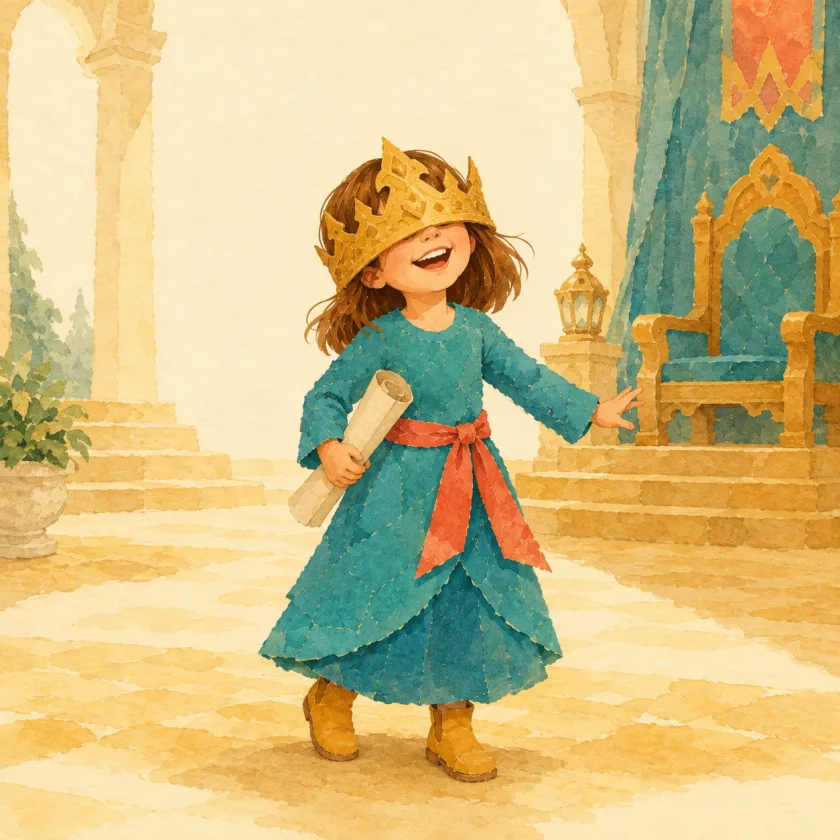
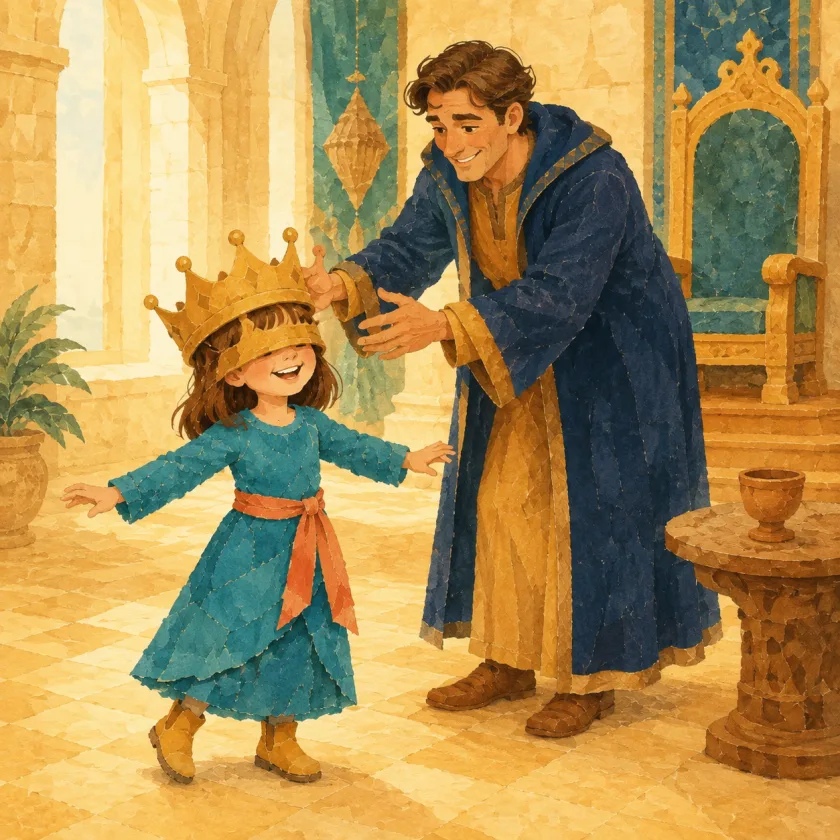
The King's crown lived on a cushion by the tall window, and one morning Princess Allison tried it on. It went past her ears, past her eyebrows, and settled on her nose. The world through a crown looks like a golden letterbox.
"Too big," she announced, from inside it.
"For now," said the King, rescuing it.
That morning he spread a long paper across the table. On it ran the road from the harbor to the palace gate. At night the road went dark, and the whole of it needed lanterns.
The table came up past Allison's chin. On her toes she could just see the harbor, and the paper hung off the table at both ends.
The paper said where the road went. It did not say where the dark was.
She walked that road every evening, her hand in the King's hand, home from the harbor as the light went out of the sky. In the dark places her hand squeezed tighter without ever deciding to. At the bend by the bramble. In the dip past the three oaks. Along the old wall, where the shadows came up past her boots.
There was a ruler in her room. It was good for shelves and no good for the dark.
Her hand had kept count anyway.
That evening Allison spread a fresh sheet of paper across her floor and drew the road in one long ochre line, harbor to gate.
Then she closed her eyes and walked it in her head, marking every place her hand had ever squeezed tighter. A dot for a little dark. A circle for a big one. The dip past the three oaks got two circles.
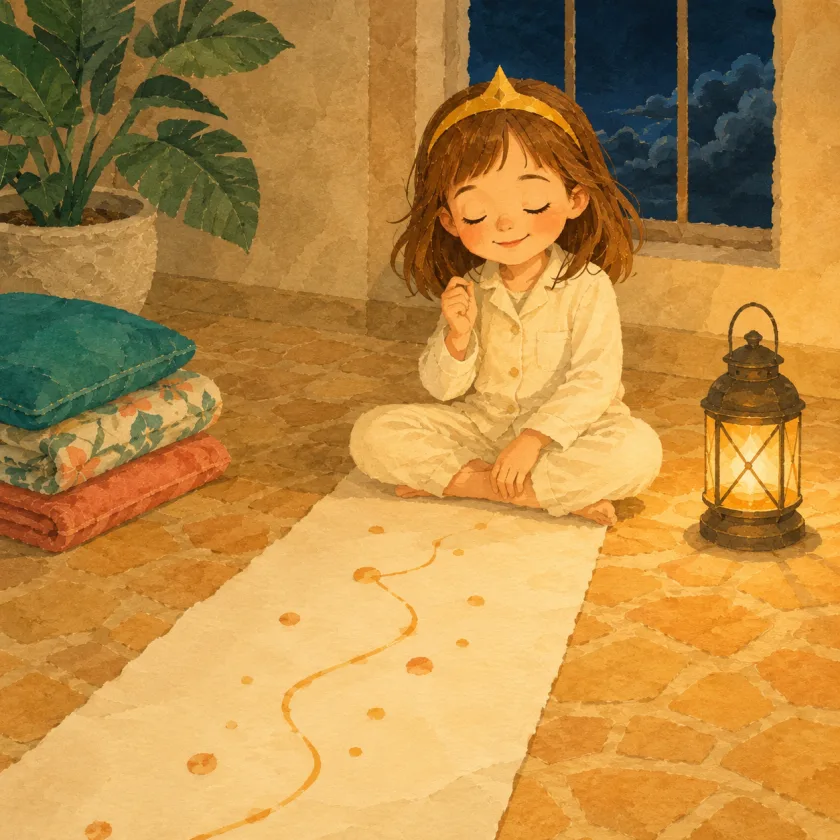
She rolled it up and took it to bed, and slept with her hand around it.
In the morning the map went soft where her fist held it. Outside the throne room her feet stopped. Up close the door was taller than the King.
Her worries got loud. The crown went past your ears, they said. Royal work comes in one size.
She thought of the night a log came down across the road, and the King braced his boot against it and said, "We can move this."
Then she pushed the door open.
"I have a plan for the lantern road," said Allison, "and I know where the dark is, because," and she got exactly that far.
The King stood up.
He moved the morning's papers off the long table with his own hands and set his cup down at the far corner.
"Show me," he said.
She unrolled the map. He put stones on the corners himself and looked at it the way he looked at real things.
"That is the best plan I have seen all year," said the King.
He shifted a stone so the corner lay flat and read the map again, harbor end to gate.
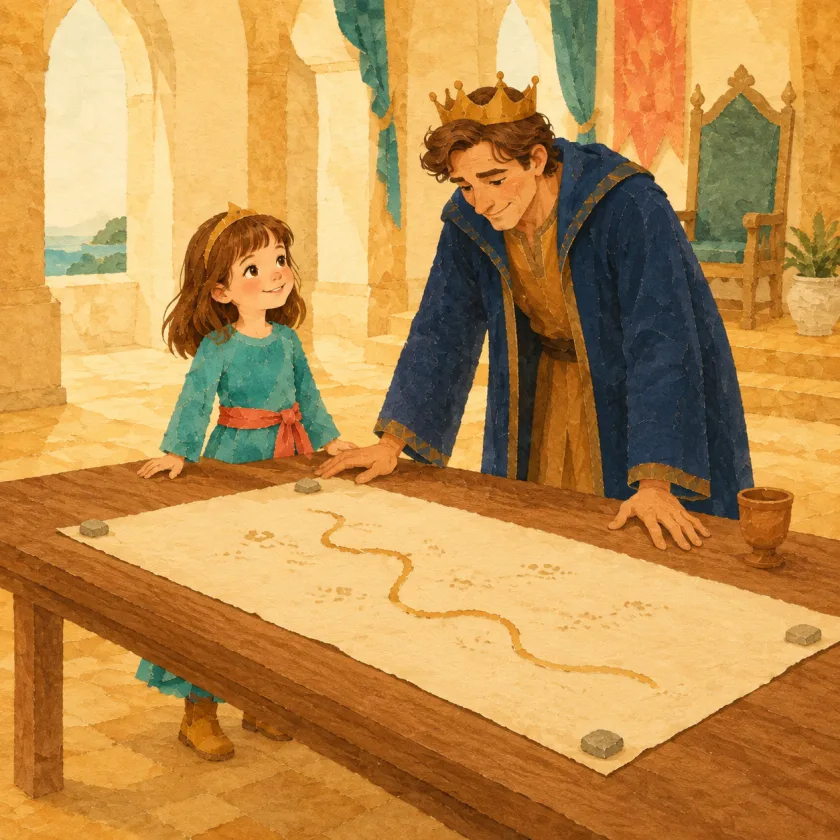
He put his finger on the two circles at the dip.
"Why two circles at the dip?"
"The dark is twice as deep there. The oaks eat the moon."
"Digging is grown-up work," said the King, "and so is hanging the lanterns. I will light them myself. But the map of the dark lives in your hand. Walk the road with me and mark every spot, and the diggers dig where the princess marks."
"The whole road?" said Allison.
"The whole road," said the King.
They walked it the next morning, harbor to gate. Allison tied a coral ribbon bow wherever her hand had squeezed.
The King walked beside her with the map in one hand and his coffee in the other, and he did not point, and he did not steer, and he did not once say are you sure.
By afternoon the road behind them wore a line of small coral bows.
At the dip past the three oaks, the deepest dark on the map, Allison tied a bow. She tied it double.
The King stood back with the map and his cup and looked down the road, bow after bow, all the way to the harbor.
"When I was your size," he said, "I thought royal work meant the crown and the chair." He drank the last of his cold coffee and looked at her the way he had looked at the map.
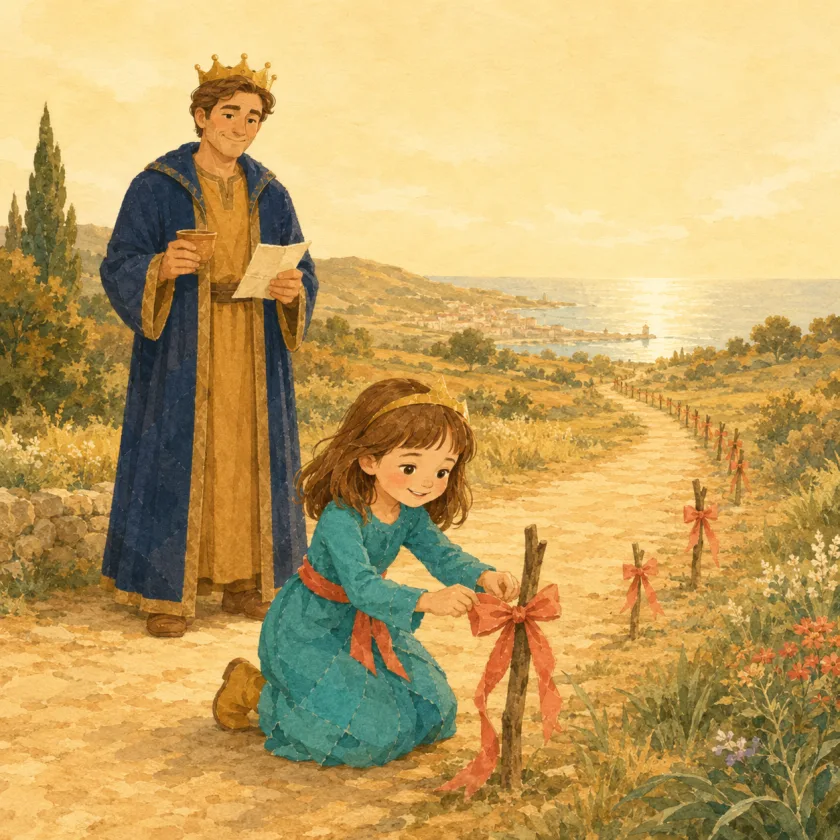
Further along, at the old wall, Allison stopped. One boot scuffed back a step. She had marked the middle, but now sunlight poured over it. The far end lay in shade. Had she put the bow in the wrong place?
The King waited.
"What does your hand remember?" was all he asked.
Allison closed her eyes and walked the wall in her head. Her fingers curled at the middle. They always curled at the middle.
She left the mark exactly where it was.
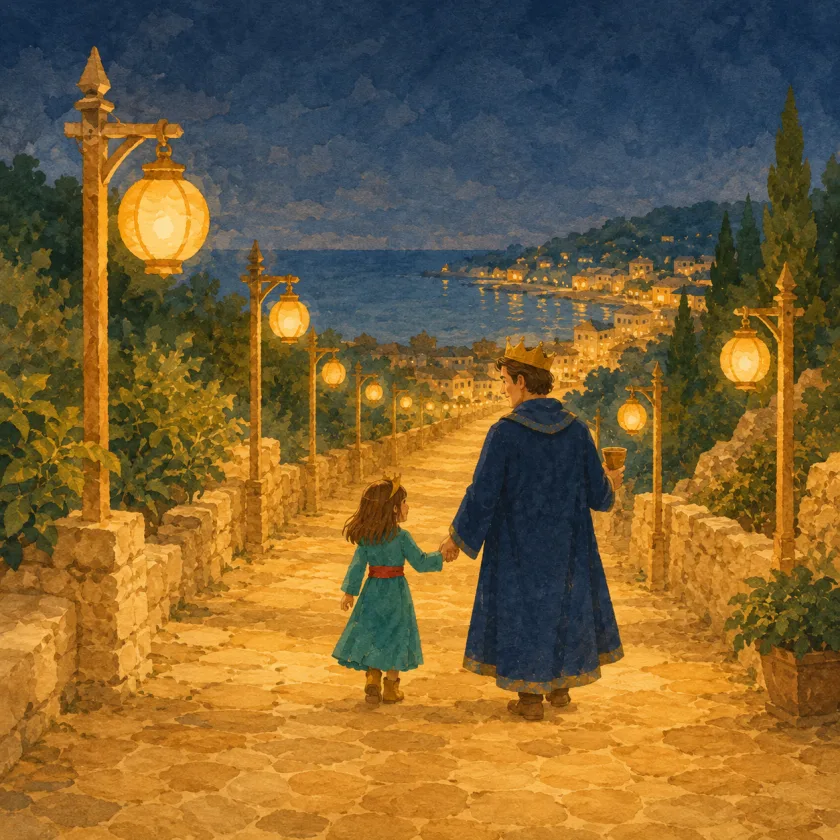
The diggers dug where the princess marked. The lanterns went up, and the dip past the three oaks got two. When the King lit them, one gold ring after another down the whole long road, every dark place wore a light instead.
They walked it that evening, hand in hand. Her hand never squeezed once. There was nowhere left for the squeeze to live. She held on anyway.
Back at the cushion by the tall window, she swapped her own crown for the King's. Past the ears, past the eyebrows, onto the nose. The world went golden-letterbox, same as ever.
"Still too big," she reported.
"The crown, yes," said the King, and lifted it off, and set her own back where it belonged.