Lumi and the Lantern Meadow
For the grown-up reading along
This story treats patience as an active kind of care. Lumi observes, waters at the roots, supports a bent stem, and then waits. Night-blooming flowers can feed moths and other nighttime pollinators, and buds on the same plant may open at different times. If a child wants to try the idea, look at the same plant for several evenings and notice what changes without touching its buds. An adult can help choose a safe plant and remind young observers to leave nighttime insects where they find them.
Lumi and the Lantern Meadow, in full
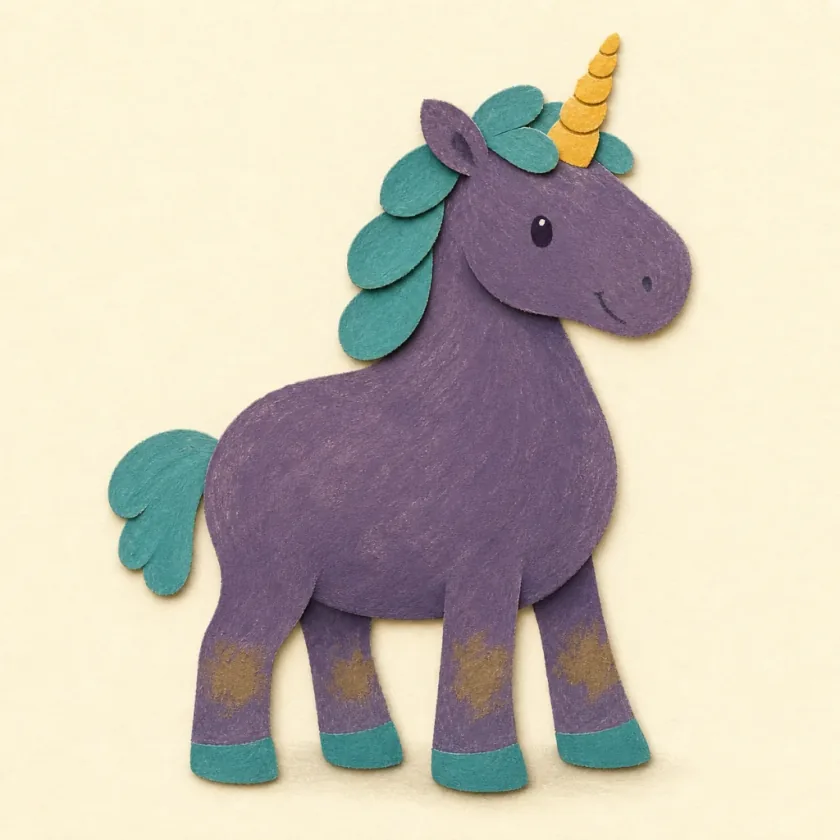
In Lantern Meadow, the moonflowers were meant to open at night. But every bud kept its petals wound tight, a pale point on a green stem. Lumi, a young unicorn, put her nose against one cold shut petal. Behind the pines the moon was coming up. "They will miss their own shining," she said.
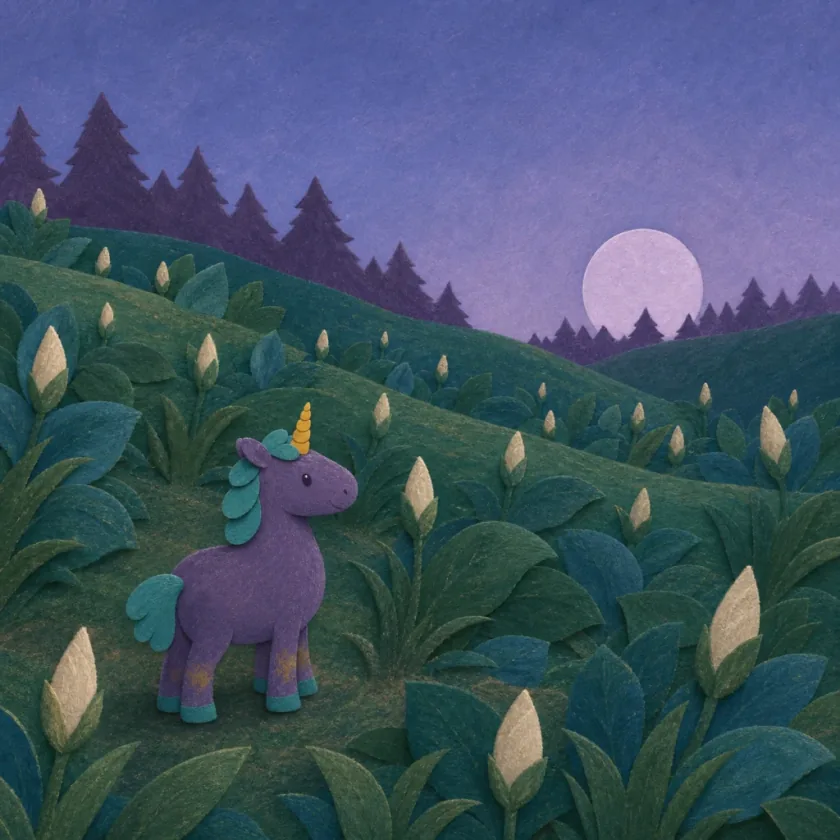
Lumi wanted the meadow path shining for its nighttime visitors. She had a plan, and the plan had a clock. "Every flower awake before the moon reaches the tallest pine," she said, and trotted down the path, counting. "Ten, eleven, twelve, and the little one by the flat stone."
Lumi touched the first bud with her horn's glow. It opened one petal. Then the whole stem shivered and the bud drew itself shut. "Maybe it wants a song," she said.
So she hummed a waking song, low, mostly on one note. Mmmmm. Mmmmm. She fanned the bud with her tail, one soft breeze, then two, until grass seeds drifted past. The bud held shut like a secret. "This is a stubborn kind of sleeping," said Lumi.
The grass by the flat stone parted, and Pip came through, a field mouse with seeds rattling in his satchel. He laid a paw flat on the soil. "This patch is thirsty," he said. He fetched ditch water in an acorn cap, Lumi filled her leaf-shaped can, and together they poured it out at the roots.
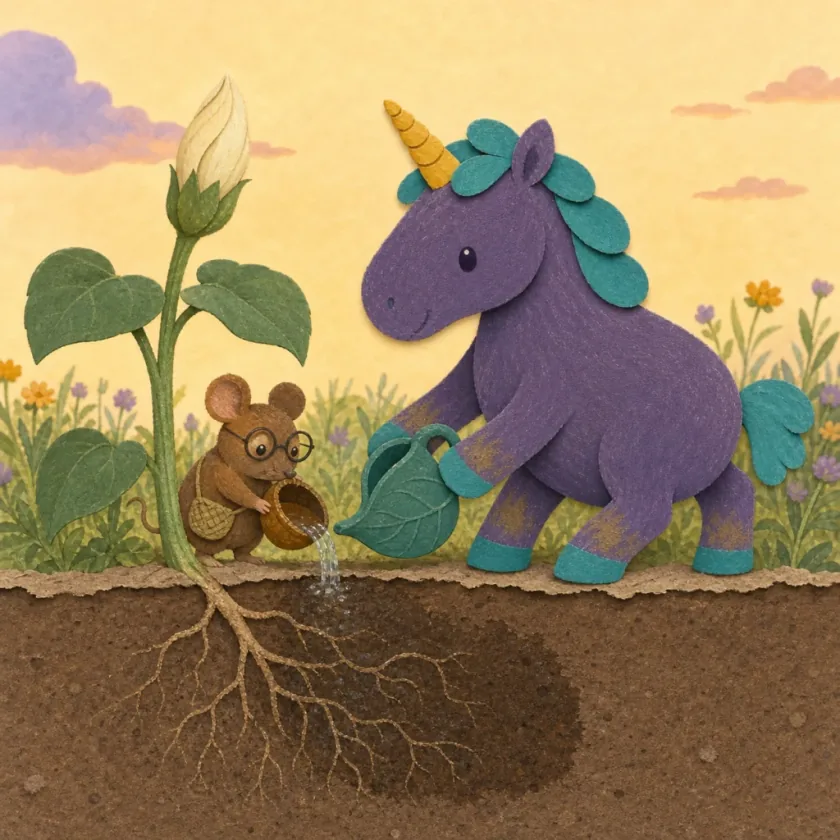
"Not on the petals?" Lumi asked. "At the roots," said Pip. "Rain slides down. Roots drink from below." The ground took it with a tick and a crackle.
One plump bud loosened. Three green ones stayed knotted. Lumi looked up at the pine. The moon was climbing. Pip said, "A little help, a little hush, then time." "No time for time," said Lumi.
The moon was near the tallest pine, and most of the buds were still shut. Just a little more light, Lumi thought. She flared her horn. Shadows jumped across the leaves, and the buds shook. A moth went crooked into the dark. Lumi dimmed her horn at once.
"Sorry," she whispered, to the moth and to the meadow. She let the dark come back over the grass, up to her knees. The crickets started again, and cool air came down from the pines. "Moonflowers like the cool," said Pip. "It tells them the sun is gone."
She sat until her tail stopped moving. One stem leaned too far to hold its bud upright. Under a fallen leaf, a snail. Every round bud pointed the same way, out into the cool air. "They were getting ready the whole time," Lumi whispered.
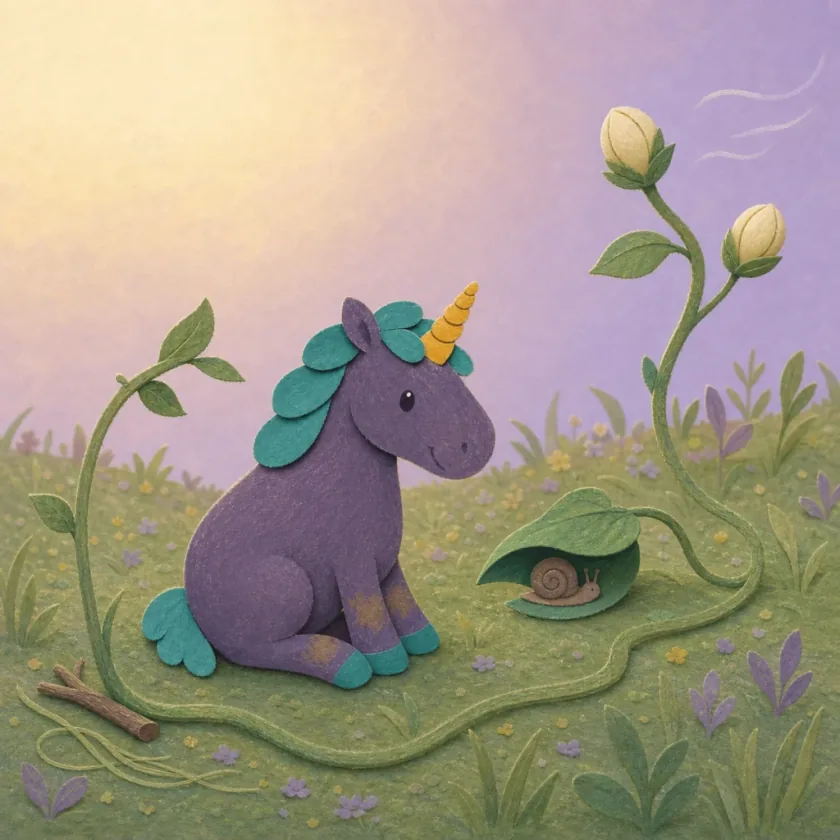
"A little help," Lumi said, and tied the leaning stem to a twig with a blade of grass. Pip lifted the fallen leaf and carried the snail to the damp shade behind the flat stone.
A little hush. Lumi folded her legs beneath her and practiced being quiet. Breathe in, slow. Breathe out, slower. Her horn glowed low, no brighter than the buds beside her. Pip opened his satchel and split a blackberry, half for each. Lumi made hers last six bites.
And then, time. The first moonflower opened. Wide, and white as the inside of a shell. A moth came down on it and unrolled its long tongue. It drank. When it lifted off for the next bloom, pollen rode in its fur.
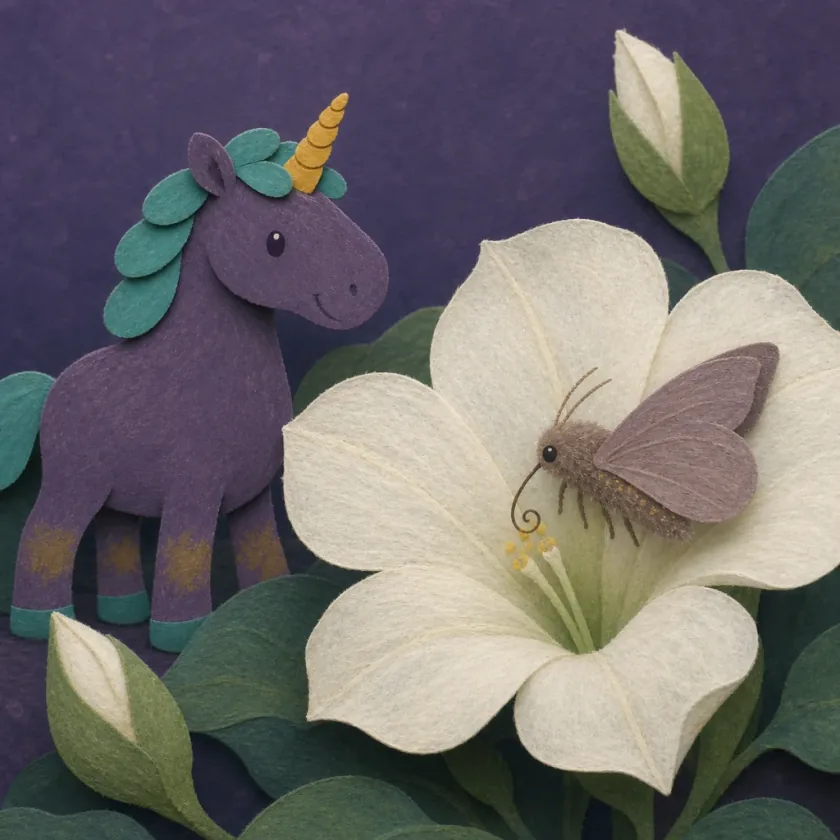
At the next bloom the moth reached in, and the pollen it carried rubbed off inside. It flew on wearing more. "Next summer's seeds," said Pip, patting his satchel. A beetle trundled to a low blossom. Overhead, a small bat stitched loops in the dark.
Across the meadow, blossoms opened one by one, never all at once, a loose trail of pale lanterns down the path. Lumi did not count how many were left. She counted how many visitors found supper.
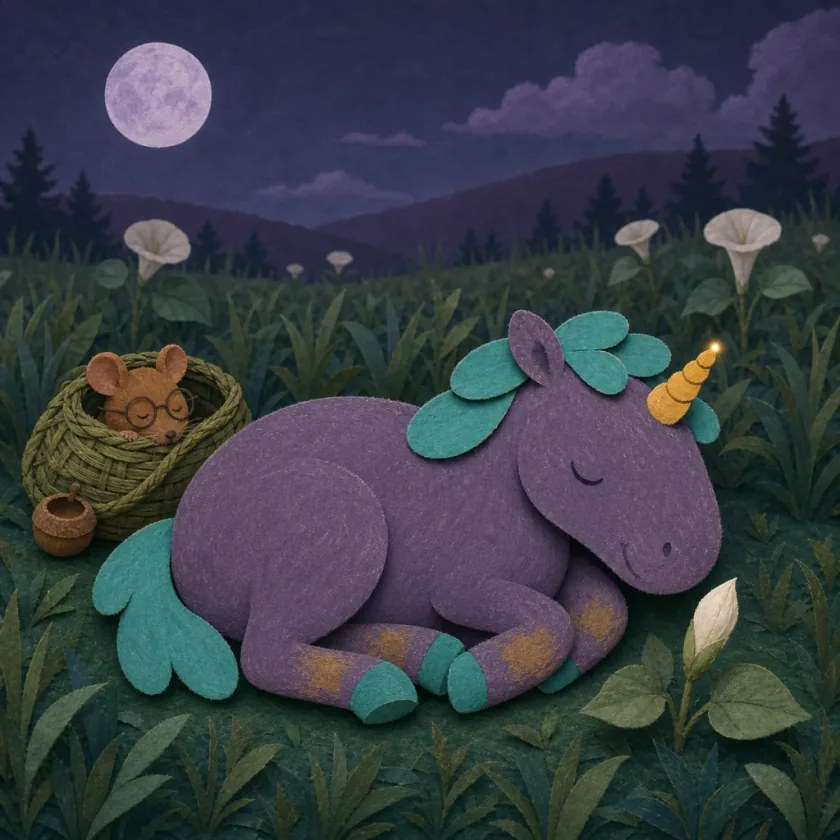
The moon had gone past the tallest pine. By the flat stone, one small bud stayed closed. Lumi curled beside it and let her horn fade to an ember. "A little help, a little hush, then time," she whispered, and the little one slept on.