The Longest Royal Wait
For the grown-up reading along
The nest is observed and never handled by Allison: she keeps a respectful distance in every scene. After the birds leave, they wait through three quiet evenings; a trained wildlife keeper confirms the nest is inactive and that removal is permitted, then moves it with gloved hands while Allison stays back. The King owns the cold-lantern inspection, cleaning, fire, and lighting throughout. Patience is framed honestly, as hard and itchy and unshortenable, and the tools are real ones: shared ritual, a way to make time visible, and company. The drawing pile gives children a concrete, copyable practice for a long wait of their own.
The Longest Royal Wait, in full
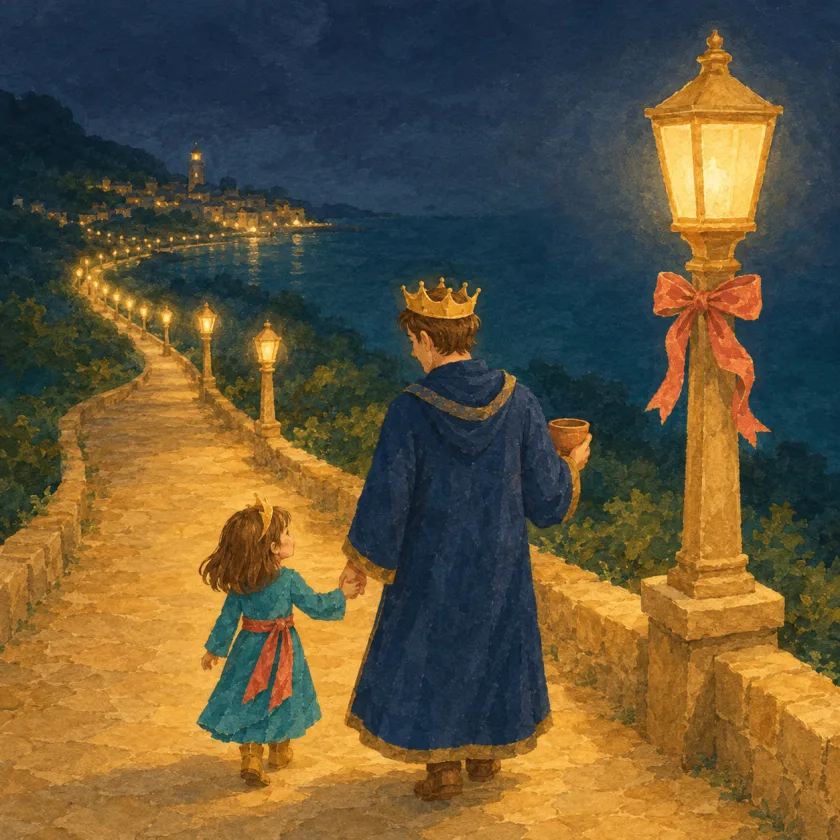
Every evening the King lit the lantern road, harbor to gate. Allison walked beside him. She had picked the spot for every lantern on it herself.
At the lantern by the bend, the King stopped, taper in hand, and did not light it.
"Look," he said, "but softly."
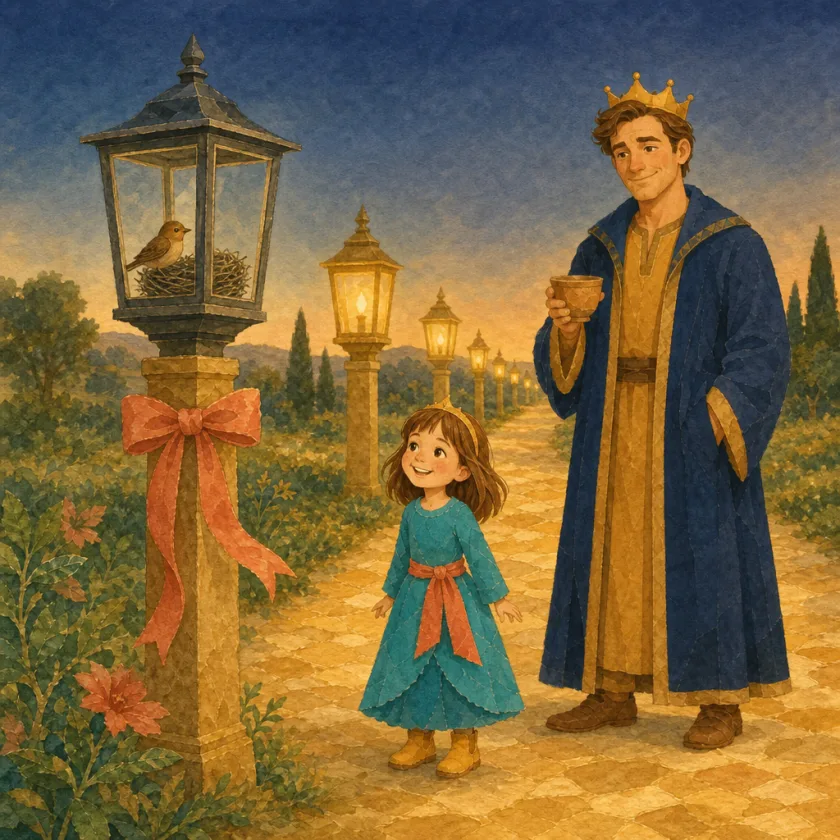
Inside the lantern's glass house, where the flame should sit, was a nest woven neat as a basket. On it sat a small brown bird, watching them as hard as they were watching her.
"She picked the best spot on the road," whispered Allison.
"She would know," said the King. "The princess marked it."
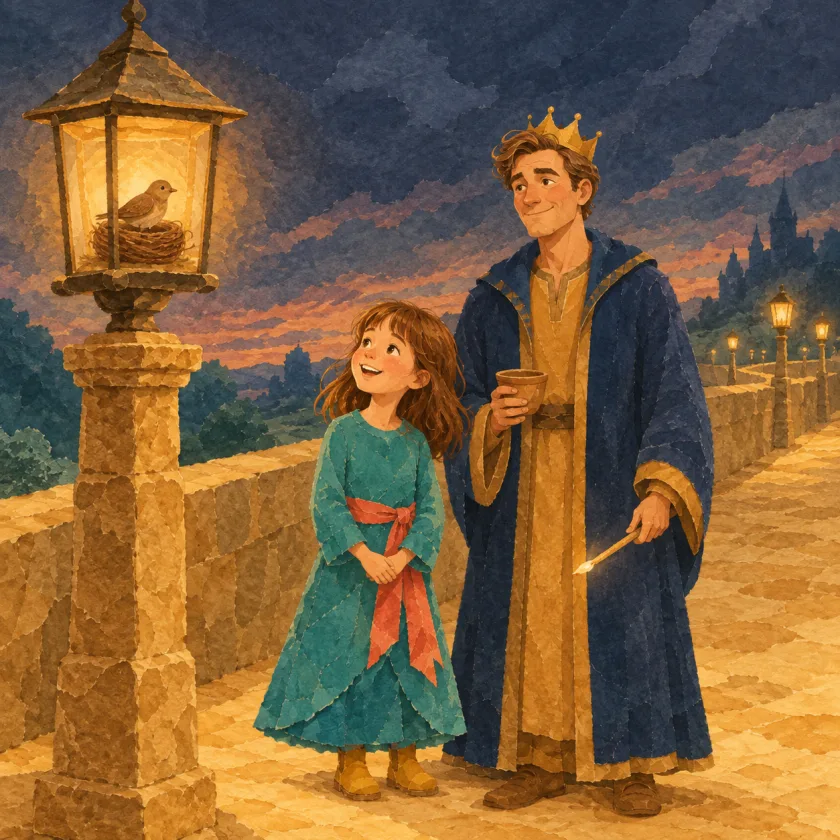
There were eggs under that bird, though you could not see them. Nothing on her moved but her eyes.
The King snuffed the taper before putting it back in his belt. This lantern would stay dark until the nest was done with it. Allison tied a coral ribbon bow low on the post, well below the nest, to mark the place for quiet passing.
"How long until they hatch?"
"A while."
"How long is a while?"
"It takes," said the King, "the time it takes."
Allison said it to herself all the way to the gate. A while. There was no number in it anywhere.
That night Allison sat on her floor with a fresh sheet of paper and her backup orange crayon and tried to plan the hatch.
She could not.
There was no first step, and nothing to fetch or mend. The paper stayed empty except for one small nest in the middle, which she circled, twice.
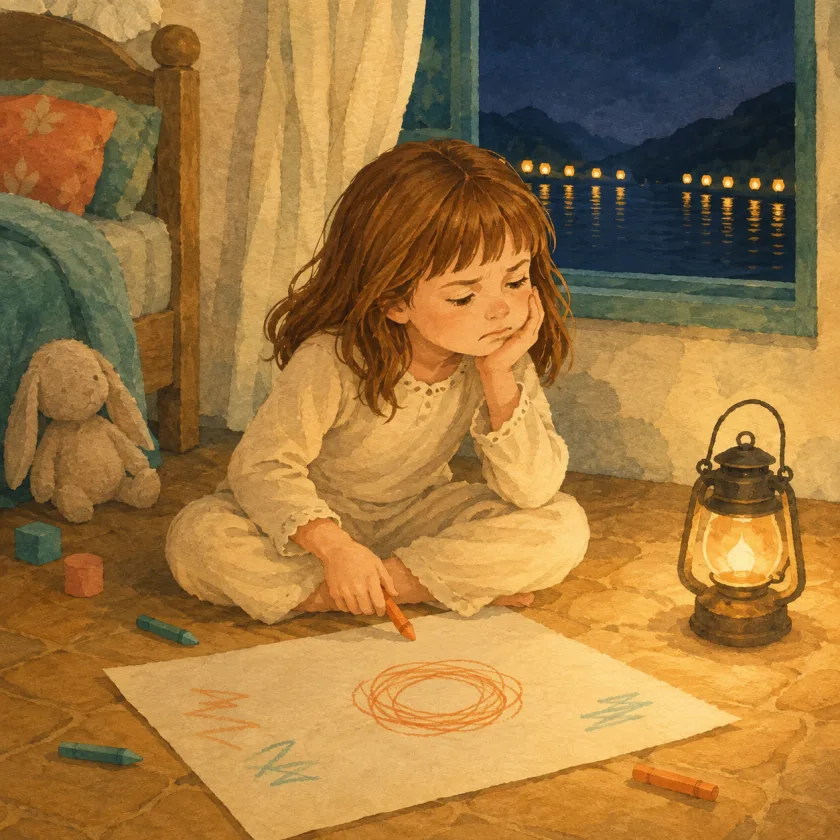
You cannot draw time. She put the crayon down and did not pick it up again that night.
"I do not know how to wait," she told the King at breakfast, into a bowl gone cold. It came out small, like a confession.
"You do not have to do it alone," said the King. "We can watch from across the road together."
Allison sat up. "And I could draw her. One drawing every evening, from across the road. Then I can plan the keeping-company," she said, "even if I cannot plan the hatch."
"Now that," said the King, "is royal thinking."
So the waiting got a shape. She cut paper to size and set the orange crayon by the door.
Every evening they walked the road at lighting time. The taper skipped the bend, and that lantern stayed dark. The coral bow held its post, and the bird sat her nest like the calmest queen in any kingdom.
She drew the bird from the far side of the road, never closer. One drawing a night: the nest, the bird, the dark ring in the line of gold.
The drawings went into a pile on her shelf, and the pile got taller.
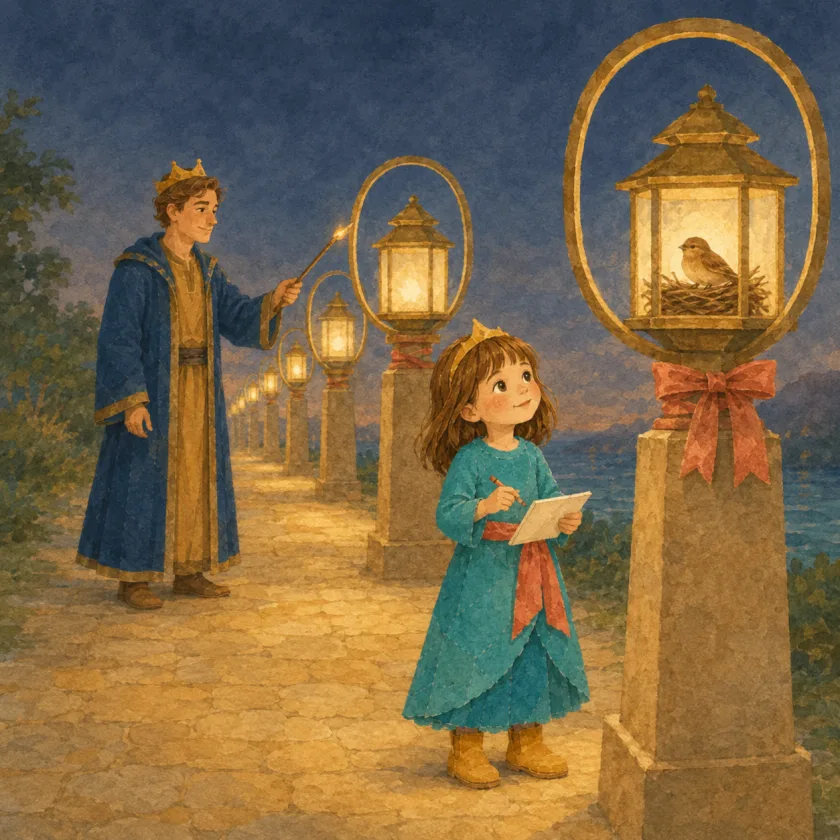
Some evenings patience came easy. One evening it itched the whole way to the gate, and she walked with her hands jammed under her arms.
"Does waiting go faster if you get good at it?" Allison asked.
"No," said the King. "It goes exactly the same speed. But it gets lighter."
"You are in my waiting," said Allison.
"Every evening of it," said the King.
The pile of drawings grew. Eleven. Fourteen. Seventeen.
Travelers slowed at the bend and tipped their hats to the little dark lantern. A coral bow on a post meant the princess had a reason. A carter stopped his horse at the bend and led it past on the grass, so the wheels would be quiet.
On the nineteenth evening the nest looked empty. Allison's feet wanted to run to the post, and she made them stay. Then a small brown whir dropped out of the dusk, and the bird settled back on her eggs as if she had never left. "She went for supper," whispered Allison, "and did not even tell us."
On the twenty-first evening, the lantern by the bend was cheeping.
Tiny and scratchy. A sound with no practice in it.
Allison froze, her paper forgotten at her side. The King froze with his taper raised. The bird stood tall on the nest's rim, and under her were three little heads, wobbling and furious about everything, each mouth open wider than the head it belonged to.
"They came," breathed Allison. "On no schedule at all."
"On theirs," said the King. "It took the time it took. And look what the time made."
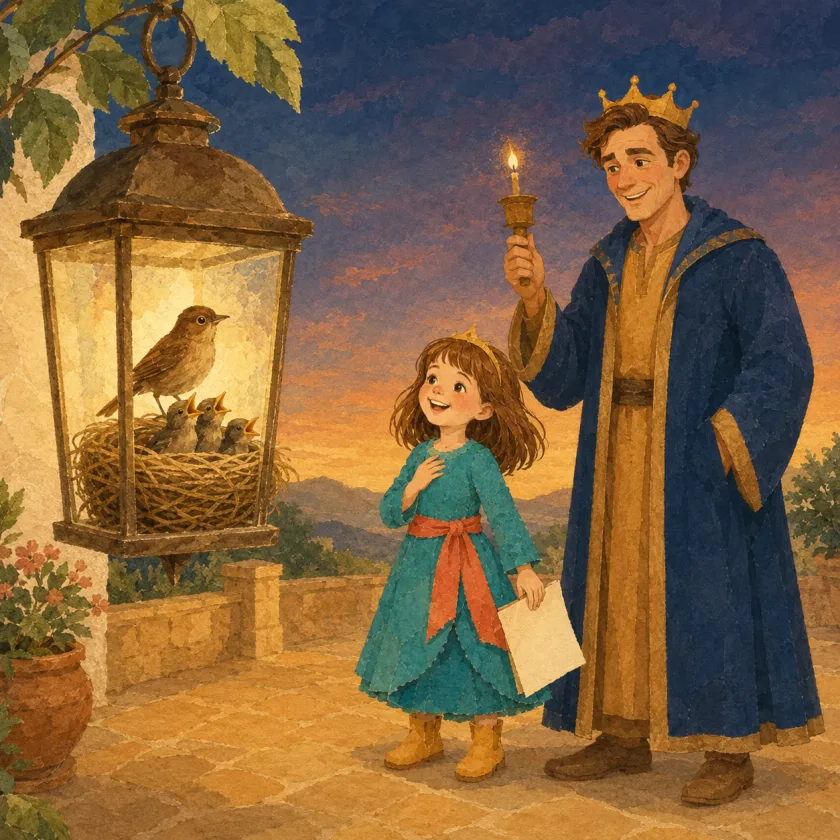
The nest needed the lantern a while longer. The taper went past the bend again, and then again.
Allison drew the babies every evening: scruffy, then feathered, then bold on the rim, then gone one dusk in a whir of small wings.
The nest sat empty. They waited three quiet evenings to be sure no bird came back.
Then the keeper who minds the kingdom's wild neighbors checked the lantern and said the nest was done being a home. Her gloved hands carried it to a brush pile off the road.
Allison kept the coral ribbon company while the King cleaned the cold lantern himself.
The King looked at Allison. Allison nodded.
That evening, the taper did not skip the bend.
The lantern by the bend came on for the first time since the bird had moved in, and the road was whole again, harbor to gate.
The light reached past the bend, all the way to the next post. Allison stood in it with her paper down, not drawing, and the King left his hand on the warm glass.
"Twenty-nine drawings," said Allison, who had counted the pile. "That is how long a while is."
"This time," said the King. "And waiting beside you is never heavy."
They walked home under the lanterns, their shadows stretching long and folding short between the posts. On her shelf the pile stood as tall as the wait, with an empty page on top.